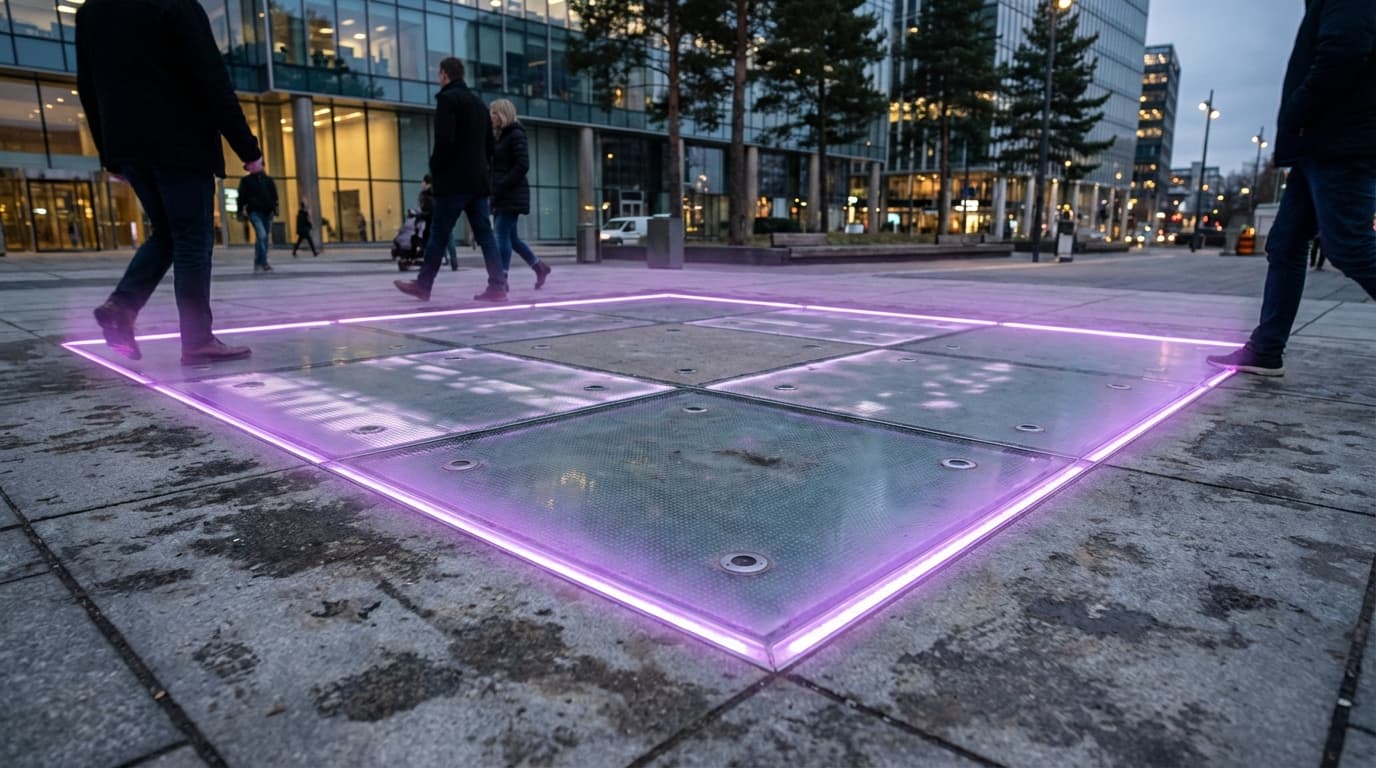
Programmable Smart Pavement
Programmable smart pavement integrates responsive materials, embedded sensors, and control systems into road surfaces to create adaptive infrastructure that responds to environmental conditions and urban needs. These systems can change properties such as permeability, reflectivity, or even shape in response to signals, enabling dynamic management of water flow, temperature regulation, and traffic patterns. Embedded sensors monitor conditions in real-time, while control systems activate material responses or communicate with city management platforms.
The technology addresses multiple urban challenges simultaneously: permeable surfaces can activate during heavy rainfall to reduce flooding, while reflective surfaces can adjust to mitigate urban heat island effects. Smart pavement can also display dynamic traffic markings, generate electricity from vehicle movement, or provide real-time structural health monitoring. Research institutions and infrastructure companies are developing various approaches, from phase-change materials that adjust thermal properties to modular systems with embedded electronics.
At TRL 3, programmable smart pavement remains largely experimental, with pilot projects testing individual capabilities rather than fully integrated systems. The technology faces significant challenges including durability under heavy traffic loads, maintenance complexity, cost-effectiveness compared to traditional materials, and the need for robust power and communication infrastructure. However, as cities face increasing pressure from climate change and urbanization, smart pavement offers a pathway to more resilient and adaptive infrastructure. If these challenges can be addressed, programmable pavement could transform urban surfaces from passive infrastructure into active systems that contribute to city sustainability and livability.
Related Organizations
United States · Startup
Develops Smart Pavement™, a precast concrete system with embedded digital technology, sensors, and connectivity for smart city infrastructure.
France · Company
A major transport infrastructure construction company that developed Wattway, a photovoltaic road pavement that produces electricity.

Provides wireless charging solutions for electric vehicles (EVs) through dynamic in-road inductive technology.
United Kingdom · Startup
Creates flooring technology that converts the kinetic energy of footsteps into electricity and data.
United States · Startup
An early innovator proposing hexagonal glass solar panels with LED lights and heating elements to replace asphalt.
France · Company
A subsidiary of VINCI Construction that developed 'Power Road', a road surface that captures thermal energy.
Hungary · Startup
Develops solar pavement blocks made from recycled plastic that can be installed in sidewalks, driveways, and plazas.
Netherlands · Startup
Produces hollow, modular road elements made from recycled plastic with space for utilities and water storage.

A leading technical university known for research into self-healing asphalt using steel wool and induction heating.

Offers a traffic management platform powered by IoT sensors installed in road studs (smart cat's eyes).
Supporting Evidence
Research this in Signals
Signals turns a topic into a sourced research record you can inspect and rerun. Your first scan is free, and this one starts with Programmable Smart Pavement already loaded, so edit it or scan as is.