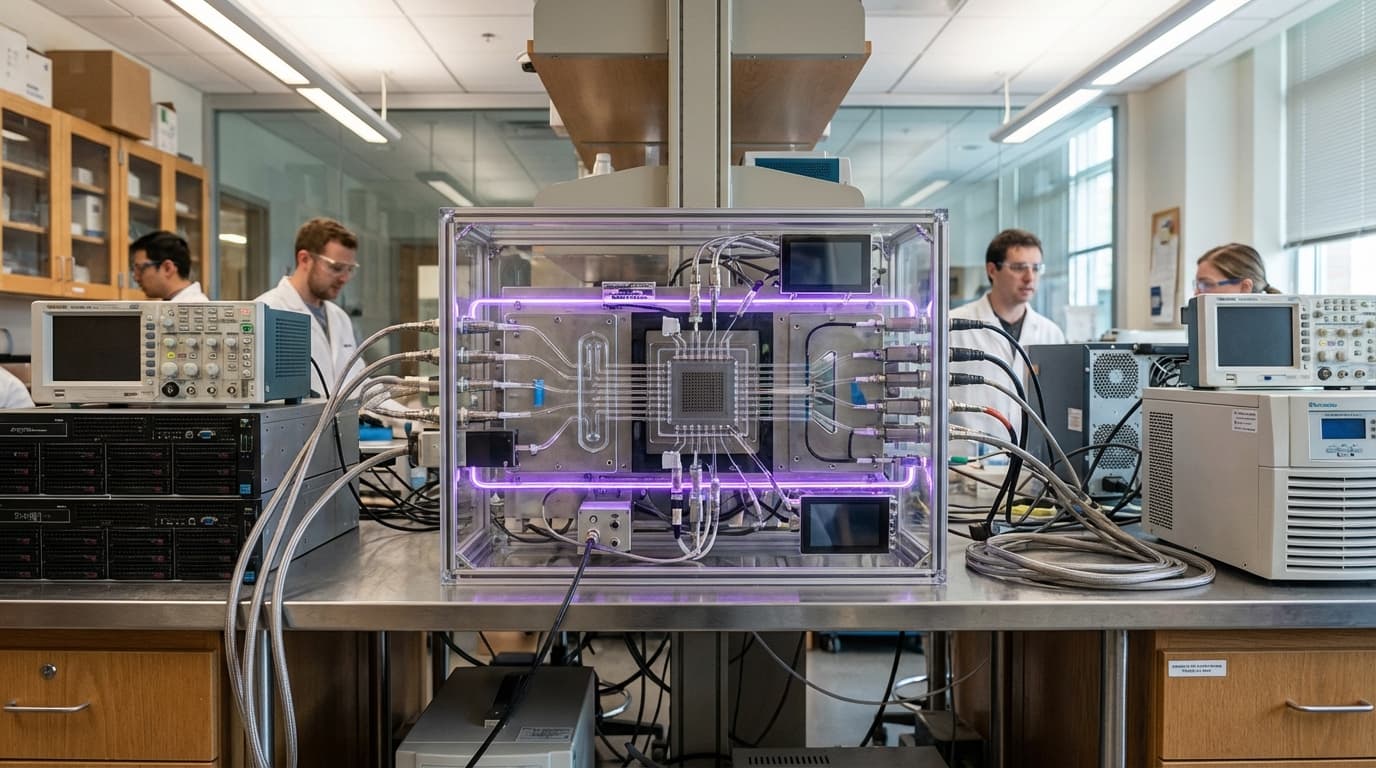
DNA Data Storage
DNA data storage encodes digital information into synthetic DNA molecules, leveraging biology's most efficient information storage system. The process converts binary data (0s and 1s) into the four-letter genetic code (A, T, C, G), synthesizes the corresponding DNA sequences, and stores them in solution or on solid supports. To retrieve data, the DNA is sequenced and decoded back into digital format. DNA offers extraordinary storage density—theoretically capable of storing all the world's data in a volume smaller than a sugar cube—and exceptional longevity, with DNA remaining readable for thousands of years under proper conditions.
The technology addresses critical challenges of digital data storage: exponential growth in data generation, the limited lifespan of current storage media (typically 5-10 years), and the enormous energy requirements of data centers. DNA storage requires no energy to maintain once synthesized, can last for millennia, and offers density millions of times greater than current storage technologies. Companies like Twist Bioscience, Catalog, and Microsoft Research are developing DNA storage systems, with some demonstrations successfully storing and retrieving data including images, videos, and documents.
At TRL 5, DNA data storage has been demonstrated for small datasets, with proof-of-concept systems encoding and retrieving various types of digital content. The technology faces significant challenges including high synthesis and sequencing costs, slow write and read speeds, the need for error correction due to synthesis and sequencing errors, and the complexity of random access to stored data. However, as DNA synthesis and sequencing costs continue to decrease rapidly, the technology becomes more viable. DNA storage is particularly valuable for archival applications where data needs to be preserved for decades or centuries, potentially providing a sustainable solution to humanity's growing data storage challenge while reducing the environmental impact of data centers.
Research this in Signals
Signals turns a topic into a sourced research record you can inspect and rerun. Your first scan is free, and this one starts with DNA Data Storage already loaded, so edit it or scan as is.