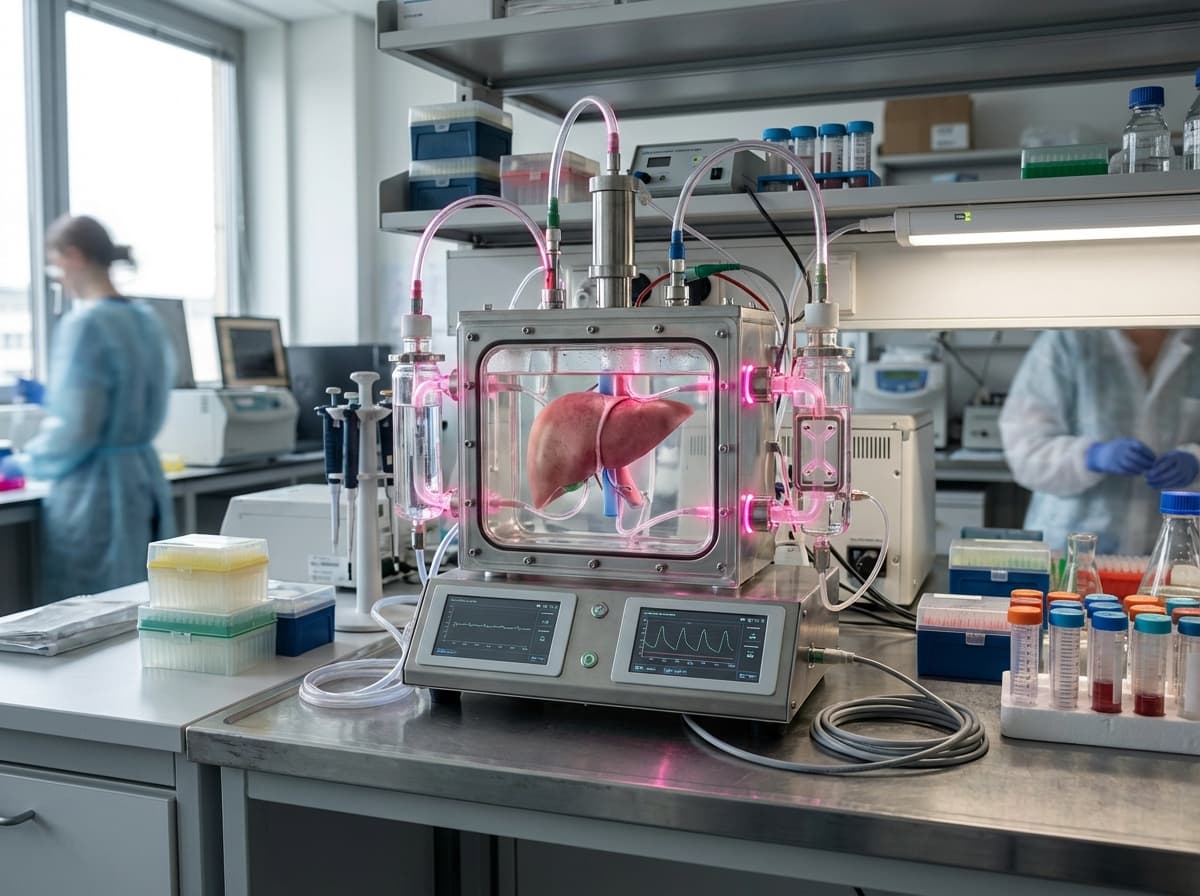
Normothermic Organ Perfusion Bioreactors
Normothermic organ perfusion bioreactors are ex vivo life-support systems that keep donor organs metabolically active outside the body using oxygenated, nutrient-rich perfusate (fluid) at body temperature, maintaining organ function and viability during transport and storage. Emerging protocols are layering gene therapy, cell therapy, and pharmacological treatments onto these platforms to actively repair, rejuvenate, or improve aged or marginal organs prior to transplantation, potentially expanding the pool of usable donor organs and improving transplant outcomes, hinting at future capabilities for whole-organ repair and rejuvenation for longevity medicine.
This innovation addresses the critical shortage of donor organs and the problem of organ quality, where many potential donor organs are discarded because they're considered too old or damaged. By maintaining organs in a functional state outside the body and applying therapeutic interventions, these systems can improve organ quality, extend preservation times, and potentially repair damage, making more organs suitable for transplantation. Companies like OrganOx, TransMedics, and research institutions are developing these technologies.
The technology is particularly significant for addressing the organ shortage crisis, where thousands of people die waiting for transplants each year. As the technology improves and therapeutic capabilities expand, it could dramatically increase the number of usable organs and improve transplant outcomes. However, ensuring organ viability, developing effective repair protocols, and managing system complexity remain challenges. The technology represents an important advance in organ preservation and could enable new approaches to organ repair, but requires continued development to achieve its full potential. Success could transform transplantation medicine by expanding the organ supply and improving outcomes, potentially saving many lives and serving as a model for organ repair and rejuvenation approaches.
Related Organizations

Creators of the metra system, which preserves donor livers at body temperature for up to 24 hours prior to transplant.

Developer of the Organ Care System (OCS), a portable normothermic perfusion platform for heart, lung, and liver transplantation.
United States · Company
Develops organ preservation solutions and the VitaSmart machine perfusion system.
Netherlands · Company
Develops perfusion systems for liver (Liver Assist) and kidney (Kidney Assist), focusing on oxygenated perfusion.

Home to the Robotics and Perception Group (RPG).
Spain · Company
Spanish biotech developing the ARK normothermic kidney perfusion system.

Conducts advanced research on cross-circulation platforms to rehabilitate donor lungs and livers ex vivo.
Spain · Research Lab
Barcelona-based research institute conducting clinical trials on normothermic regional perfusion.
Supporting Evidence
Research this in Signals
Signals turns a topic into a sourced research record you can inspect and rerun. Your first scan is free, and this one starts with Normothermic Organ Perfusion Bioreactors already loaded, so edit it or scan as is.