Worker Augmentation and Reskilling Platforms
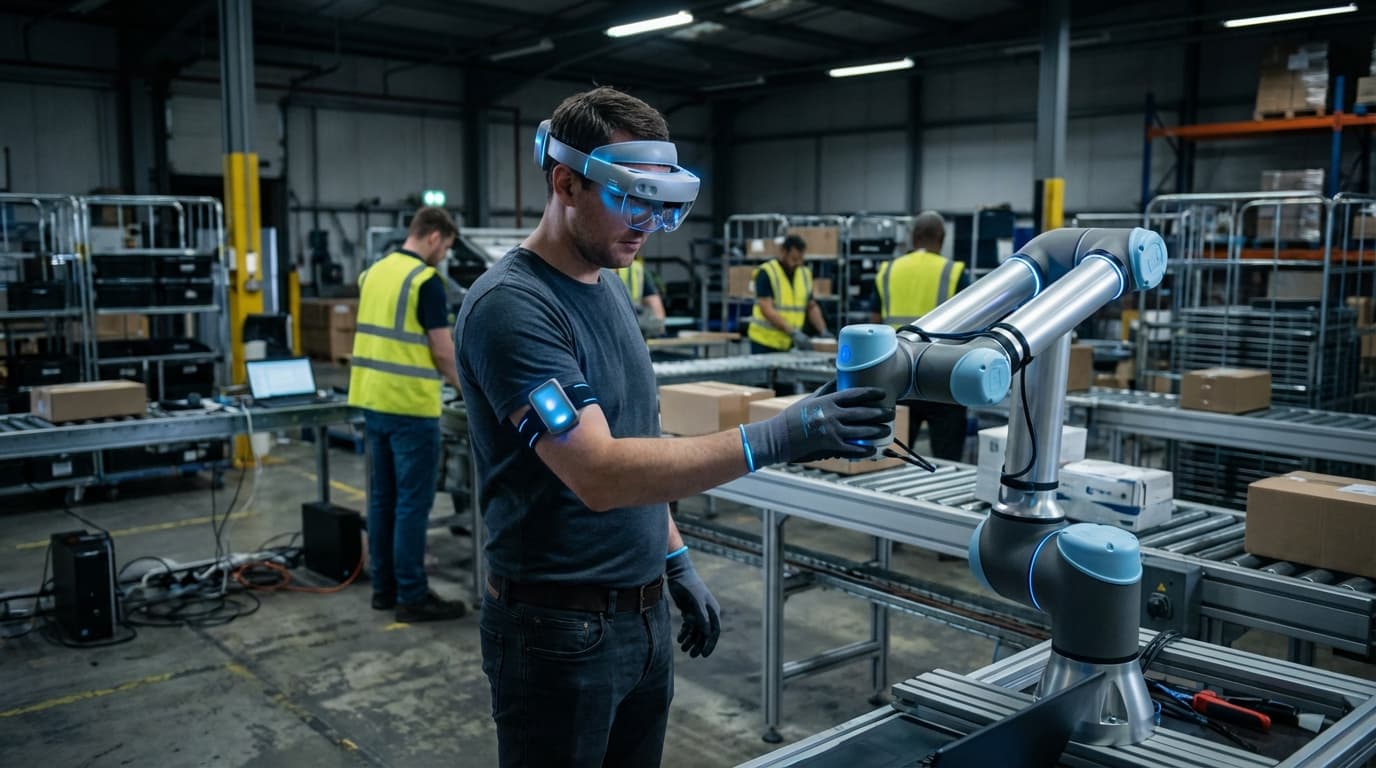
The rapid automation of warehouses and logistics operations has created a critical challenge: how to transition human workers from traditional manual roles into new positions that complement rather than compete with automated systems. Worker augmentation and reskilling platforms address this challenge by providing comprehensive frameworks that combine physical assistance technologies, digital training systems, and career development pathways. These platforms typically integrate wearable devices such as exoskeletons and smart glasses with learning management systems and performance analytics tools. The exoskeletons reduce physical strain during tasks that still require human dexterity or judgment, while augmented reality interfaces guide workers through complex procedures in real-time. Meanwhile, the digital training components use adaptive learning algorithms to personalise skill development based on individual worker capabilities and learning speeds. This integrated approach ensures that automation enhances rather than replaces human capabilities, creating hybrid roles where workers supervise robotic systems, manage exceptions that require human judgment, and perform tasks requiring fine motor skills or contextual decision-making that remain beyond current automation capabilities.
The logistics industry faces mounting pressure to increase efficiency while managing labour shortages and high turnover rates, particularly in warehouse environments. Traditional approaches to automation often resulted in workforce displacement and resistance to technological change, creating social tensions and operational disruptions. Worker augmentation and reskilling platforms solve these problems by providing structured pathways for employees to transition from physically demanding roles into positions as robot operators, quality control specialists, data analysts, and system supervisors. These platforms incorporate ergonomic design principles to reduce workplace injuries, safety analytics that predict and prevent accidents in mixed human-robot environments, and competency frameworks that map traditional skills to emerging roles. By demonstrating clear career progression opportunities and providing the tools for workers to succeed in automated environments, these platforms help organisations implement automation while maintaining workforce stability and morale. This approach also addresses the growing recognition among logistics companies that successful automation requires skilled human oversight rather than complete workforce replacement.
Early implementations of these platforms are appearing in major distribution centres operated by large retailers and third-party logistics providers, where pilot programs demonstrate measurable improvements in both worker satisfaction and operational efficiency. Workers using augmentation technologies report reduced fatigue and injury rates, while reskilling programs show promising retention rates as employees transition into supervisory and technical roles. Some platforms now incorporate virtual reality training modules that allow workers to practice operating automated systems in risk-free environments before working with actual equipment. The integration of continuous learning systems means that as warehouse technologies evolve, workers can adapt through ongoing micro-credentialing rather than facing obsolescence. This trend aligns with broader movements toward just transition frameworks in industrial automation, recognising that sustainable technological advancement requires investing in human capital alongside physical infrastructure. As supply chain automation accelerates, these platforms represent an essential component of responsible implementation, ensuring that the benefits of increased efficiency are shared rather than concentrated, and that human expertise remains central to logistics operations even as the nature of that expertise evolves.
Related Organizations

Produces the Cray X, a connected power suit that supports lifting movements and provides data analytics.

Develops highly mobile, dexterous industrial robots and exoskeletons like the Guardian XO.


Develops a smart belt buckle wearable that tracks employee location, motion, and environmental conditions to prevent injury.

Develops ruggedized head-mounted tablet devices for industrial frontline workers to access data hands-free.


Offers 'TeamViewer Frontline', an enterprise AR productivity platform (acquired from Ubimax) for logistics and manufacturing.

A connected worker platform (acquired by IFS) that facilitates real-time knowledge sharing and task management on the factory floor.

Supplier of smart glasses and Augmented Reality (AR) technologies.
Supporting Evidence
Research this in Signals
Signals turns a topic into a sourced research record you can inspect and rerun. Your first scan is free, and this one starts with Worker Augmentation and Reskilling Platforms already loaded, so edit it or scan as is.