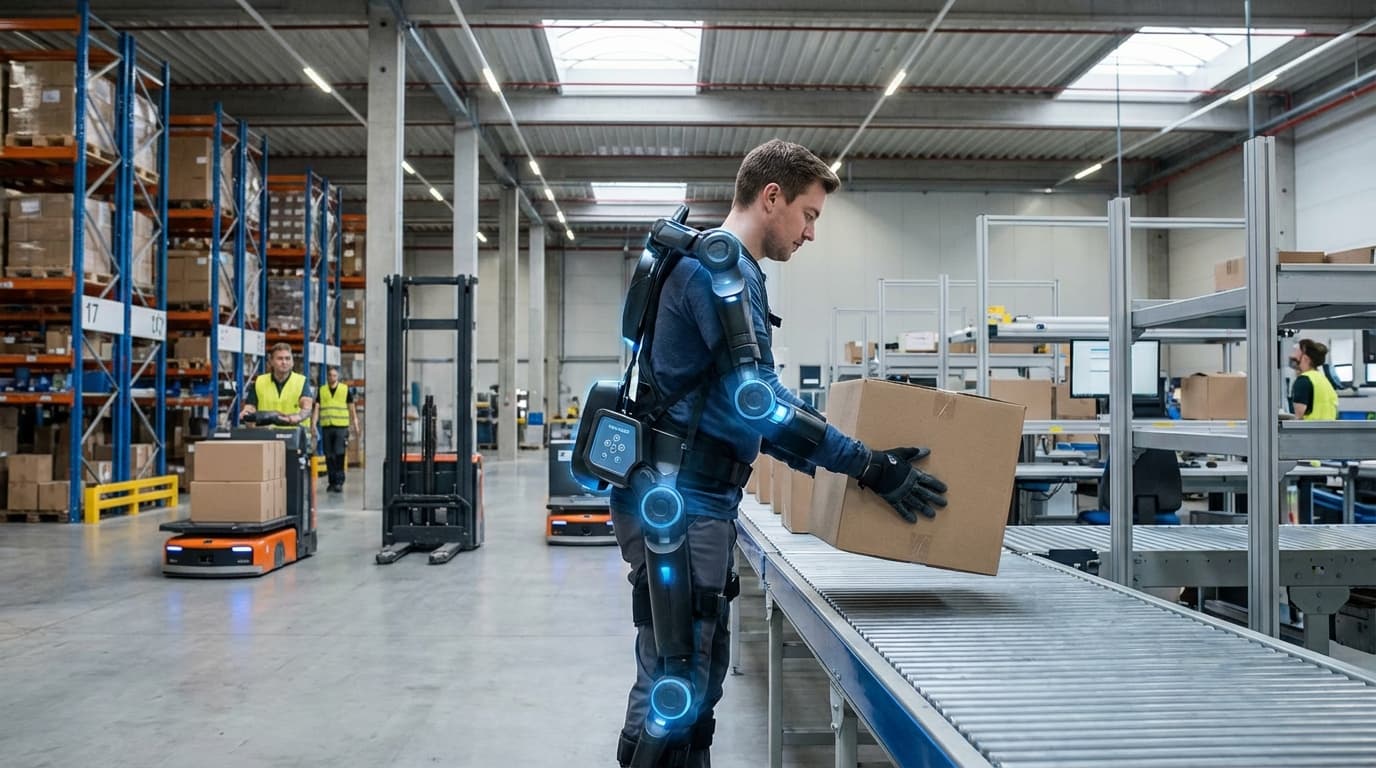
Warehouse Exoskeletons
Warehouse exoskeletons represent a convergence of robotics, biomechanics, and wearable technology designed to augment human physical capabilities in demanding logistics environments. These devices range from passive systems that use springs and counterweights to redistribute load forces across the body, to active powered exoskeletons that employ motors, actuators, and batteries to directly amplify human strength. The core mechanism involves transferring weight from vulnerable areas like the lower back and shoulders to more robust skeletal structures such as the hips and legs. Advanced models incorporate real-time sensors that detect the wearer's movements and intentions, adjusting assistance levels dynamically to match the task at hand. Some systems use electromyography sensors to read muscle signals, while others rely on inertial measurement units and force sensors embedded throughout the frame to understand posture, load distribution, and fatigue indicators.
The logistics industry faces a persistent challenge with musculoskeletal disorders, which account for a significant portion of workplace injuries and lost productivity in warehouse operations. Workers routinely handle packages weighing between 20 and 50 pounds throughout shifts that can extend beyond eight hours, leading to chronic back pain, shoulder injuries, and premature career endings. Warehouse exoskeletons address these challenges by reducing the biomechanical load on workers' bodies during repetitive lifting, carrying, and overhead reaching tasks. This technology enables companies to maintain workforce health while meeting the increasing demands of e-commerce fulfillment, where order volumes continue to surge and speed expectations intensify. Beyond injury prevention, exoskeletons create opportunities for more inclusive hiring practices by enabling workers of varying physical capabilities to perform demanding tasks safely, potentially extending career longevity and reducing the costs associated with worker compensation claims and turnover.
Early deployments in major logistics operations have demonstrated measurable reductions in physical strain, with some pilot programs reporting decreased muscle fatigue and improved worker comfort during extended shifts. Current adoption focuses primarily on specific high-risk tasks such as overhead work, repetitive lifting zones, and loading dock operations where the return on investment is most apparent. The technology is evolving from bulky, restrictive early prototypes toward lighter, more ergonomic designs that workers can don quickly and wear comfortably throughout their shifts. Integration with warehouse management systems allows these devices to contribute data on worker movements, task completion rates, and potential ergonomic risks, creating feedback loops that inform both immediate safety interventions and longer-term facility design improvements. As the technology matures and costs decrease, warehouse exoskeletons are positioned to become standard equipment in modern logistics facilities, particularly as labor shortages and aging workforces make worker retention and safety increasingly critical business priorities.
Related Organizations

Produces the Cray X, a connected power suit that supports lifting movements and provides data analytics.

Spun out of Harvard, Verve produces the SafeLift, a lightweight soft exosuit that uses sensors and algorithms to detect lifting and provide assistive force.

A pioneer in the field of robotic exoskeletons for medical and industrial use.

Develops highly mobile, dexterous industrial robots and exoskeletons like the Guardian XO.

Develops the Ironhand, a soft robotic muscle strengthening system for hands.

Develops flexible manufacturing systems and open automation solutions for the automotive and battery industries.


The world market leader in technical orthopedics and prosthetics.

Develops lightweight passive exoskeletons like the LiftSuit and CarrySuit for load support.

Develops the UPRISE tactical exoskeleton, with adaptations for industrial load carriage.

Creator of the Chairless Chair, a wearable sitting support for workers who stand for long periods.
Supporting Evidence
Research this in Signals
Signals turns a topic into a sourced research record you can inspect and rerun. Your first scan is free, and this one starts with Warehouse Exoskeletons already loaded, so edit it or scan as is.