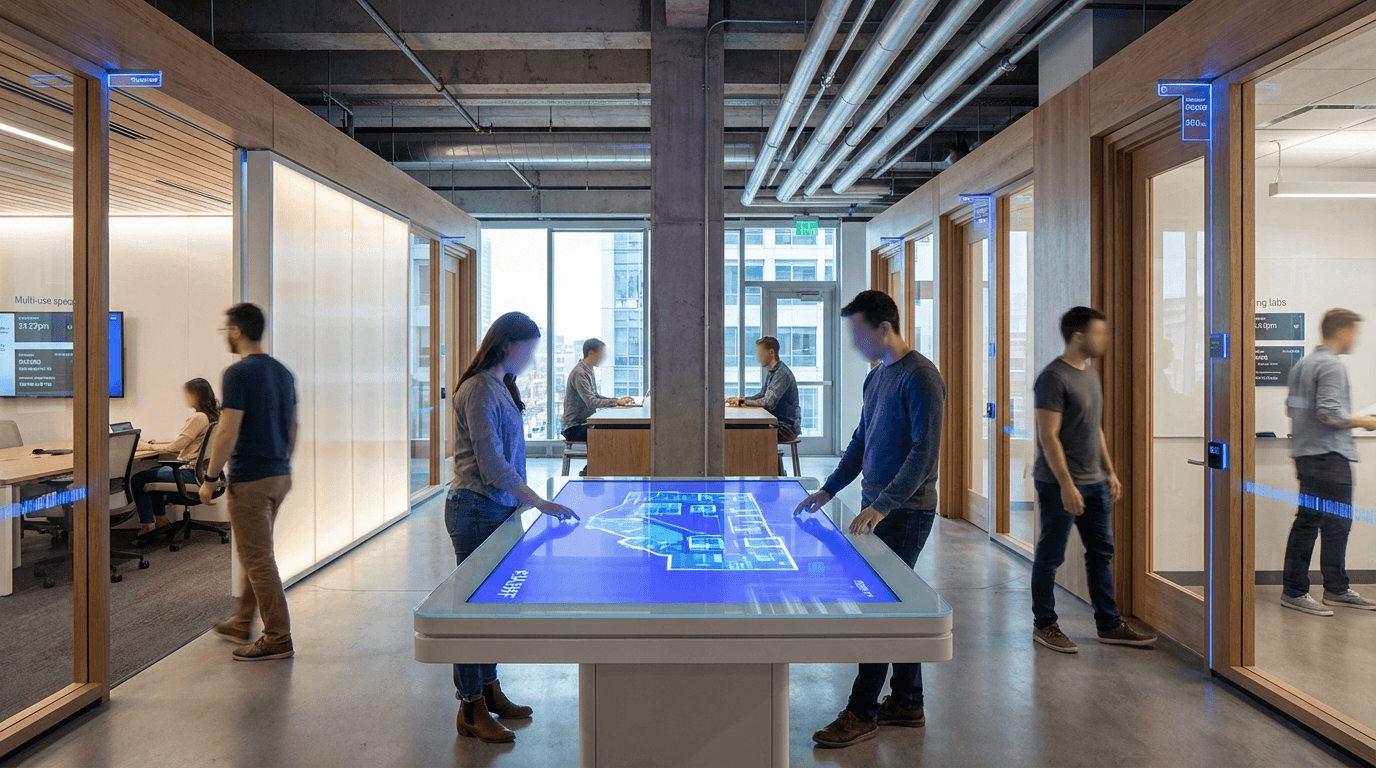
Space-as-a-Service Orchestration
Traditional real estate has long operated on rigid, long-term lease agreements that lock tenants into fixed spaces regardless of their evolving needs and leave property owners with limited flexibility to respond to market fluctuations. This inflexibility becomes particularly problematic in an era of hybrid work, seasonal retail demand, and just-in-time logistics, where space requirements can shift dramatically within weeks or even days. Space-as-a-Service Orchestration addresses this fundamental mismatch by transforming physical real estate into a dynamic, responsive resource that can be allocated, priced, and reconfigured in near real-time. At its technical core, these orchestration platforms integrate multiple data streams—occupancy sensors, booking systems, environmental monitors, and external market signals—into unified control layers that treat diverse property types as fungible inventory. Advanced algorithms continuously analyse utilization patterns, predict demand curves, and optimize space allocation across entire portfolios, whether those portfolios span coworking facilities, retail pop-up locations, or last-mile distribution centers. The systems employ machine learning models to identify underutilized zones, forecast peak periods, and dynamically adjust pricing mechanisms similar to how cloud computing platforms allocate server capacity.
For property owners and operators, this technology fundamentally reimagines the business model of real estate from passive asset holding to active service delivery. Rather than waiting months to fill vacant office floors or retail storefronts, operators can now segment spaces into smaller, more flexible units and match them to short-term demand in real time. This capability proves especially valuable in mixed-use developments where a single building might serve morning coworking tenants, afternoon retail pop-ups, and evening event spaces, with the orchestration engine managing transitions, access control, and billing automatically. The technology also enables new revenue optimization strategies, allowing operators to implement surge pricing during high-demand periods while offering discounts to fill otherwise idle capacity. Early deployments in flexible workspace providers and retail landlords suggest that this approach can increase overall utilization rates by twenty to forty percent while reducing vacancy periods and improving tenant satisfaction through better space-to-need matching.
The emergence of Space-as-a-Service Orchestration reflects broader shifts toward the servicification of physical assets and the expectation of on-demand access across industries. Pilot programs in major metropolitan areas are demonstrating how these platforms can coordinate networks of properties to serve enterprise clients who need temporary expansion capacity, retailers testing new markets without long-term commitments, and logistics operators requiring surge capacity during peak shipping seasons. As sensor technology becomes more affordable and standardized APIs emerge for building management systems, the technical barriers to implementing these orchestration layers continue to fall. Looking forward, industry analysts note that this technology may accelerate the convergence of previously distinct real estate sectors, as the same orchestration platform could theoretically manage office, retail, and warehouse inventory as interchangeable resources within a unified portfolio. This evolution promises not only greater capital efficiency for property owners but also more responsive, adaptable built environments that can better serve the fluid space requirements of modern economic activity.
Related Organizations

Marketplace for on-demand office space and hybrid workplace management.

Management software for coworking spaces and hybrid workplaces.

SaaS platform aggregating global flexible workspace inventory for enterprise booking.

Platform giving employees access to a global network of coworking spaces on demand.

Software and technology specifically designed for the operation of flexible workspaces.

Premium flexible workspace provider partnering with landlords to manage flex inventory.

Parent company of Regus and Spaces, offering a digital platform for global flex space access.

White-label software platform for managing coworking and flexible workspaces.

Platform for private office space on flexible terms, often utilizing underused real estate.

Workplace experience platform for desk booking, room scheduling, and hybrid work orchestration.

Investment and property management software for all types of real estate.
Supporting Evidence
Research this in Signals
Signals turns a topic into a sourced research record you can inspect and rerun. Your first scan is free, and this one starts with Space-as-a-Service Orchestration already loaded, so edit it or scan as is.