








Intelligent Urban Management
This page is a narrower case of it.
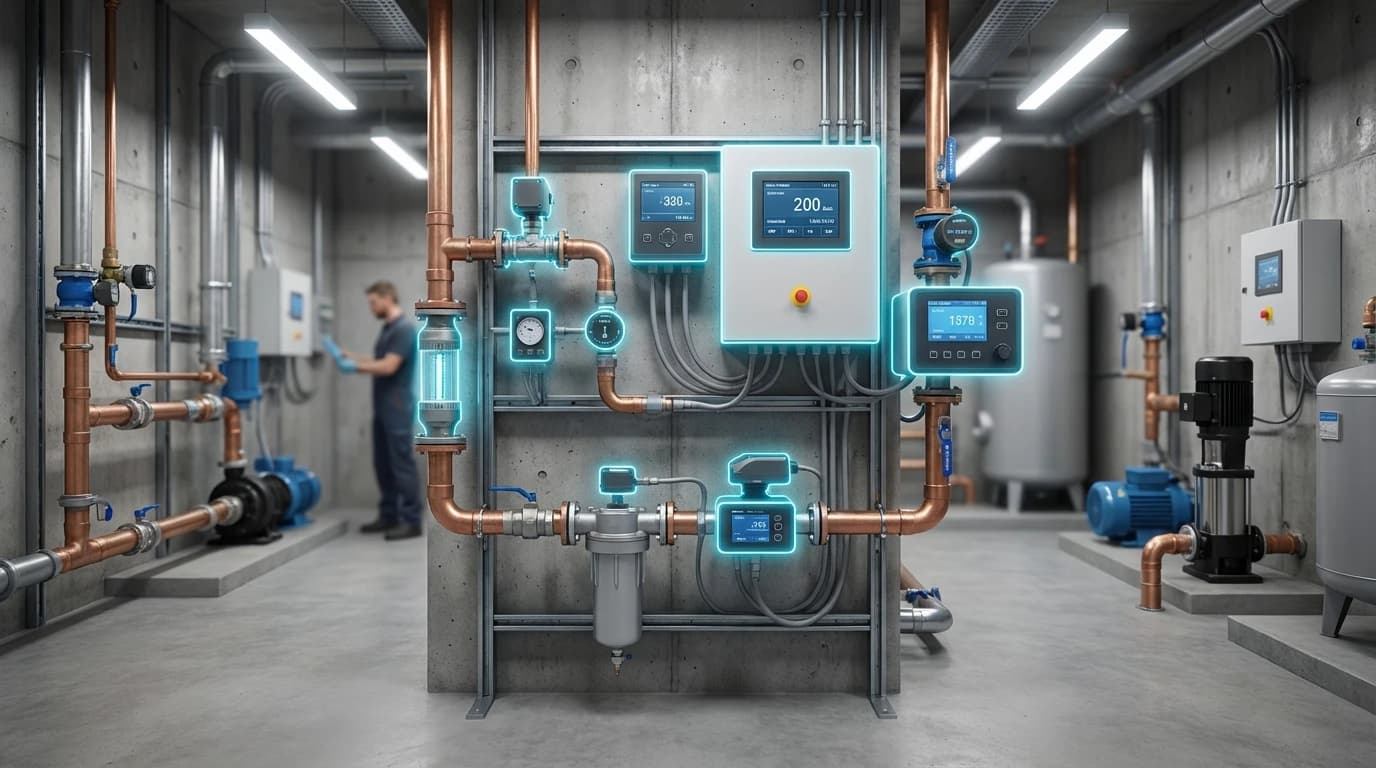
Water scarcity and infrastructure inefficiency represent two of the most pressing challenges facing modern urban development. Traditional water management systems operate largely on reactive principles, addressing problems only after they manifest as visible leaks, excessive bills, or system failures. This approach results in substantial waste—studies suggest that up to 25% of treated water in urban systems is lost to leaks and inefficient usage before reaching its intended purpose. Smart Water Systems emerge as a comprehensive solution to these challenges by transforming passive water infrastructure into an intelligent, responsive network. These systems deploy networks of IoT-enabled sensors throughout a building's plumbing infrastructure, including flow meters, pressure sensors, and water quality monitors that continuously track consumption patterns, detect anomalies, and assess water characteristics in real time. The data streams from these sensors feed into cloud-based analytics platforms that employ machine learning algorithms to establish baseline consumption patterns, identify deviations that may indicate leaks or inefficiencies, and predict maintenance needs before failures occur. Advanced implementations integrate greywater recycling systems that separate and treat wastewater from sinks and showers for reuse in irrigation or toilet flushing, while smart irrigation controllers adjust watering schedules based on soil moisture levels, weather forecasts, and plant requirements.
The implications for the built environment are substantial, particularly as water stress intensifies in many regions due to climate change and population growth. For building operators and property managers, these systems address the dual challenges of rising water costs and regulatory pressure to reduce consumption. Early leak detection capabilities prevent the catastrophic damage and remediation costs associated with undetected pipe failures, which can run into hundreds of thousands of dollars for commercial properties. The granular consumption data these systems provide enables building managers to identify inefficient fixtures, detect unusual usage patterns that might indicate problems, and implement targeted conservation measures. In multi-tenant buildings, individual metering and real-time feedback encourage behavioral changes among occupants, while automated controls ensure that irrigation systems don't operate during rainfall or water outdoor spaces during peak evaporation hours. For developers and architects, smart water systems support green building certifications and demonstrate commitment to environmental stewardship, increasingly important factors in property valuations and tenant attraction.
Commercial deployments of smart water systems have expanded significantly in recent years, moving beyond pilot programs to become standard features in new construction and retrofit projects, particularly in water-stressed regions and high-performance buildings. Hotels and resorts have adopted these platforms to manage the substantial water demands of landscaping, laundry, and guest services while meeting sustainability commitments. Agricultural facilities and vertical farms use precision irrigation controls to optimize crop yields while minimizing water consumption. Municipal buildings and university campuses deploy campus-wide monitoring networks that provide facilities teams with comprehensive visibility into water usage across dozens of buildings. The technology aligns with broader trends toward smart building integration, where water management systems communicate with HVAC, lighting, and energy platforms to create holistic building performance optimization. As climate adaptation becomes increasingly critical to urban resilience planning, smart water systems represent essential infrastructure for cities facing the dual challenges of growing populations and diminishing water resources, offering a pathway toward more sustainable and secure water futures in the built environment.
Provides a central event management solution for water networks, using analytics to detect anomalies like leaks and bursts.
Provides a sensor that straps onto existing water meters to provide real-time usage data to homeowners.
Offers a fully integrated water intelligence platform with hardware and software for real-time water quality monitoring.
Develops smart water monitors that attach to pipes to detect leaks and monitor usage (backed by Belkin/Uponor).
A global leader in water, waste, and energy management with dedicated facilities for e-waste and battery recycling.
Specializes in water intelligence for construction sites and commercial buildings to prevent water damage.
Provides software and kits for managing water quality programs, specifically lead service line replacement.
A manufacturer of flow measurement and control technology, with a strong focus on smart water metering.
Uses AI and edge computing to monitor and repair commercial water meters, recovering lost revenue for utilities.
Published forecasts about this technology, graded against what happened in Hindsight.
Intelligent Urban Management
This page is a narrower case of it.
Signals turns a topic into a sourced research record you can inspect and rerun. Your first scan is free, and this one starts with Smart Water Systems already loaded, so edit it or scan as is.