Digital Heritage Twins
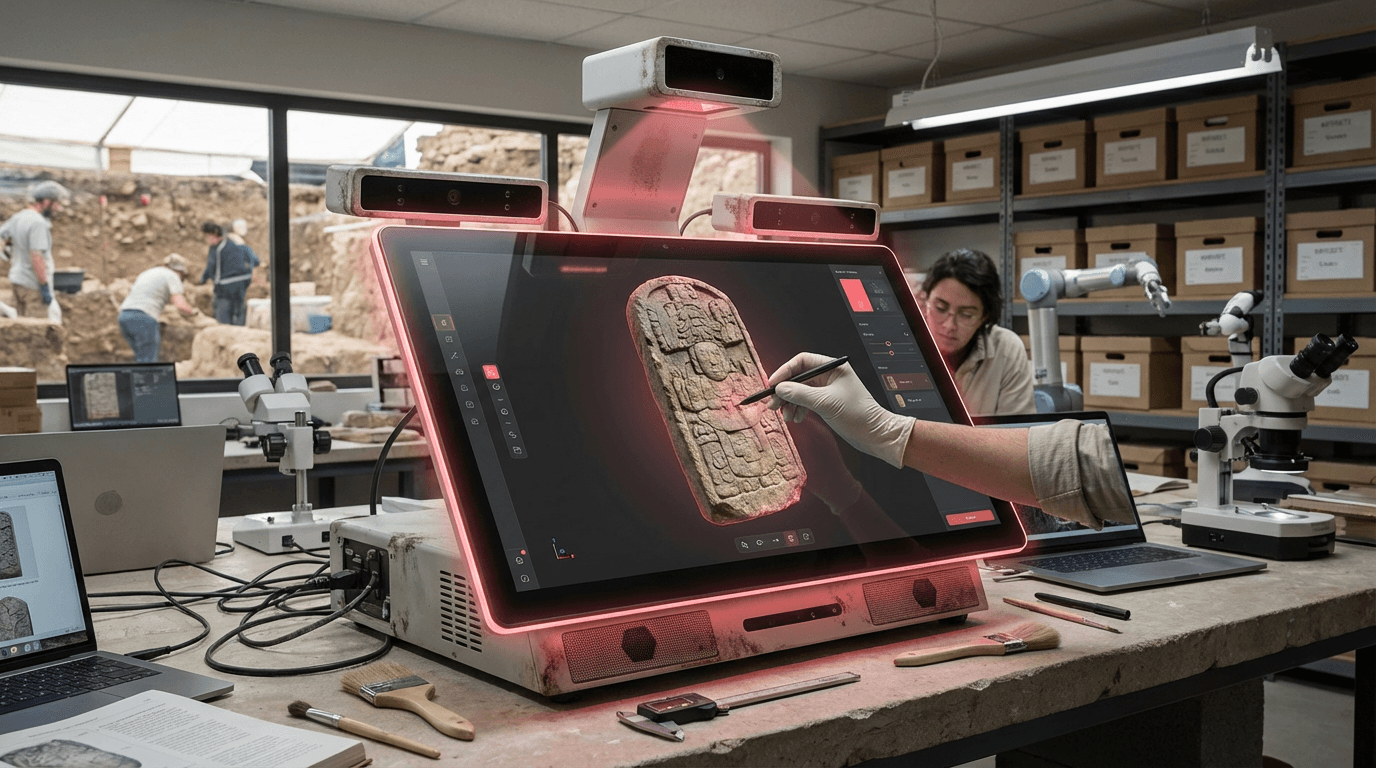
Digital heritage twins represent a convergence of advanced 3D scanning, photogrammetry, and simulation technologies to create highly accurate virtual replicas of cultural heritage sites, artifacts, and documents. Unlike simple digital photographs or basic 3D models, these twins incorporate precise geometric data, material properties, environmental conditions, and even structural behaviors of their physical counterparts. The creation process typically involves laser scanning (LiDAR), high-resolution photogrammetry, spectral imaging, and sometimes X-ray or CT scanning to capture both visible surfaces and internal structures. The resulting digital models are physics-compliant, meaning they can simulate how materials age, respond to environmental stresses, or behave under different conditions. This technical foundation enables not just visualization but genuine scientific analysis and experimentation within the virtual environment.
The preservation and accessibility challenges facing cultural institutions have intensified as climate change, urban development, and mass tourism threaten vulnerable sites and artifacts. Traditional conservation methods often require restricting access to fragile materials, creating tension between preservation and public engagement. Digital heritage twins address this dilemma by enabling unlimited virtual access while the physical originals remain protected. Museums and archives can now share rare manuscripts, delicate textiles, or structurally compromised buildings with researchers worldwide without shipping risks or handling damage. These twins also solve critical research limitations by allowing scholars to examine artifacts from multiple angles, test hypotheses about construction techniques, or simulate restoration approaches before touching the original. For sites facing imminent threats from conflict, natural disasters, or development, digital twins serve as insurance policies, capturing detailed records that could inform future reconstruction efforts.
Early implementations have demonstrated the technology's versatility across heritage contexts. Major cultural institutions have deployed digital twins for everything from ancient temples and archaeological sites to Renaissance paintings and medieval manuscripts. Researchers use these models to study erosion patterns, test conservation materials virtually, and even recreate lost colors or damaged sections based on remaining evidence. Educational institutions leverage heritage twins to provide students with hands-on experiences that would otherwise be impossible, allowing them to virtually handle priceless artifacts or explore restricted archaeological sites. The technology aligns with broader trends toward democratizing cultural access and creating persistent digital records of humanity's material legacy. As scanning technologies become more affordable and processing capabilities improve, digital heritage twins are evolving from specialized research tools into standard practice for cultural preservation, fundamentally transforming how institutions balance conservation responsibilities with their educational missions.
Related Organizations

A nonprofit dedicated to digitally recording, archiving, and sharing the world's most significant cultural heritage sites.

French startup specializing in the digitization of endangered cultural heritage sites using drones and 3D photogrammetry.
Organization dedicated to the digital preservation of art and artifacts, developing custom high-res scanners.

A research center at Carleton University dedicated to the advanced geometric modelling and digital representation of architecture.

Developers of Unreal Engine 5, which features Lumen, a fully dynamic global illumination and reflection system designed for next-gen consoles and PC.

Develops immersive AR and VR experiences for parks, museums, and historic sites to visualize history in situ.

Global leader in 3D measurement, imaging, and realization technology.
Scan the World
United Kingdom · Open Source
A community-built open source museum hosting thousands of 3D printable scans of art and sculpture.
Supporting Evidence
Research this in Signals
Signals turns a topic into a sourced research record you can inspect and rerun. Your first scan is free, and this one starts with Digital Heritage Twins already loaded, so edit it or scan as is.