Arranged Marriage & Family Matchmaking Platforms
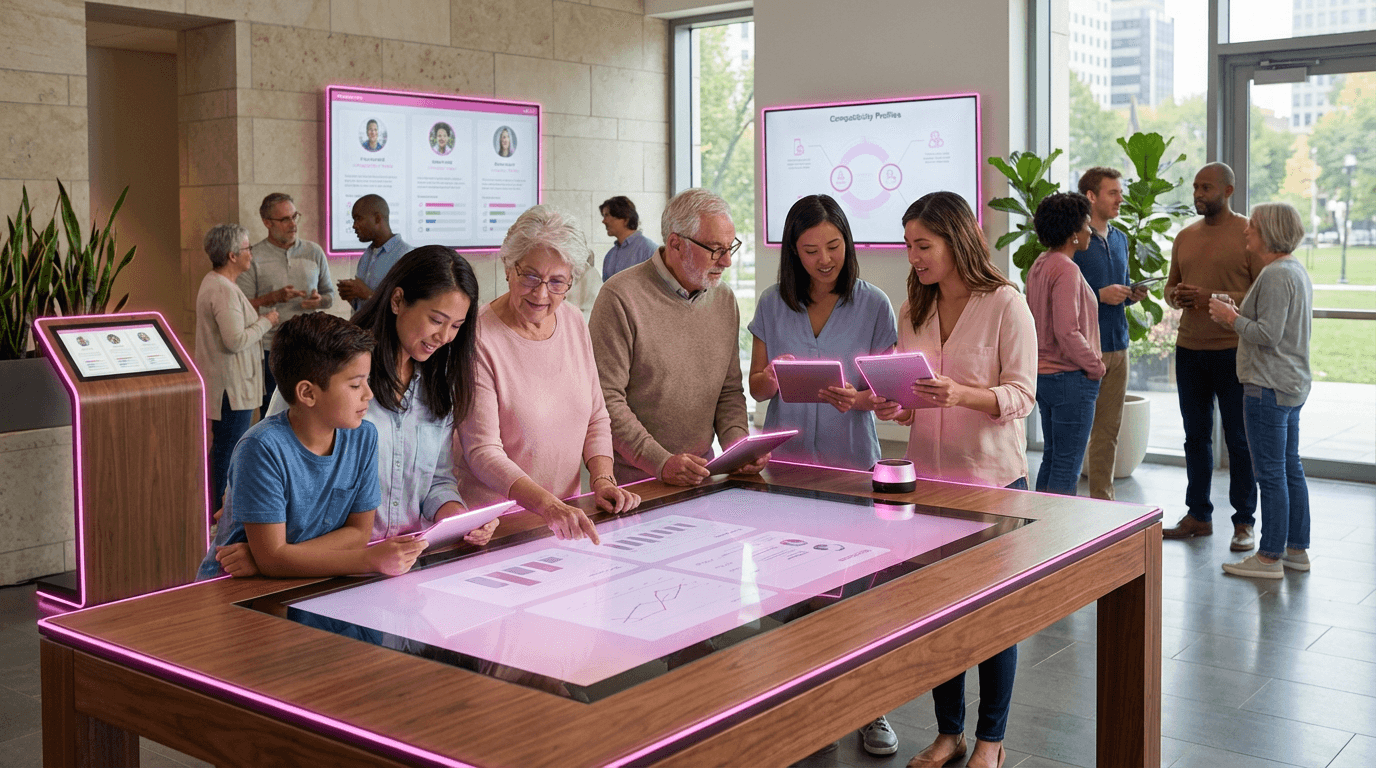
In many cultures worldwide, particularly across South Asia, the Middle East, East Asia, and their diaspora communities, marriage decisions involve not just individual choice but complex family negotiations, cultural compatibility assessments, and multi-generational considerations. Traditional arranged marriage processes have historically relied on extended family networks, community matchmakers, and personal introductions to identify suitable partners based on factors including family background, education, profession, religious observance, and astrological compatibility. Arranged Marriage & Family Matchmaking Platforms digitise and systematise these culturally-specific partner selection processes while preserving their fundamental social structures. These platforms differ fundamentally from Western dating applications by incorporating family profiles alongside individual ones, enabling parents, siblings, and extended relatives to participate directly in the search and vetting process. Technical features include biodata formats that capture culturally-relevant information such as caste, sect, ancestral origin, and family occupation; horoscope matching algorithms based on Vedic astrology, Chinese zodiac systems, or Islamic compatibility principles; financial transparency mechanisms that allow families to discuss dowry, mahr, or economic arrangements openly; and multi-party consent workflows that require approval from designated family members before matches can progress. Many platforms also incorporate video calling facilities for family introductions, document verification systems for educational and professional credentials, and privacy controls that allow families to share information selectively based on match progression stages.
These platforms address several critical challenges in contemporary arranged marriage practices. Geographic dispersion of diaspora communities has made traditional matchmaking networks less effective, as families struggle to identify suitable matches within their cultural and religious parameters across international boundaries. The platforms solve this by creating searchable databases that can filter millions of profiles based on highly specific cultural criteria that would be impossible to accommodate in mainstream dating applications. They also tackle the information asymmetry problem inherent in family-mediated matchmaking, where exaggerated claims about education, income, or family status were difficult to verify through informal networks. By incorporating credential verification, background checks, and community reputation systems, these platforms reduce the risk of misrepresentation that has historically plagued arranged marriage processes. Furthermore, they enable a delicate balance between tradition and modernity, allowing younger generations to have input and veto power while respecting family involvement—a compromise that purely individual-focused dating apps cannot facilitate. This has proven particularly valuable for second and third-generation immigrants seeking to honour cultural traditions while exercising personal agency in partner selection.
Major platforms in this space now serve hundreds of millions of users globally, with particularly strong adoption in India, Pakistan, Bangladesh, the Gulf states, and diaspora communities in North America, the United Kingdom, and Australia. The sector has attracted significant venture capital investment as investors recognise the massive addressable market—arranged marriages remain the predominant form of union formation for billions of people worldwide. Some platforms have begun expanding beyond simple matchmaking to offer wedding planning services, pre-marital counselling that addresses both individual and family dynamics, and post-marriage community features that help newly formed families integrate. The technology is also evolving to incorporate artificial intelligence for more nuanced compatibility matching that considers personality traits alongside traditional criteria, and blockchain-based systems for secure, verifiable credential sharing. As global migration continues and diaspora communities seek to maintain cultural practices while adapting to new contexts, these platforms represent a significant evolution in how technology can serve culturally-specific social institutions rather than imposing Western relationship models universally.
Related Organizations

The parent company of BharatMatrimony and hundreds of community-specific matchmaking portals.

Global matchmaking service focusing on serious relationships and marriage, with heavy family integration features.

Marriage app for Muslims that includes chaperone (Wali) features to include family in chats.

AI-driven matrimony app that focuses on compatibility scores and professional matching, often without immediate parental control.

Matchmaking app specifically for the South Asian diaspora, blending modern dating UI with marriage intent.

South Korea's largest marriage consulting and matchmaking company.

Muslim marriage and friendship app focusing on halal dating and serious commitment.

Parent company of Jeevansathi.com, a major Indian matrimonial portal.

Holding company for Hinge, Match, and Hawaya (Muslim marriage app).
Supporting Evidence
Research this in Signals
Signals turns a topic into a sourced research record you can inspect and rerun. Your first scan is free, and this one starts with Arranged Marriage & Family Matchmaking Platforms already loaded, so edit it or scan as is.