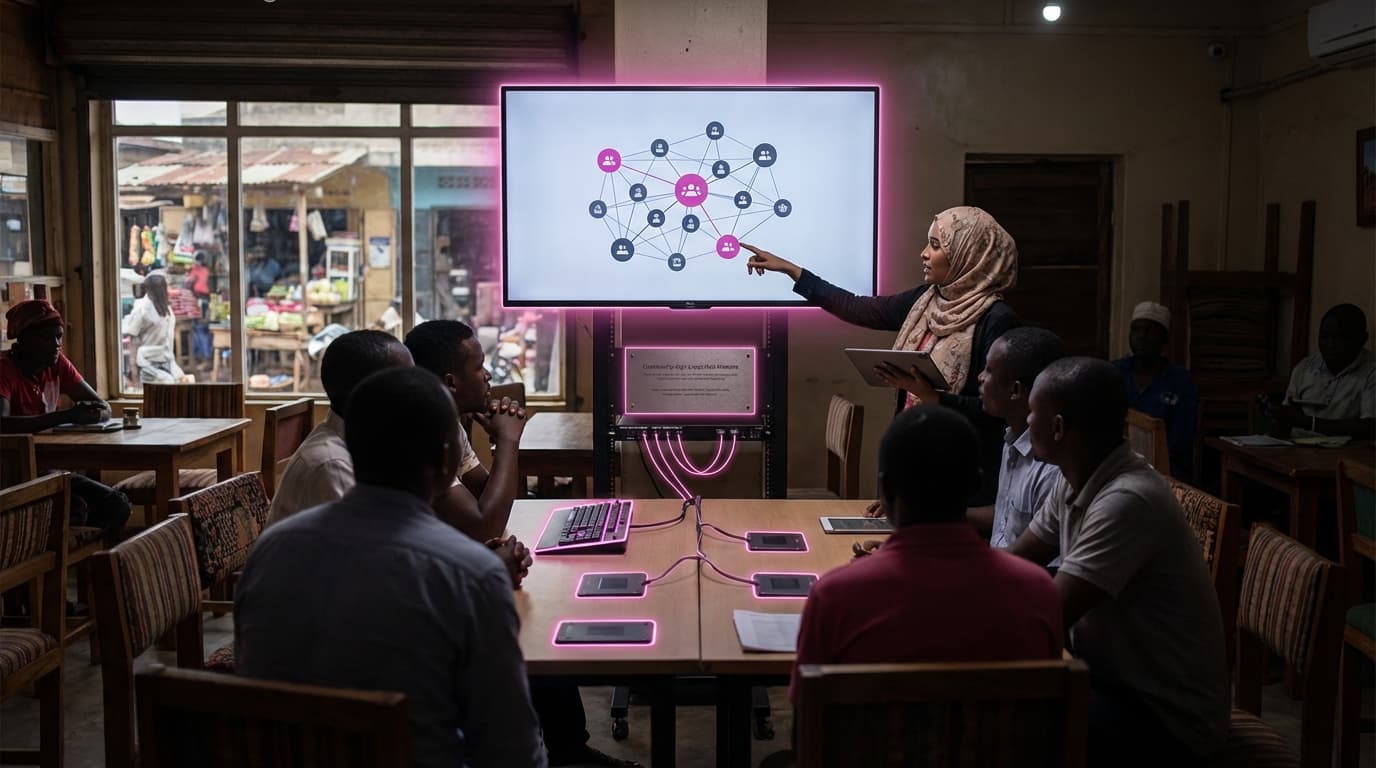
Algorithmic Relationship Colonialism
The dominance of Western-designed relationship platforms has created a subtle but pervasive form of cultural homogenization in how people around the world form and maintain intimate connections. Algorithmic Relationship Colonialism describes the critical examination of how global dating apps, social media platforms, and AI-driven relationship tools systematically embed and export Western assumptions about romance, partnership, and family formation. These platforms typically prioritize individual choice, romantic love as the primary basis for partnership, monogamous coupling, and nuclear family structures—values rooted in Euro-American cultural traditions. The algorithms that power matching systems, content recommendation engines, and relationship advice chatbots are trained predominantly on Western datasets and designed by teams operating within Western cultural frameworks. This creates technical architectures that inherently favor certain relationship models while marginalizing or rendering invisible others, such as arranged marriages, extended family decision-making processes, polyamorous configurations, or community-based partner selection practices that remain central to many cultures across Asia, Africa, the Middle East, and indigenous communities worldwide.
This technological monoculture presents significant challenges for communities seeking to preserve diverse relationship traditions and social structures. When a dating app's core functionality assumes that individuals should browse and select partners independently based on personal attraction, it fundamentally conflicts with cultures where family involvement, community matchmaking, or collective decision-making are valued practices. The problem extends beyond mere user interface design—the underlying data models, success metrics, and engagement optimization strategies often measure relationship "success" through Western lenses, such as exclusive coupling, rapid progression toward cohabitation, or emotional intensity markers that may not align with other cultural values. This creates pressure on users in non-Western contexts to either adapt their relationship practices to fit platform affordances or face marginalization within digital spaces that increasingly mediate social connection. The issue becomes particularly acute as these platforms achieve market dominance, effectively creating monopolistic conditions where alternative relationship formation pathways become less visible and accessible, especially for younger generations who have grown up with these technologies as primary social infrastructure.
Resistance movements and alternative design approaches are emerging from scholars, activists, and technologists who recognize these patterns of cultural erasure. Research in critical algorithm studies and postcolonial technology theory has begun documenting how platform design choices perpetuate power imbalances, while grassroots initiatives work to create relationship technologies that honor cultural plurality. Some regional platforms have emerged that explicitly center non-Western relationship models, incorporating features for family involvement, community vetting processes, or compatibility assessments based on local cultural values rather than Western psychological frameworks. Advocates for pluralistic design argue that truly global relationship technologies must move beyond superficial localization—such as language translation or regional marketing—to fundamentally reimagine their algorithmic logic, data structures, and success metrics to accommodate multiple valid approaches to human connection. This work connects to broader movements around technological sovereignty, data colonialism, and the right to cultural self-determination in digital spaces. As relationship technologies continue to evolve with increasingly sophisticated AI capabilities, the stakes of this resistance grow higher, making the fight for algorithmic pluralism essential to preserving the rich diversity of human social practices in an interconnected world.
Related Organizations

An organization that combines art and research to illuminate the social implications and harms of AI systems.

Data & Society
United States · Research Lab
Research institute focused on the social and cultural issues arising from data-centric technological development.

The parent company of BharatMatrimony and hundreds of community-specific matchmaking portals.

Marriage app for Muslims that includes chaperone (Wali) features to include family in chats.
A policy research institute focusing on the social consequences of artificial intelligence and the concentration of power in the tech industry.

A non-profit dedicated to radically reimagining the digital infrastructure to align with human well-being and overcome toxic polarization.

A multidisciplinary research and teaching department of the University of Oxford.

Global matchmaking service focusing on serious relationships and marriage, with heavy family integration features.

A non-profit organization that advocates for a healthy internet and conducts 'Trustworthy AI' research.
Supporting Evidence
Research this in Signals
Signals turns a topic into a sourced research record you can inspect and rerun. Your first scan is free, and this one starts with Algorithmic Relationship Colonialism already loaded, so edit it or scan as is.