Co-parenting Orchestration Platforms
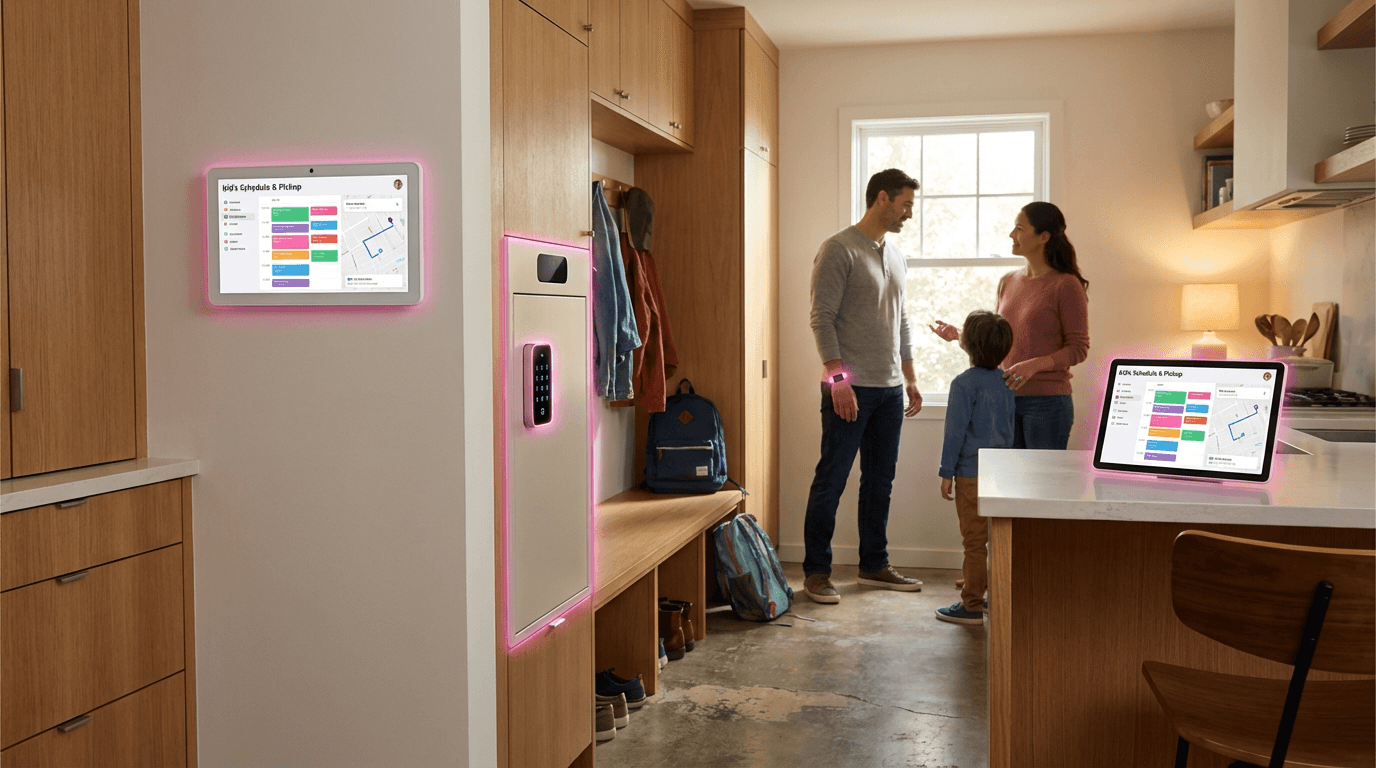
Co-parenting orchestration platforms represent a specialized category of relationship technology designed to address the logistical and emotional complexities that arise when children are raised across multiple households. These digital infrastructures function as centralized coordination hubs, integrating calendar management, financial tracking, communication channels, and documentation systems into unified interfaces accessible to all caregivers. The technical architecture typically includes secure messaging systems that create timestamped records of all exchanges, shared calendars with custody schedules and activity coordination, expense tracking with receipt uploads and automated splitting calculations, and document repositories for medical records, school reports, and legal agreements. Many platforms incorporate conflict-reduction mechanisms such as tone analyzers that flag potentially inflammatory language before messages are sent, cooling-off periods for sensitive communications, and structured templates that guide conversations toward child-focused outcomes rather than interpersonal disputes.
The fundamental challenge these platforms address is the breakdown of informal coordination mechanisms that intact households take for granted. When parents separate, the ambient awareness of a child's daily life—who picked them up from school, whether they completed homework, if they seemed upset about something—fragments across households. This information asymmetry creates practical problems like duplicate purchases, missed appointments, and inconsistent routines, while also generating emotional friction as parents struggle to maintain involvement in their children's lives. Traditional solutions like email chains, text messages, and verbal handoffs prove inadequate for managing the volume and sensitivity of information exchange required, often escalating conflict rather than reducing it. Co-parenting platforms solve this by creating neutral digital spaces that depersonalize logistical coordination, transforming what might otherwise become contentious negotiations into straightforward data exchanges. They enable what family therapists call "parallel parenting" for high-conflict situations, where parents can fulfill their responsibilities with minimal direct interaction, while also supporting collaborative co-parenting models for families capable of more integrated approaches.
Current adoption of these platforms spans both voluntary use by separated families seeking better coordination tools and court-mandated implementation in custody arrangements where communication breakdowns have become problematic. Family law practitioners increasingly recommend or require these systems as part of parenting plans, recognizing their ability to create auditable records that can inform custody modifications while simultaneously reducing the volume of disputes that reach courtrooms. The platforms serve diverse family structures beyond traditional divorce scenarios, including blended families coordinating across step-parent relationships, families with children in foster care maintaining connections with biological parents, and multi-generational households where grandparents share caregiving responsibilities. Research in family systems therapy suggests that by externalizing coordination tasks into neutral technological infrastructure, these platforms help parents shift their identity from former romantic partners in conflict to professional collaborators in child-rearing. As family structures continue to diversify and courts seek alternatives to adversarial custody proceedings, co-parenting orchestration platforms represent a growing intersection between relationship technology and family law, offering tools that acknowledge the permanent nature of parental bonds even as romantic relationships dissolve.
Related Organizations

The leading app for co-parenting communication, scheduling, and expense tracking, often court-mandated.

A co-parenting communication service that maintains an unalterable record of all conversations for legal purposes.
A free co-parenting app offering scheduling, messaging, and payment requests.
A web and mobile platform facilitating organization and communication for separated parents.

App providing on-demand mediation and coaching to help co-parents resolve disputes without court intervention.

Software for creating professional parenting plans and custody schedules.

Automated child support payment platform that manages shared expenses and payments between parents.

Onward
United States · Startup
App specifically designed for tracking shared expenses for co-parents to avoid financial arguments.

Co-parenting app focused on reducing stress through simplified scheduling and messaging.
Supporting Evidence
Research this in Signals
Signals turns a topic into a sourced research record you can inspect and rerun. Your first scan is free, and this one starts with Co-parenting Orchestration Platforms already loaded, so edit it or scan as is.