Neural Lace Interfaces
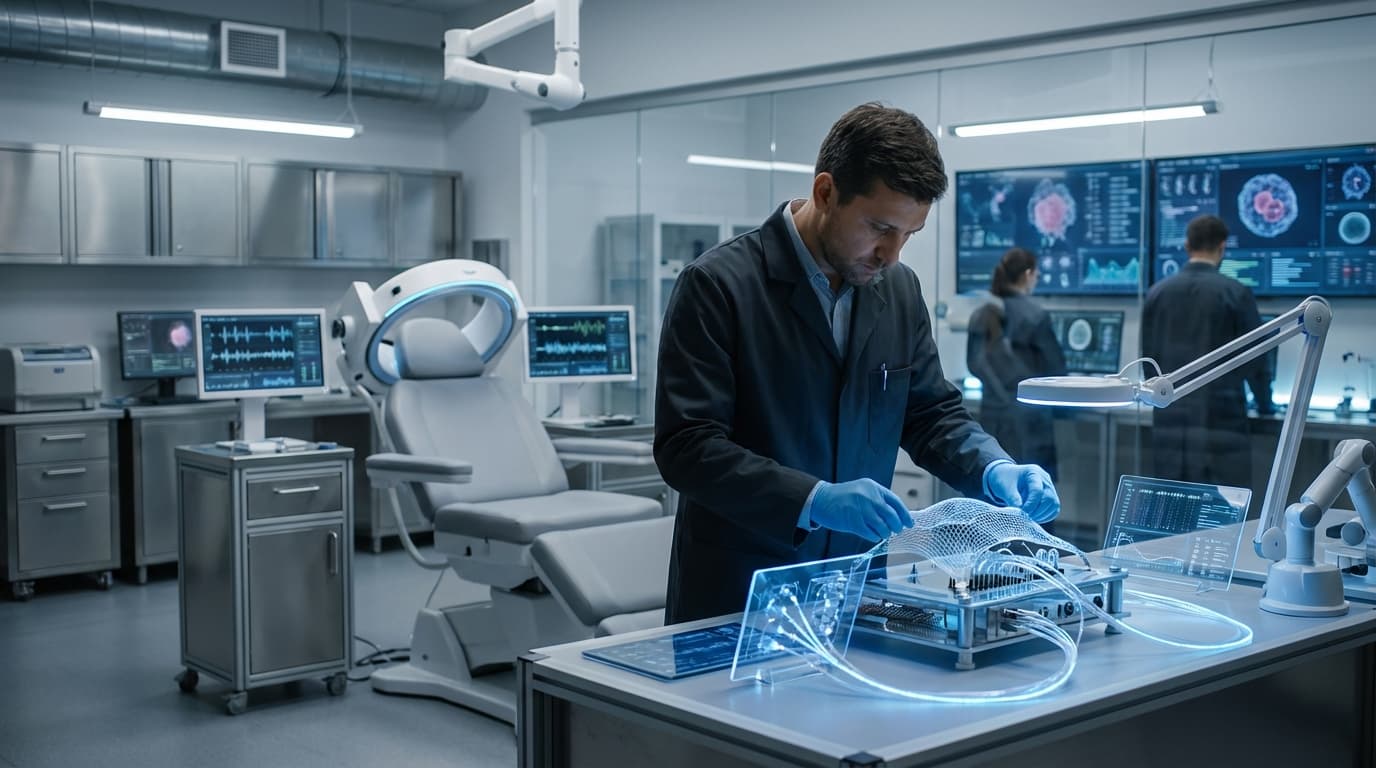
Neural lace interfaces represent a radical departure from traditional brain-computer interface technologies, employing ultra-fine mesh structures that can be injected through minimally invasive procedures and then unfurl within neural tissue. Unlike rigid electrode arrays that require invasive surgery and often trigger immune responses, these flexible polymer-based meshes are designed to integrate seamlessly with the brain's natural architecture. The mesh structure, typically composed of biocompatible materials with embedded electrodes measuring just micrometers in width, mimics the mechanical properties of neural tissue itself. Once deployed, the interface expands to create a three-dimensional network that can monitor and potentially modulate neural activity across large regions of the brain simultaneously. This approach leverages advances in materials science, particularly in developing conductive polymers and nanoscale fabrication techniques, to create interfaces that can maintain stable connections with neurons over extended periods while minimizing tissue damage and inflammatory responses.
The development of neural lace technology addresses a critical challenge in treating age-related cognitive decline and neurodegenerative conditions: the need for long-term, high-resolution monitoring and intervention in brain function without the complications associated with traditional implants. Current treatments for conditions like Alzheimer's disease, Parkinson's disease, and age-related memory loss are limited by our inability to precisely target affected neural circuits or compensate for lost cognitive function. Neural lace interfaces promise to overcome these limitations by providing unprecedented bandwidth for both recording neural signals and delivering therapeutic stimulation. This bidirectional communication capability could enable real-time compensation for failing neural networks, essentially creating a bridge between healthy and compromised brain regions. Beyond therapeutic applications, the technology opens possibilities for cognitive enhancement in aging populations, potentially allowing individuals to maintain mental acuity well beyond current biological limits. The high-density electrode arrays could also accelerate research into the mechanisms of cognitive aging by providing detailed maps of how neural networks change over time.
Early research prototypes have demonstrated the feasibility of injecting mesh structures into animal models, where they successfully integrate with neural tissue and maintain recording capabilities over months. While human trials remain in preliminary stages, the technology's potential applications extend from treating specific neurodegenerative conditions to broader cognitive support systems for an aging global population. The interfaces could eventually enable direct neural communication with external computing systems, allowing individuals experiencing cognitive decline to offload memory storage or processing tasks to artificial systems while maintaining their sense of agency and identity. As the technology matures, it may also facilitate new forms of cognitive therapy, where neural activity patterns associated with healthy brain function could be reinforced or restored. The convergence of neural lace interfaces with advances in artificial intelligence and machine learning suggests a future where the boundary between biological and technological cognition becomes increasingly fluid, offering hope for extending not just lifespan but cognitive healthspan well into advanced age.
Related Organizations

Neurotechnology company developing implantable brain-machine interfaces.

Runs the Semantic Forensics (SemaFor) program to develop technologies for automatically detecting, attributing, and characterizing falsified media.

Developing the Layer 7 Cortical Interface, a thin-film electrode array designed to sit on the brain's surface without penetrating tissue.

Developing graphene-based neural interfaces for high-resolution brain decoding and modulation.

Developed the Stentrode, an endovascular brain interface implanted via the jugular vein without open brain surgery.

Creating the Connexus Direct Data Interface, a high-data-rate BCI for severe motor impairment.

Developing the Science Eye, a visual prosthesis combining gene therapy and a micro-LED display implant.

Translational research center developing implantable neuro-sensing devices for communication restoration in locked-in patients.

Manufacturer of the Utah Array, the gold-standard electrode system used in the majority of human BCI research.
Supporting Evidence
Research this in Signals
Signals turns a topic into a sourced research record you can inspect and rerun. Your first scan is free, and this one starts with Neural Lace Interfaces already loaded, so edit it or scan as is.