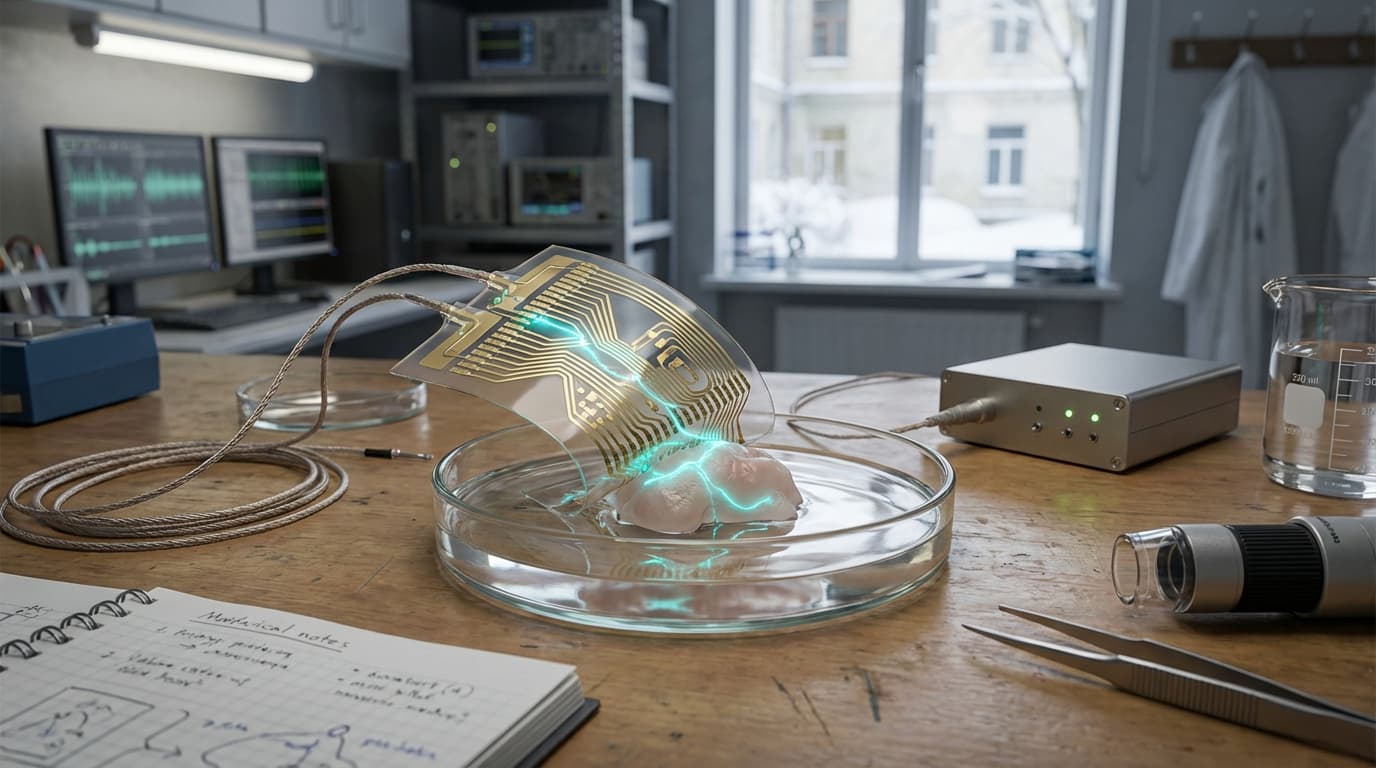
Flexible Electrode Arrays
Flexible electrode arrays are polymer-based neural interfaces that embed conductive meshes or traces into stretchable, biocompatible substrates, allowing implants to flex and move with natural brain motion (which occurs with every heartbeat and movement) while maintaining stable, low-impedance electrical contact with neural tissue over long durations. This flexibility is critical for chronic neuromodulation therapies where rigid electrodes can cause tissue damage or lose contact over time, enabling long-term neural interfaces that remain functional and safe for extended periods by conforming to the brain's natural movements rather than resisting them.
This innovation addresses the challenge of long-term neural interfaces, where rigid electrodes can cause tissue damage, lose contact, or fail due to mechanical stress from brain movement. By using flexible materials, these arrays can maintain better long-term performance. Companies and research institutions are developing these technologies.
The technology is particularly significant for chronic neural interfaces used in therapeutic applications, where long-term stability and safety are essential. As the technology improves, it could enable better long-term BCIs and neuromodulation devices. However, ensuring electrical performance, managing manufacturing complexity, and achieving long-term stability remain challenges. The technology represents an important evolution toward more biocompatible neural interfaces, but requires continued development to achieve the reliability needed for widespread clinical use. Success could enable better long-term neural interfaces, but the technology must prove itself in extended clinical use.
Research this in Signals
Signals turns a topic into a sourced research record you can inspect and rerun. Your first scan is free, and this one starts with Flexible Electrode Arrays already loaded, so edit it or scan as is.