Envisioning is an emerging technology research institute and advisory.

LinkedInInstagramGitHub

2011 — 2026

research
  • Reports
  • Newsletter
  • Methodology
  • Origins
  • Vocab
services
  • Research Sessions
  • Signals Workspace
  • Bespoke Projects
  • Use Cases
  • Signal Scanfree
  • Readinessfree
impact
  • ANBIMAFuture of Brazilian Capital Markets
  • IEEECharting the Energy Transition
  • Horizon 2045Future of Human and Planetary Security
  • WKOTechnology Scanning for Austria
audiences
  • Innovation
  • Strategy
  • Consultants
  • Foresight
  • Associations
  • Governments
resources
  • Pricing
  • Partners
  • How We Work
  • Data Visualization
  • Multi-Model Method
  • FAQ
  • Security & Privacy
about
  • Manifesto
  • Community
  • Events
  • Support
  • Contact
  • Login
ResearchServicesPricingPartnersAbout
  1. Home
  2. Research
  3. Cities
  4. Self-driving Bus

Self-driving Bus

Autonomous public transit vehicles using AI and sensors to navigate urban routes without drivers
Back to CitiesView interactive version

Urban areas worldwide grapple with the challenges of traffic congestion and air pollution. Traditional public transport systems, though essential, often struggle with inefficiencies that exacerbate these issues. Enter the self-driving bus, a technological solution set to revolutionise urban mobility by addressing these persistent problems.

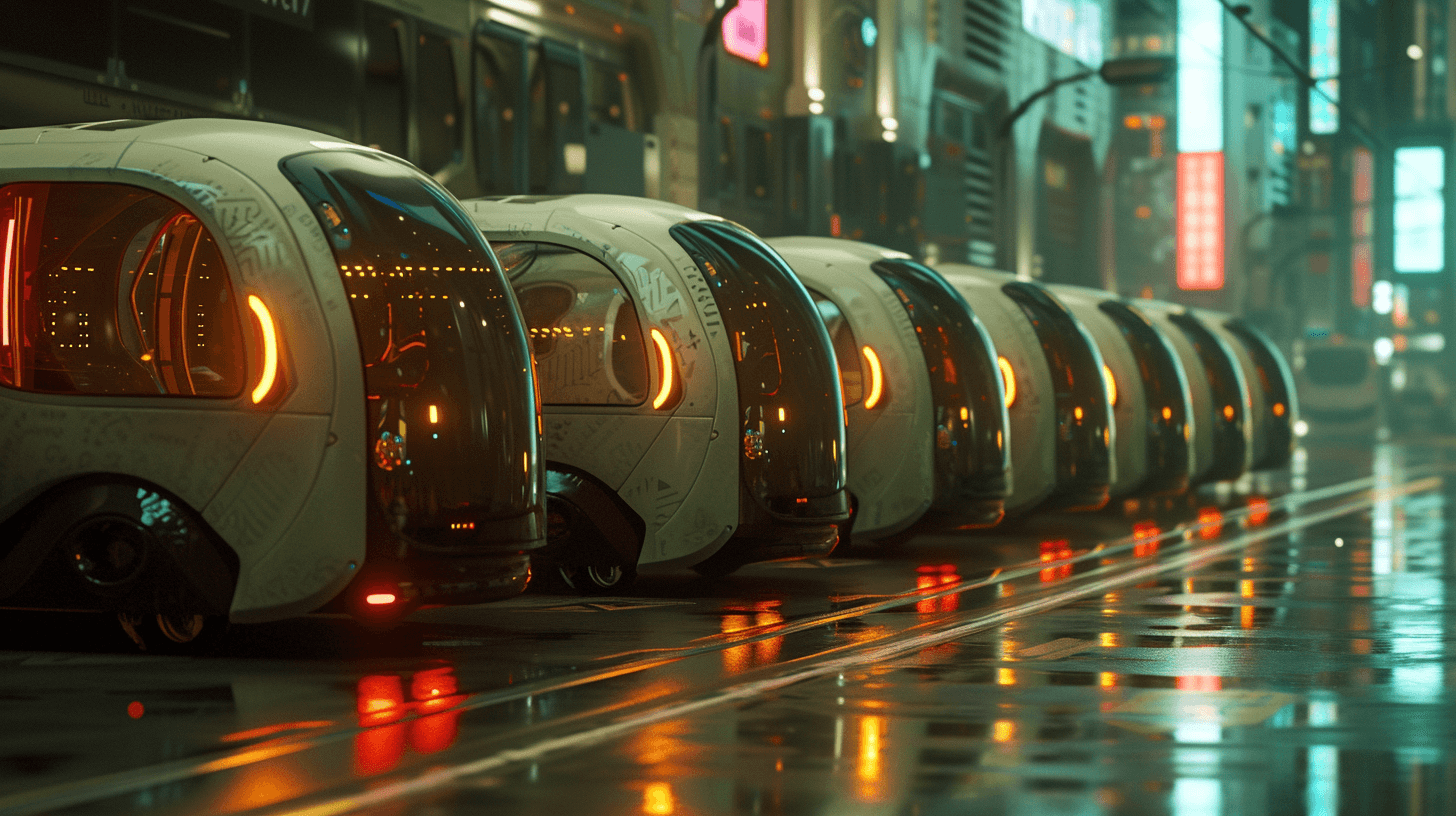
Self-driving buses, also known as autonomous shuttles, leverage advanced artificial intelligence, sensor technologies, and machine learning to operate without human intervention. These vehicles are equipped with a combination of LiDAR, radar, cameras, and GPS to navigate complex urban environments safely. By continuously analysing and interpreting data from their surroundings, self-driving buses can make real-time decisions, such as adjusting speed, avoiding obstacles, and adhering to traffic signals, thereby ensuring a smooth and efficient ride for passengers.

The primary function of a self-driving bus is to provide a reliable, eco-friendly, and cost-effective alternative to conventional buses. Autonomous buses can follow optimised routes to minimise travel time and energy consumption. Moreover, they operate with electric powertrains, significantly reducing greenhouse gas emissions and noise pollution. This shift not only enhances air quality but also contributes to quieter, more liveable urban spaces. Additionally, these buses can run with higher frequency and flexibility, adapting to real-time passenger demand and reducing waiting times.

As urban populations continue to swell, the pressure on existing transport infrastructures will only intensify. Autonomous buses offer a scalable solution that can be integrated into current public transport systems to enhance capacity and efficiency. By reducing the reliance on private vehicles, they help alleviate traffic congestion and promote sustainable urban growth. Furthermore, self-driving buses can improve accessibility, providing reliable transport options for underserved areas and individuals with mobility challenges.

Technology Readiness Level
7/9Prototype Demonstration
Diffusion of Innovation
2/5Early Adopters
Technology Life Cycle
1/4Emergence
Category
Hardware

Related Organizations

EasyMile logo
EasyMile

France · Company

100%

A high-tech company specializing in driverless technology and smart mobility solutions, famous for the EZ10 autonomous shuttle.

Developer
Beep logo

Beep

United States · Startup

95%

A mobility-as-a-service provider delivering autonomous mobility networks, operating shuttles in planned communities and cities.

Deployer
Holon

Germany · Company

95%

A brand by Benteler Group focused on the 'Mover', a fully electric, autonomous mover for inclusive public transport.

Developer
May Mobility logo
May Mobility

United States · Startup

95%

A leader in autonomous vehicle technology, deploying fleets of self-driving shuttles for public transit in various US cities.

Developer
WeRide logo
WeRide

China · Startup

95%

A leading L4 autonomous driving technology company that has developed and deployed the WeRide Robobus.

Developer
ADASTEC logo
ADASTEC

United States · Startup

90%

A software company delivering an SAE Level-4 automated driving software platform for commercial vehicles and buses.

Developer
Ohmio logo
Ohmio

New Zealand · Company

90%

A New Zealand-based manufacturer of autonomous electric shuttles designed for first and last-mile transport.

Developer
Yutong Bus

China · Company

90%

One of the world's largest bus manufacturers, actively developing and deploying autonomous buses (WitGo).

Developer
ZF Group logo
ZF Group

Germany · Company

85%

A global technology company supplying systems for passenger cars and commercial vehicles, including autonomous shuttle systems (via 2getthere acquisition).

Developer

Supporting Evidence

News

WeRide Wins Permit for Autonomous Robotaxi Service in Shanghai

GlobeNewswire · Jul 26, 2025

WeRide obtained a permit to operate Level 4 autonomous shuttle services in Shanghai's Pudong New Area, connecting transport hubs like the Shanghai World Expo Center and Pudong International Airport.

Support 95%Confidence 95%

News

Autonomous Buses Enter Road Test in Chengdu

SASAC · Aug 20, 2025

Chengdu Public Transport Group and CRRC Electric Vehicle launched an autonomous bus demonstration project featuring four L4 6-meter micro-circulation buses equipped with LiDAR and vision technology.

Support 90%Confidence 92%

Article

Autonomous Vehicles Investment Landscape 2026: Who Wins the Self-Driving Race?

DataToBrief · Feb 25, 2026

A 2026 market analysis discusses the maturity of autonomous vehicle sectors, noting the progress of Waymo and the specific operational economics of autonomous transport.

Support 80%Confidence 88%

Paper

Impact of autonomous bus on efficiency of non-lane-based traffic

EPJ Web of Conferences · Sep 9, 2025

A microsimulation study examining the impact of autonomous buses on traffic flow and road capacity in non-lane-based traffic environments, finding potential for efficiency improvements.

Support 80%Confidence 90%

Article

Urban Mobility: Exciting Future of Autonomous Public Transit Systems

blog.emb.global

Autonomous public transit systems offer efficient, sustainable, and convenient transportation solutions for growing urban centers. Advanced sensors and AI in autonomous vehicles improve safety, fuel efficiency, and traffic management. Smart city integration with data-driven technologies optimizes traffic flow and enhances the overall passenger experience. Eco-friendly infrastructure and sustainable energy sources are crucial for reducing the carbon footprint of urban transit systems. Smart infrastructure and eco-friendly solutions are crucial for the success of these systems in creating sustainable urban mobility. As cities invest in autonomous transit and address regulatory and environmental challenges, a brighter urban future unfolds.

Support 50%Confidence 80%

Article

A smart bus trundled into London and we went along for a ride

cnet.com

We rode Citymapper's smart bus around the British capital and a world of possibilities opened up before us.

Support 50%Confidence 80%

Article

Shenzhen bus operator joins Baidu, Google in autonomous driving race with public trial

scmp.com

China, the world’s biggest vehicle market, has targeted up to 20 per cent of its cars on the road to be highly autonomous by 2025, and for 10 per cent of cars to be fully self-driving by 2030

Support 50%Confidence 80%

Article

Variation Based Online Travel Time Prediction Using Clustered Neural Networks

ieeexplore.ieee.org

This paper proposes a variation-based online travel time prediction approach using clustered Neural Networks with traffic vectors extracted from raw detector data as the input variables. Different from previous studies, the proposed approach decomposes the corridor travel time into two parts: 1) the base term, which is predicted by a fuzzy membership-value-weighted average of the clustered historical data to reflect the primary traffic pattern in the corridor; and 2) the variation term, which is predicted through the calibrated cluster-based artificial neural network model to capture the actual traffic fluctuation. To evaluate the effectiveness of the proposed approach, this paper has conducted intensive numerical experiments with simulated data from the microscopic simulator CORSIM. Experimental results under various traffic volume levels have revealed the potentials for the proposed method to be applied in online corridor travel time prediction.

Support 50%Confidence 80%

Article

Mercedes-Benz unveils its self-driving Future Bus

dezeen.com

Mercedes-Benz has revealed its design for an autonomous bus, which recently made its first self-driven journey along a 20-kilometre-long route in the Netherlands (+ movie).

Support 50%Confidence 80%

Article

Introducing autonomous buses and taxis: Quantifying the potential benefits in Japanese transportation systems

sciencedirect.com

The introduction of autonomous buses and taxis is expected to generate such benefits as cost reductions—and particularly for regional bus operations with a substantial deficit—as well as enhancing public transit accessibility through decreased trip costs. The purpose of this paper is to provide an overview of the impacts of introducing autonomous buses and taxis on metropolitan transportation systems by quantifying the costs of travel in Japan, and to discuss the potential benefits. First, this study sets the assumptions on autonomous driving technology, including its impacts on vehicle costs, the decreased labor costs for driving and safety monitoring in buses and taxis, and decreased driving stress for private car users. Next, operating costs are computed for autonomous buses and taxis in Japanese metropolitan areas. The costs of travel, or the sum of monetary and time costs, are then computed with and without vehicle automation for different trip types in high- and low-density metropolitan areas. The results highlight that the costs of public transit trips that currently have a smaller share of time costs in overall trip costs could decrease considerably due to vehicle automation. For instance, costs for 10–20-km trip lengths could decrease by 44–61% for taxi trips and 13–37% for rail/bus trips with taxi access, followed by a decrease of 6–11% for bus trips and 1–11% for rail trips with bus access. Further, private car trip costs could decrease by 11–16%. More substantial cost reductions in rail/bus trips with taxi access could occur in the case of smaller trip distances and/or in residential areas far from stations; larger reductions in rail trips with bus access could occur in low-density metropolitan areas. Finally, it is expected that vehicle automation in more fixed modes of public road transit could primarily benefit the transit industry and government, with such effects as improved labor productivity and reduced subsidies, while vehicle automation in more flexible modes could benefit metropolitan residents as well as the transit industry. This further suggests that a deficit of regional bus operations could be recovered during the transition to the full performance of autonomous buses.

Support 50%Confidence 80%

Article

Sorry, bus drivers: Self-driving mass transit is on the way

mashable.com

One state is launching a brand-new project to test autonomous buses.

Support 50%Confidence 80%

Article

Applications of Artificial Intelligence in Transport: An Overview

mdpi.com

The rapid pace of developments in Artificial Intelligence (AI) is providing unprecedented opportunities to enhance the performance of different industries and businesses, including the transport sector. The innovations introduced by AI include highly advanced computational methods that mimic the way the human brain works. The application of AI in the transport field is aimed at overcoming the challenges of an increasing travel demand, CO2 emissions, safety concerns, and environmental degradation. In light of the availability of a huge amount of quantitative and qualitative data and AI in this digital age, addressing these concerns in a more efficient and effective fashion has become more plausible. Examples of AI methods that are finding their way to the transport field include Artificial Neural Networks (ANN), Genetic algorithms (GA), Simulated Annealing (SA), Artificial Immune system (AIS), Ant Colony Optimiser (ACO) and Bee Colony Optimization (BCO) and Fuzzy Logic Model (FLM) The successful application of AI requires a good understanding of the relationships between AI and data on one hand, and transportation system characteristics and variables on the other hand. Moreover, it is promising for transport authorities to determine the way to use these technologies to create a rapid improvement in relieving congestion, making travel time more reliable to their customers and improve the economics and productivity of their vital assets. This paper provides an overview of the AI techniques applied worldwide to address transportation problems mainly in traffic management, traffic safety, public transportation, and urban mobility. The overview concludes by addressing the challenges and limitations of AI applications in transport.

Support 50%Confidence 80%

Article

Self-Driving Cars Are Set to Revolutionize Urban Mobility

bcg.com

Despite COVID-19, Cities Will Embrace Autonomous Vehicles—But This Emerging Mobility Option Will Benefit Some Metropolises More Than Others, a New Report from BCG and the University of St. Gallen Finds

Support 50%Confidence 80%

Article

Self-driving bus starts first route in Germany

dw.com

German railway company Deutsche Bahn has introduced an autonomous bus to drive passengers along a pre-programmed route in Bavaria. In case of an emergency, a human driver can take control with a joystick.

Support 50%Confidence 80%

Article

Top 10 Applications of Autonomous Vehicles in 2023 & 2024

startus-insights.com

How are industries using autonomous vehicles to automate operations and increase productiivty? Explore our in-depth research on the top applications of autonomous vehicles across 10 industries based on our analysis of 800+ companies. These use cases for autonomous vehicle include automated last-mile deliveries, robotaxis & more!

Support 50%Confidence 80%

Connections

Software
Software
Autonomous Sustainability Monitoring

Real-time sensor networks and AI tracking air quality, energy use, and waste across cities

Technology Readiness Level
6/9
Diffusion of Innovation
2/5
Technology Life Cycle
1/4
Applications
Applications
Mobility as a Service

Unified platform integrating transit, ride-sharing, and bike rentals into one app for seamless urban travel

Technology Readiness Level
8/9
Diffusion of Innovation
3/5
Technology Life Cycle
2/4
Applications
Applications
Micromobility

Small electric vehicles like e-scooters and e-bikes for short urban trips and last-mile delivery

Technology Readiness Level
9/9
Diffusion of Innovation
3/5
Technology Life Cycle
3/4
Hardware
Hardware
Aerial Urban Gondola

Cable-suspended transit system that moves passengers above street-level traffic

Technology Readiness Level
9/9
Diffusion of Innovation
2/5
Technology Life Cycle
2/4
Hardware
Hardware
Integrated Autonomous Energy Grid

AI-managed grid combining renewable sources with existing infrastructure for real-time urban energy optimization

Technology Readiness Level
7/9
Diffusion of Innovation
3/5
Technology Life Cycle
2/4
Applications
Applications
Pedestrian Zone

Urban areas where motor vehicle traffic is restricted to prioritize walking, cycling, and public life

Technology Readiness Level
9/9
Diffusion of Innovation
4/5
Technology Life Cycle
3/4

Book a research session

Bring this signal into a focused decision sprint with analyst-led framing and synthesis.
Research Sessions