Envisioning is an emerging technology research institute and advisory.

LinkedInInstagramGitHub

2011 — 2026

research
  • Reports
  • Newsletter
  • Methodology
  • Origins
  • Vocab
services
  • Research Sessions
  • Signals Workspace
  • Bespoke Projects
  • Use Cases
  • Signal Scanfree
  • Readinessfree
impact
  • ANBIMAFuture of Brazilian Capital Markets
  • IEEECharting the Energy Transition
  • Horizon 2045Future of Human and Planetary Security
  • WKOTechnology Scanning for Austria
audiences
  • Innovation
  • Strategy
  • Consultants
  • Foresight
  • Associations
  • Governments
resources
  • Pricing
  • Partners
  • How We Work
  • Data Visualization
  • Multi-Model Method
  • FAQ
  • Security & Privacy
about
  • Manifesto
  • Community
  • Events
  • Support
  • Contact
  • Login
ResearchServicesPricingPartnersAbout
  1. Home
  2. Research
  3. Cities
  4. Pedestrian Zone

Pedestrian Zone

Urban areas where motor vehicle traffic is restricted to prioritize walking, cycling, and public life
Back to CitiesView interactive version

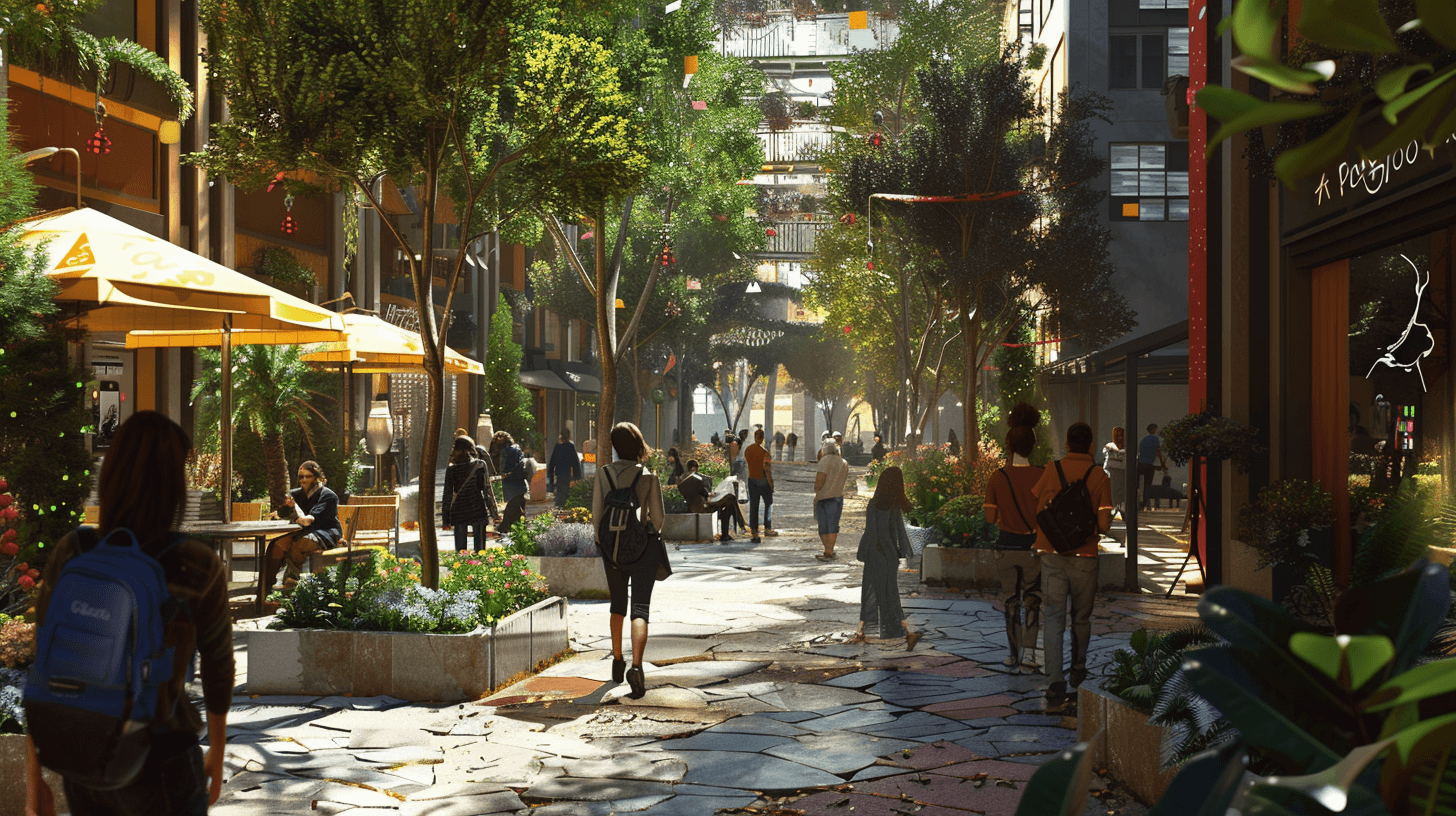
Urban congestion, pollution, and the decline of public spaces are significant challenges faced by modern cities. Pedestrian zones, also known as car-free zones or pedestrianised areas, offer a solution to these problems. By restricting or eliminating motor vehicle traffic in designated areas, pedestrian zones create safer, more vibrant, and environmentally friendly urban spaces.

A pedestrian zone is typically an area of a city where motorised traffic is prohibited or severely restricted, allowing only pedestrians, cyclists, and sometimes public transportation. These zones often encompass key commercial districts, historical areas, or other high-footfall regions. They are implemented through various methods such as street closures, the installation of physical barriers, and the redesign of urban landscapes to prioritise foot traffic. Advanced technologies like automated bollards and smart traffic management systems can dynamically control access, ensuring that only authorised vehicles, such as emergency services, can enter when necessary.

The primary function of pedestrian zones is to enhance urban liveability by reducing traffic congestion and improving air quality. By limiting vehicle access, these zones reduce noise and air pollution, creating healthier environments for residents and visitors. Additionally, pedestrian zones encourage walking and cycling, contributing to public health and reducing the reliance on fossil fuels. They also stimulate local economies by attracting shoppers and tourists, fostering a sense of community and enhancing the aesthetic appeal of city centres.

As urban populations continue to grow, the demand for sustainable and liveable urban environments will only increase. Pedestrian zones address several critical issues simultaneously: they mitigate the adverse effects of traffic congestion, promote environmental sustainability, and enhance public health and safety. Moreover, by prioritising people over vehicles, these zones help reclaim public spaces for social interaction, cultural activities, and leisure, ultimately fostering more connected and resilient communities.

Technology Readiness Level
9/9Fully Operative
Diffusion of Innovation
4/5Late Majority
Technology Life Cycle
3/4Maturity
Category
Applications

Related Organizations

City of Pontevedra

Spain · Government Agency

95%

A Spanish city that has become an international model by pedestrianizing nearly its entire city center.

Deployer
Gehl logo
Gehl

Denmark · Company

95%

Urban design and research consultancy focusing on making cities for people, famous for pedestrianizing Times Square and Copenhagen.

Developer
FAAC Technologies

Italy · Company

90%

A global leader in access automation, specifically manufacturing automated bollards and vehicle barriers used to enforce pedestrian zones.

Developer

C40 Cities

United States · Consortium

85%

A network of the world's leading mayors united in action to confront the climate crisis, actively promoting and providing frameworks for Low Emission Zones.

Standards Body
Institute for Transportation and Development Policy (ITDP) logo
Institute for Transportation and Development Policy (ITDP)

United States · Nonprofit

85%

A global nonprofit that provides technical expertise to cities to design and implement sustainable and equitable transport systems.

Researcher
Project for Public Spaces

United States · Nonprofit

85%

A central hub of the global placemaking movement, helping communities transform public spaces into vital community places.

Researcher
Living Streets

United Kingdom · Nonprofit

80%

The UK charity for everyday walking, responsible for the creation of the first zebra crossings and advocating for pedestrian zones.

Researcher
Macq

Belgium · Company

80%

Provides smart mobility solutions including ANPR cameras for enforcing Low Emission Zones and pedestrian areas.

Developer
Swarco logo
Swarco

Austria · Company

80%

A large traffic technology group providing intelligent traffic lights, LED signage, and detection systems for safer pedestrian crossings.

Developer
Urbis Schréder

Belgium · Company

75%

A lighting company that develops smart poles (Shuffle) integrating cameras, Wi-Fi, and lighting for public pedestrian spaces.

Developer

Supporting Evidence

Article

From Resistance to Resilience: Strøget and the Long-Term Payoff of Pedestrianisation

Cities Forum · Aug 12, 2025

Analyzes the historic transformation of Copenhagen's Strøget, illustrating how initial resistance to car-free zones can evolve into long-term public support and economic resilience.

Support 80%Confidence 85%

Article

What Happens to Business When You Close a Street to Cars

Max Mautner · Feb 23, 2026

Discusses the positive business impacts of pedestrianization, citing revenue increases in Times Square (NYC) and Montreal following street closures to cars.

Support 75%Confidence 80%

Article

Pedestrian Zone

sciencedirect.com

Pedestrian zones (also known as car-free zones) are areas of a city or town reserved for pedestrians only and in which most or all automobile traffic may be prohibited.

Support 50%Confidence 80%

Article

Pedestrian Zones Are Here to Stay

nlc.org

Pedestrian zones offer a unique policy option for municipalities to explore that not only fosters community wellbeing but can also increase economic development, improve road safety and enhance mobility options for all residents. NLC’s guide on Pedestrian Zones defines these zones as “area[s] that are permanently, periodically or occasionally closed to vehicular traffic.” Municipalities can make these zones permanent features, recurring (such as Saturday mornings for farmers markets), or more sporadic for annual or seasonal events.

Support 50%Confidence 80%

Article

Investing in pedestrian areas multiplies local income

bbva.ch

Pedestrianizing or 'pacifying' streets increases local revenues for municipalities and businesses, reduces pollution, protects health and improves children's autonomy. Towns around the world are opting for more humane cities.

Support 50%Confidence 80%

Article

City pedestrian zones and their effect on business

citywayfinding.com

Brussels city mayor Yvan Mayeur was refused service at a restaurant as a protest against the pedestrian zone he has been implementing, one of the biggest in Eurpoe. The chef was protesting against the effect of a car ban on the local economy, along with scores of other shop keepers, some of whom tried to sue the city for loss of business.

Support 50%Confidence 80%

Article

Pedestrian Zone - ScienceDirect

sciencedirect.com

Support 50%Confidence 80%

Article

Pedestrian Zones as an Integral Part of Territorial Development

researchgate.net

The analysis of the pedestrian zones issue in this paper uses the publicly available information taken especially from the field of selected traffic in the Czech Republic and the Federal Republic of Germany where, with respect to the public transport development, the latter is at the top as far as quality and the level of public transport are concerned (except for the Swiss Confederation). The paper reflects and describes exclusively comparable examples of traffic, such as the traffic in České Budějovice provided upon the bus concept. Providing of transport operation by means of other types of transport is not considered, although especially the tram transport is very common in the traffic in pedestrian zones.

Support 50%Confidence 80%

Article

Paris School Streets Project

x.com

"60% of the public space in Paris is roads. But only 10% of journeys are made by car. So, we're addressing that imbalance by making the streets more inclusive—for the elderly, children, women, and people with disabilities." - Paris School Streets Project Head Priscilla Benedetti

Support 50%Confidence 80%

Connections

Ethics & Security
Ethics & Security
Ultra Low Emission Zone

Designated urban areas enforcing strict vehicle emission standards through daily charges

Technology Readiness Level
9/9
Diffusion of Innovation
3/5
Technology Life Cycle
2/4
Hardware
Hardware
Cycling Infrastructure

Dedicated bike lanes, parking, and storage systems that reduce traffic and promote sustainable transport

Technology Readiness Level
9/9
Diffusion of Innovation
3/5
Technology Life Cycle
3/4
Hardware
Hardware
Self-driving Bus

Autonomous public transit vehicles using AI and sensors to navigate urban routes without drivers

Technology Readiness Level
7/9
Diffusion of Innovation
2/5
Technology Life Cycle
1/4

Book a research session

Bring this signal into a focused decision sprint with analyst-led framing and synthesis.
Research Sessions