Neurofeedback Headbands for Learning
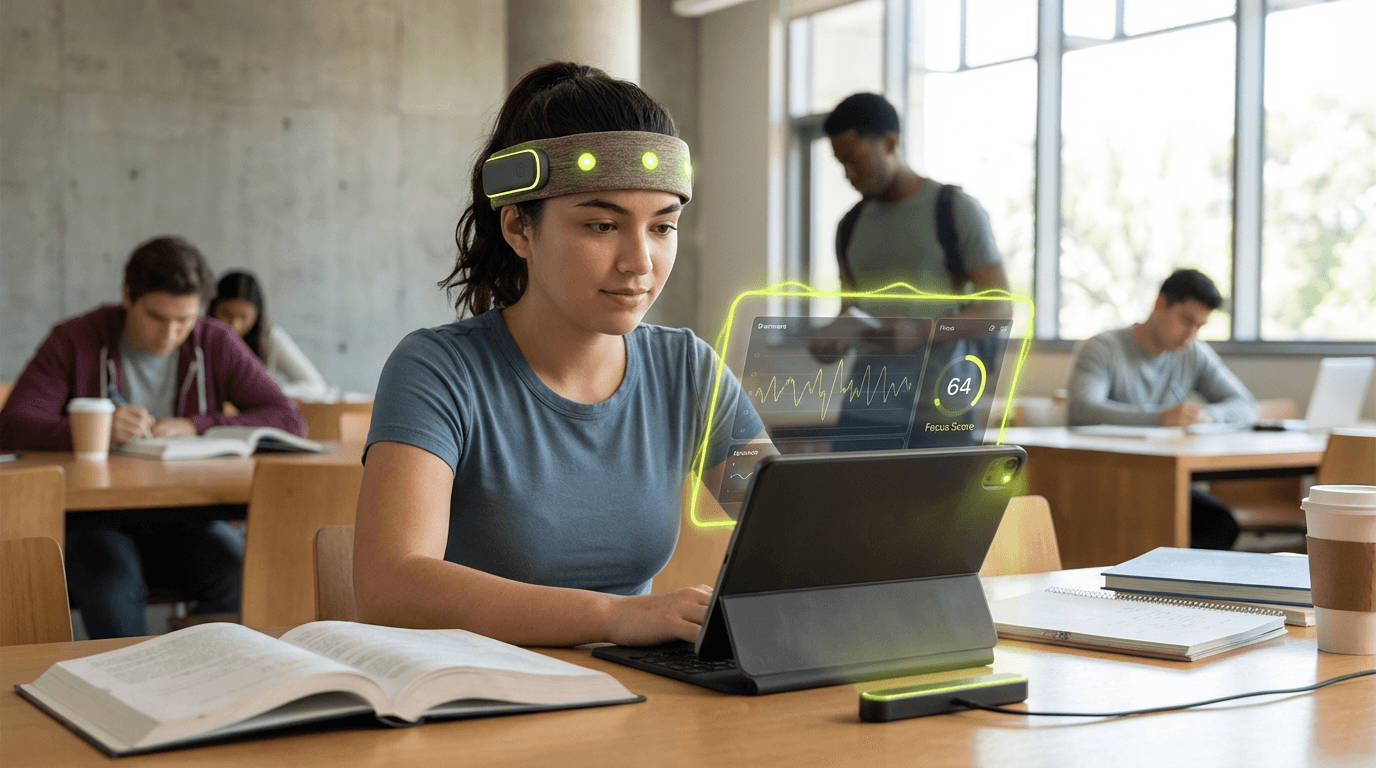
Neurofeedback headbands represent a convergence of consumer neurotechnology and educational practice, bringing brain-computer interface capabilities out of clinical settings and into everyday learning environments. These devices typically employ electroencephalography (EEG) sensors—simplified versions of medical-grade equipment—to detect electrical activity across the scalp, measuring patterns associated with attention, relaxation, and cognitive load. Some advanced models incorporate functional near-infrared spectroscopy (fNIRS) principles, using light wavelengths to estimate blood oxygenation in prefrontal regions linked to executive function. The captured neural signals are processed through proprietary algorithms that translate raw brainwave data into accessible metrics: focus scores, distraction alerts, or readiness indicators. Unlike traditional biofeedback that might track heart rate or skin conductance, these headbands claim to measure cognitive states directly, providing learners with immediate insight into their mental engagement during study sessions, test preparation, or skill acquisition activities.
The educational technology sector has long grappled with the challenge of maintaining student engagement and optimising learning conditions, particularly in self-directed or remote learning contexts where traditional classroom cues are absent. Neurofeedback headbands address this gap by offering quantifiable data on attention states that would otherwise remain invisible to both learners and educators. Early implementations suggest these devices can help students develop metacognitive awareness—the ability to recognise when their focus wanes and employ strategies to re-engage. For learners with attention-related challenges, structured neurofeedback protocols may complement existing interventions by providing objective feedback loops that reinforce sustained concentration. The technology also enables adaptive learning systems to respond not just to answer accuracy but to the learner's cognitive state, potentially adjusting difficulty, pacing, or content presentation when mental fatigue is detected. This creates opportunities for more personalised educational experiences that account for neurological readiness rather than relying solely on performance metrics.
Current adoption remains concentrated in specialised tutoring centres, corporate training programs focused on performance optimisation, and among early-adopter students seeking competitive advantages in high-stakes academic environments. Several education technology platforms have begun piloting integration of neurofeedback data into their learning management systems, though widespread classroom deployment faces significant hurdles. The technology raises important questions about neural data privacy, particularly regarding who owns brainwave information and how it might be used beyond immediate educational purposes. Concerns about measurement validity persist, as consumer-grade sensors operate with far less precision than research equipment, and the interpretation of complex neural patterns into simple focus scores involves substantial algorithmic assumptions. There is also ongoing debate about whether training attention through neurofeedback produces transferable skills or merely teaches students to optimise the specific metrics the device measures. As the technology matures and regulatory frameworks around neural data emerge, neurofeedback headbands may become routine components of personalised learning ecosystems, though their ultimate educational value will depend on addressing current limitations in accuracy, interpretation, and ethical deployment.
Related Organizations

Develops BMI technology including the FocusCalm headband and prosthetic hands.

Creators of the Muse headband, a consumer EEG device used for meditation and cognitive research.
Produces EEG headsets and the BCI-OS platform, allowing developers to build applications that respond to cognitive stress and facial expressions.
Home of the Affective Computing research group led by Rosalind Picard.

Developer of the SenzeBand and Memorie app, a cognitive training solution for children and seniors.
Creators of 'The Crown', a wearable EEG device focused on inducing and maintaining flow states for productivity and study.
Manufacturer of biosensor chips (ThinkGear) and the MindWave headset, enabling low-cost consumer EEG.
Creates open-source brain-computer interface tools and the Galea headset (integrating with VR) for researching physiological responses.
Develops semi-dry and dry EEG wearable devices for human behavior research and neurotechnology applications.
Supporting Evidence
Research this in Signals
Signals turns a topic into a sourced research record you can inspect and rerun. Your first scan is free, and this one starts with Neurofeedback Headbands for Learning already loaded, so edit it or scan as is.