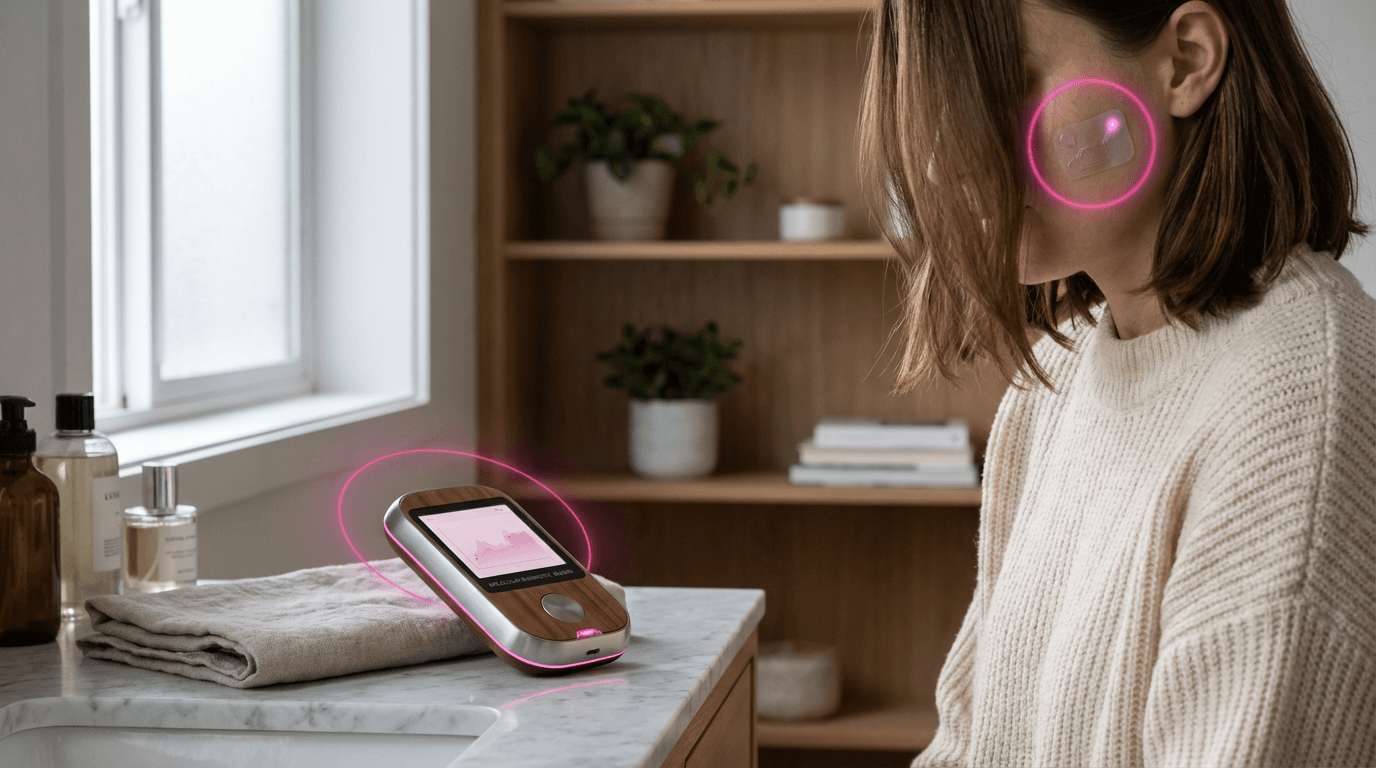
At-Home Molecular Diagnostics
At-home molecular diagnostics kits miniaturize spectroscopy, fluorescence, and lab-on-chip microfluidics into hand mirrors, countertop pods, or adhesive patches. By combining dermal micro-samples, saliva, or sebum collections with CMOS imaging arrays, they quantify collagen cross-linking, oxidative stress, microbiome balance, and endocrine markers that previously demanded a clinical lab.
Beauty retailers and telederm platforms use these panels to personalize regimens in days instead of months. Companies such as Revea, Oddity's Voyage platform, and L'Oréal's Perso ecosystem fuse the biometric readout with AI formulators so customers receive serums compounded to match changing hormone cycles, pollution exposure, or travel schedules. Clinics lean on the same devices to document outcomes for energy-based treatments and to tier membership pricing around objective biomarker improvement.
Accuracy still depends on calibration against CLIA-certified labs, so leading vendors partner with diagnostics manufacturers to run back-end quality control and maintain FDA 510(k) pathways. As reimbursement codes emerge for remote skin and metabolic testing, expect insurers to underwrite these kits for chronic acne, rosacea, or menopausal skin programs, making molecular diagnostics a standard pre-visit triage step.
Related Organizations
United Kingdom · Startup
Develops adhesive patch kits that collect skin microbiome samples for at-home sequencing and molecular analysis.
South Korea · Company
Manufacturer of advanced skin and hair diagnostic devices that utilize optical technology and AI for home and clinic use.
Germany · Company
The global standard for scientific skin testing devices, now developing smaller, connected probes for personal/home use.
United States · Company
Offers the Skin360 app and previously the SkinScanner tool, enabling at-home analysis of skin health metrics.
United States · Startup
Develops flexible, skin-like microfluidic wearables for analyzing sweat and hydration.
HiMirror
Taiwan · Company
Produces smart mirrors with integrated cameras and analysis engines to track skin conditions like wrinkles, red spots, and pores over time.
Australia · Company
A pioneer in genomics and skin health, offering DNA testing kits specifically designed to analyze genetic markers associated with skin aging and health.

Provider of wearable sensors and a medical data platform for decentralized clinical trials and patient monitoring.
Supporting Evidence
Research this in Signals
Signals turns a topic into a sourced research record you can inspect and rerun. Your first scan is free, and this one starts with At-Home Molecular Diagnostics already loaded, so edit it or scan as is.