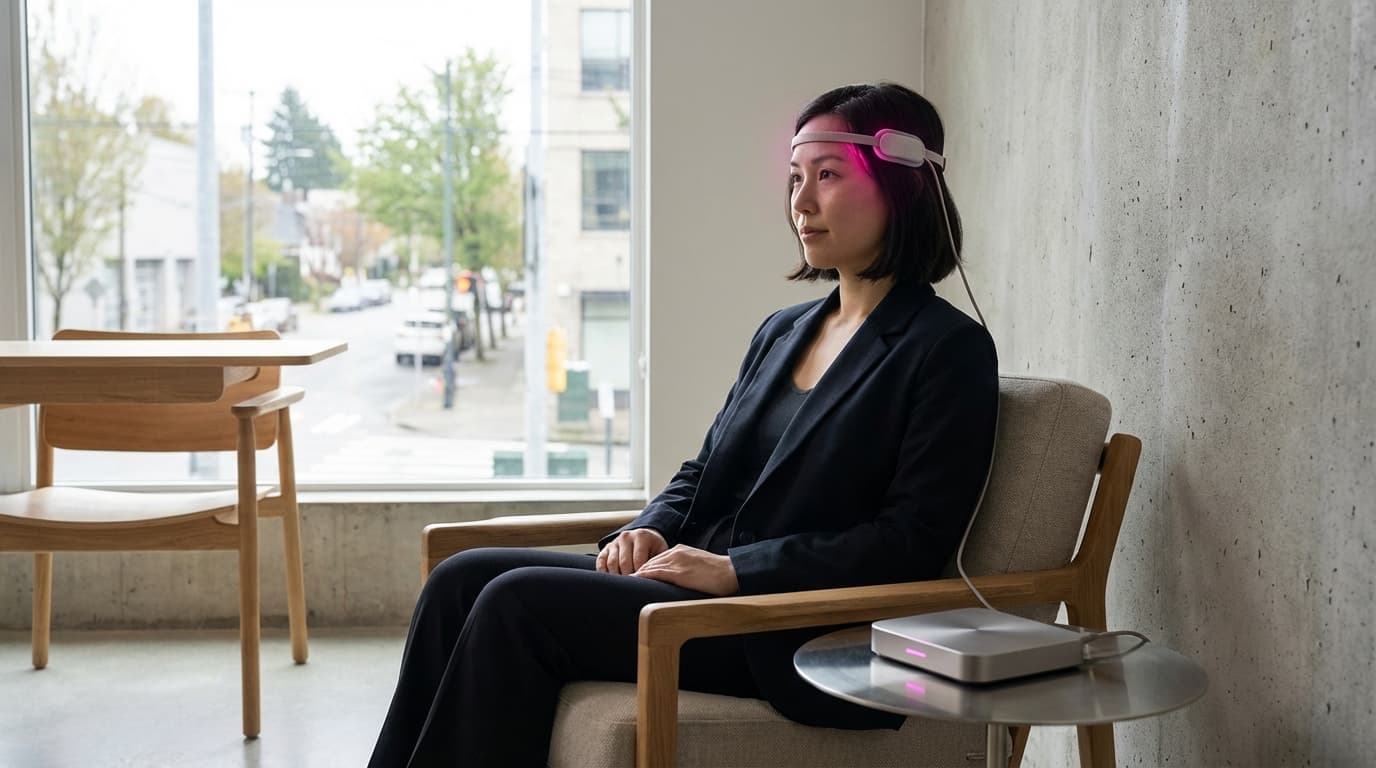
Cranial Neuromodulation for Aesthetics
Cranial neuromodulation devices use transcranial direct current stimulation (tDCS), transcranial alternating current stimulation (tACS), or focused ultrasound to non-invasively modulate brain activity, targeting neural circuits involved in stress response, sleep regulation, and emotional processing. These devices deliver low-intensity electrical currents or acoustic waves through the skull to influence cortical and subcortical activity, creating changes in neurotransmitter release, neuroplasticity, and autonomic nervous system function that cascade to affect skin health, inflammation, and metabolic processes.
This innovation addresses the growing recognition that psychological stress, poor sleep, and negative emotional states directly impact skin appearance through cortisol-mediated inflammation, impaired barrier function, and accelerated aging. By modulating the neural drivers of these processes, neuromodulation offers a systemic approach to aesthetic improvement that complements topical treatments. Companies like Halo Neuroscience, Flow Neuroscience, and research institutions are developing consumer and clinical devices, with early studies showing improvements in stress markers, sleep quality, and self-reported skin appearance when combined with traditional beauty regimens.
The technology is particularly significant for holistic aesthetic approaches, where addressing the mind-body connection could enhance outcomes from conventional treatments. As evidence accumulates and devices become more accessible, neuromodulation could become a standard component of comprehensive beauty and wellness protocols. However, ensuring efficacy, managing individual variability, and navigating regulatory frameworks remain challenges. The technology represents an emerging frontier in aesthetic medicine, but requires rigorous validation to establish its role alongside established interventions.
Related Organizations
United States · Company
Manufacturer of wearable cranial electrotherapy stimulation (CES) devices targeting the brain to treat stress, anxiety, and insomnia.

Manufacturer of non-invasive neuromodulation and brain stimulation devices, including specific GVS hardware for research.
FeelZing (Thync Global)
United States · Company
Produces a transdermal neurostimulation patch designed to enhance energy and focus or induce calm.

Develops a tDCS headset for brain stimulation, primarily for depression but utilizing technology relevant to cognitive performance.
United Kingdom · Company
A health-tech company creating non-invasive neurostimulation devices that target the brainstem to regulate metabolism, sleep, and anxiety.

Develops non-invasive vagus nerve stimulation technology to restore autonomic balance and reduce chronic stress.

Develops a wearable vagus nerve stimulator worn around the neck to reduce stress and improve sleep quality.

Develops a device using infrasonic resonance to tone the vagus nerve and lower stress biomarkers.
Supporting Evidence
Research this in Signals
Signals turns a topic into a sourced research record you can inspect and rerun. Your first scan is free, and this one starts with Cranial Neuromodulation for Aesthetics already loaded, so edit it or scan as is.