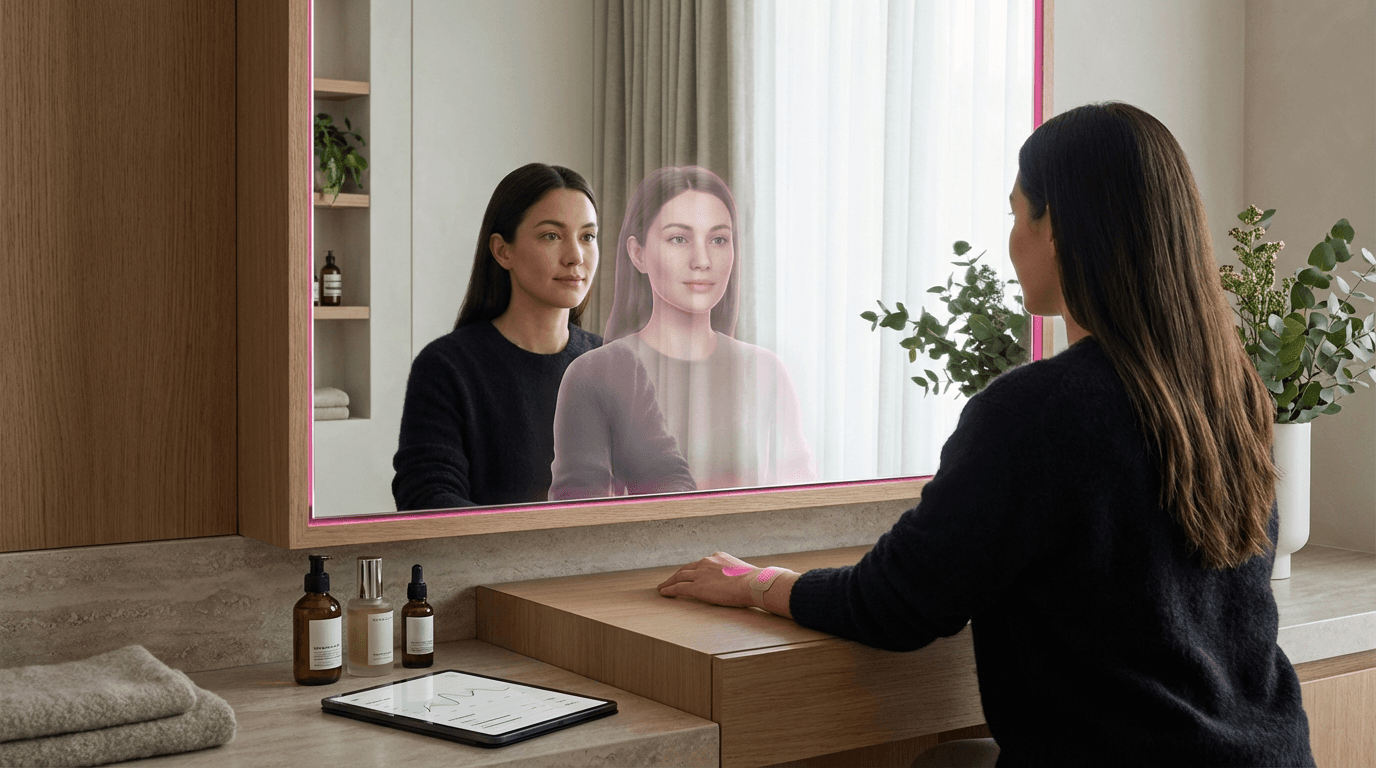
AI Skin & Body Twins
AI skin and body twins are sophisticated computational models that create digital replicas of an individual's skin, hair, and body systems, integrating data from genetic profiles, microbiome analysis, lifestyle factors, environmental exposures, and longitudinal biomarker measurements. These models use machine learning algorithms to simulate how different interventions—topical products, dietary changes, sleep patterns, stress levels, or environmental factors—will affect skin appearance, hair health, and overall body composition over time. By continuously updating with new data from wearables, imaging, and self-reports, these digital twins become increasingly accurate predictors of individual responses, enabling personalized recommendations for skincare routines, supplement protocols, and lifestyle modifications.
This innovation addresses the one-size-fits-all limitation of traditional beauty and wellness approaches, where products and protocols are designed for average responses rather than individual biology. By creating personalized predictive models, these systems enable truly customized interventions that account for genetic predispositions, current health status, and environmental factors. Companies like Proven Skincare, Function of Beauty, and various AI-driven wellness platforms are developing these capabilities, with early adopters seeing improved outcomes from personalized recommendations compared to generic approaches.
The technology is particularly significant for the future of personalized medicine and wellness, where understanding individual responses before trying interventions could save time, money, and prevent adverse reactions. As data collection improves and models become more sophisticated, AI twins could become standard tools for optimizing appearance and health. However, ensuring data privacy, managing model accuracy, and translating predictions into actionable recommendations remain challenges. The technology represents a convergence of AI, personalized medicine, and aesthetic science, but requires continued development to achieve the accuracy and usability needed for widespread adoption.
Related Organizations
Estonia · Startup
A leader in generative AI for skincare, creating predictive models that simulate skin aging and the effects of products over time.

Software corporation specializing in 3D design and digital mock-ups.

A clinical-stage biotechnology company using generative AI for end-to-end drug discovery and research.
United States · Company
The industry standard for skin imaging systems (VISIA), providing the high-fidelity data required to build accurate digital skin twins.
United States · Company
Develops AI and facial imaging solutions for skin analysis, focusing on clarity and feature extraction for modeling.
France · Company
Specializes in 3D bioprinting and predictive ex vivo models for dermocosmetics and personalized medicine.

Invests heavily in 'in silico' biology and microbiome digital twins to test product efficacy without animal testing.
United States · Startup
A biotechnology company offering a direct-to-consumer epigenetics test to determine current skin quality and match it with skincare products.

Develops modeling and simulation software (GastroPlus) that includes modules for dermal absorption and skin permeability prediction.
Supporting Evidence
Research this in Signals
Signals turns a topic into a sourced research record you can inspect and rerun. Your first scan is free, and this one starts with AI Skin & Body Twins already loaded, so edit it or scan as is.