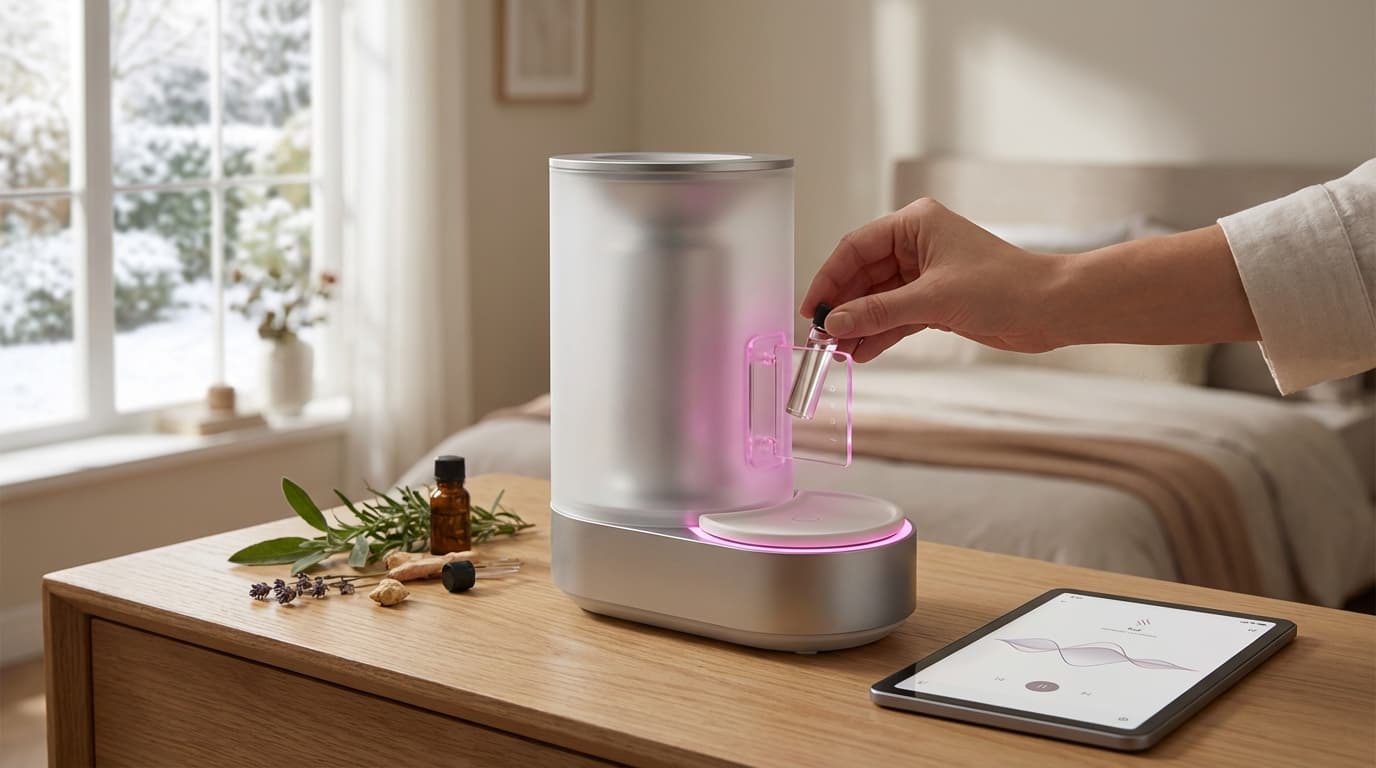
Personalized Fragrance AI
Personalized fragrance AI uses machine learning algorithms trained on extensive fragrance databases to analyze user preferences, personality traits, lifestyle factors, and even biometric data (like skin chemistry) to generate custom scent formulations. These systems understand how different fragrance notes and accords interact, how they evolve on skin over time (top, middle, and base notes), and how individual body chemistry affects scent perception. By translating user inputs into mathematical representations of fragrance compositions, AI can generate unique scent recipes that are then compounded into micro-batches, enabling truly personalized perfumes at scale.
This innovation addresses the limitation of mass-market fragrances, where consumers must choose from a limited selection of pre-formulated scents that may not match their preferences or work with their body chemistry. By enabling custom fragrance creation, AI systems can provide personalized scents that are uniquely suited to each individual. Companies like Scentbird, Function of Beauty, and various fragrance startups are exploring AI-powered personalization, with some offering custom fragrance creation services.
The technology is particularly significant for the future of personalized beauty, where custom formulations could become standard across product categories. As AI models improve and fragrance manufacturing becomes more flexible, personalized fragrances could become accessible to mainstream consumers. However, ensuring scent quality, managing the complexity of fragrance chemistry, and translating digital formulations into appealing scents remain challenges. The technology represents an ambitious application of AI in beauty, but requires continued development to achieve the sophistication needed for truly compelling personalized fragrances.
Related Organizations
Switzerland · Company
Develops advanced cosmetic ingredients including B-Lightyl and other biomimetic peptides designed to replicate aesthetic procedure results.

A Google Research spinoff using AI to map the structure of molecules to odor perception (digitizing smell).
Germany · Company
Global supplier of cosmetic ingredients, developing peptides that target neuromuscular communication for aesthetic applications.
Switzerland · Company
Fragrance house (now DSM-Firmenich) that launched the first AI-augmented laundry care fragrances and focuses on AI for odor neutralization.

Long-standing leader in neuro-symbolic AI, combining neural networks with logical reasoning for enterprise applications.
IFF (International Flavors & Fragrances)
United States · Company
Global fragrance leader using AI to link scents with emotional and cognitive data (Science of Wellness program).

Developers of the Gemini family of models, which are trained from the start to be multimodal across text, images, video, and audio.
Slovenia · Startup
Startup developing a smart perfume bottle controlled by an AI-app that mixes three internal cartridges to create different scents on demand.
Supporting Evidence
Research this in Signals
Signals turns a topic into a sourced research record you can inspect and rerun. Your first scan is free, and this one starts with Personalized Fragrance AI already loaded, so edit it or scan as is.