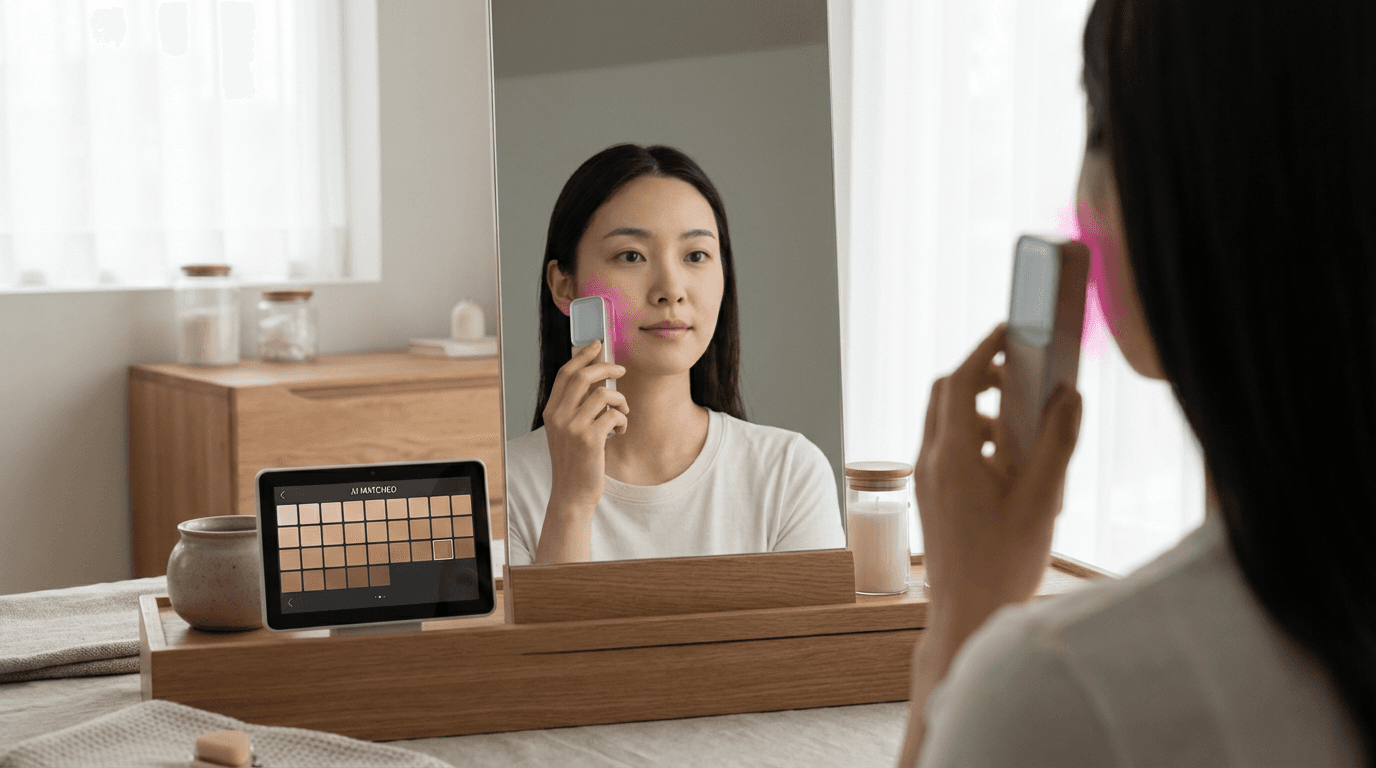
Skin Tone Matching AI
Skin tone matching AI uses advanced computer vision algorithms to analyze facial images captured under various lighting conditions, identifying not just overall skin tone but also undertones (warm, cool, neutral), surface texture, pigmentation patterns, and how skin appears in different lighting environments. These systems are trained on diverse datasets representing the full spectrum of human skin tones and undertones, enabling accurate shade recommendations for foundation, concealer, and other complexion products across all skin types. By accounting for lighting variations and undertone complexity, these AI systems can provide more accurate matches than human assessment or simple color matching, reducing product returns and helping brands expand inclusive shade ranges.
This innovation addresses the persistent problem of shade matching in cosmetics, where finding the right foundation color is a major pain point for consumers and a significant source of returns for retailers. By providing accurate, accessible shade matching through smartphone apps or in-store kiosks, these systems improve the shopping experience and reduce waste. Companies like ModiFace, Perfect Corp, and major beauty brands have integrated AI shade matching into their apps and websites, with some systems achieving high accuracy rates and positive user feedback.
The technology is particularly significant for promoting inclusivity in beauty, where AI systems can help brands identify gaps in their shade ranges and ensure products work for all skin tones. As algorithms improve and datasets become more diverse, AI shade matching could become the standard method for finding complexion products. However, ensuring accuracy across all skin tones, managing lighting variations, and maintaining user trust remain important considerations. The technology represents an important application of AI in retail and beauty, with clear benefits for both consumers and brands.
Related Organizations
Taiwan · Company
Developer of the YouCam suite and AgileHand technology, providing enterprise-grade AR try-on solutions for makeup, nails, watches, and jewelry.
United States · Company
Tech-first beauty brand famous for its PowerMatch algorithm.
Canada · Company
An AR beauty technology provider acquired by L'Oréal to power virtual try-ons across the group's portfolio and partners like Amazon.
Estonia · Startup
A leader in generative AI for skincare, creating predictive models that simulate skin aging and the effects of products over time.
Creators of CausalImpact, a package for causal inference using Bayesian structural time-series.
Finland · Startup
Provides a Digital Health-Beauty-Wellness Platform that combines AI skin analysis with AR try-on capabilities for retailers.
United States · Company
Major US beauty retailer offering the 'GlamLab' virtual try-on tool.

Offers 'Try On for Beauty' features, allowing users to virtually test eyeshadow and lipstick from partner brands using Lens technology.

Supporting Evidence
Research this in Signals
Signals turns a topic into a sourced research record you can inspect and rerun. Your first scan is free, and this one starts with Skin Tone Matching AI already loaded, so edit it or scan as is.