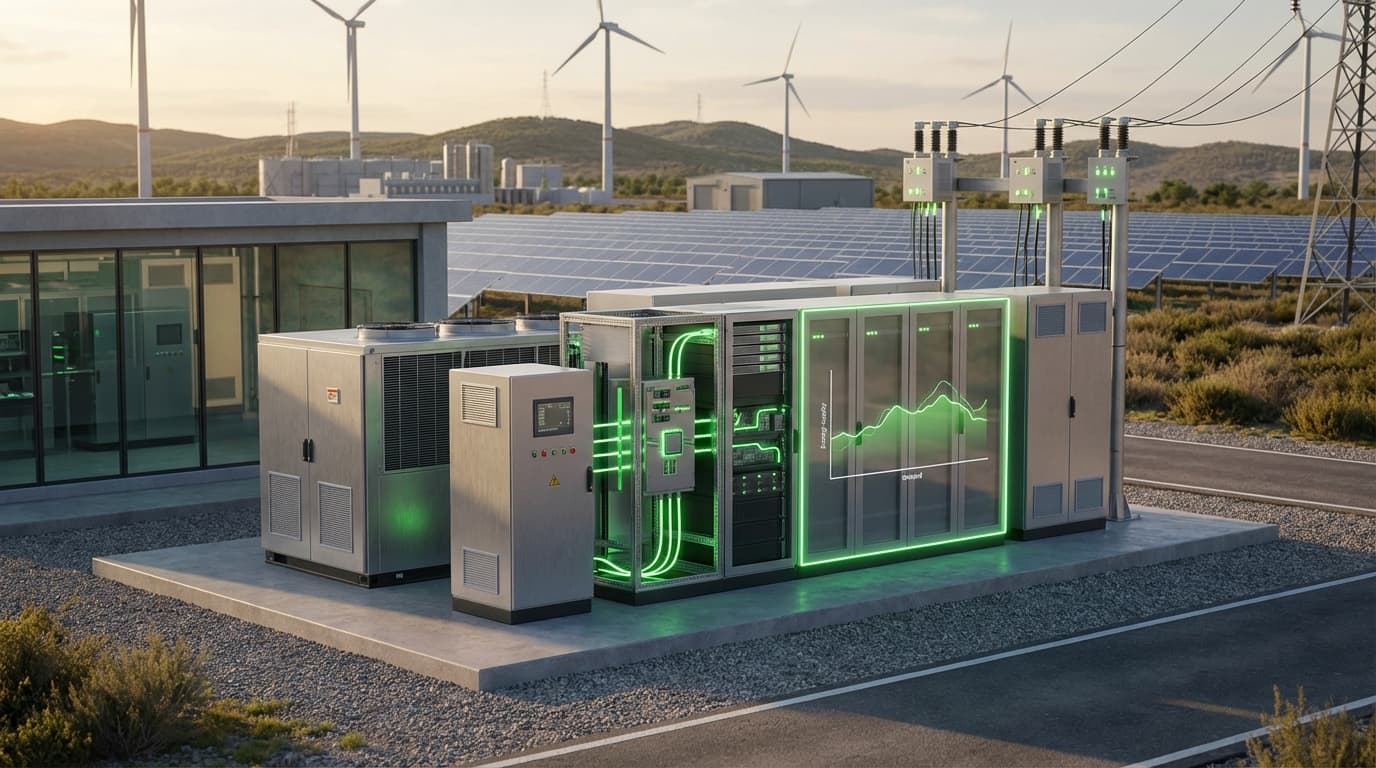
Grid Load Balancing AI
Grid load-balancing platforms apply machine learning to forecast load, renewable generation, and network congestion from minutes to days ahead. They combine weather models, DER telemetry, and market data to produce probabilistic scenarios, then derive optimal dispatch plans for storage, flexible generation, and demand response. During real-time operations, AI agents adjust setpoints every few seconds to keep frequency and voltage within bounds, even as solar or wind ramps rapidly.
Transmission operators use these tools to schedule HVDC flows, battery charging, and imports with more confidence, cutting reserve margins. Distribution utilities deploy them to coordinate community batteries, EV charging hubs, and microgrids as feeder-level assets. Traders and retailers embed the forecasts into hedging strategies, reducing imbalance penalties. By layering automation on top of traditional EMS/SCADA, operators can manage higher inverter penetration without manual micromanagement.
This technology is TRL 7 but requires rigorous validation, cybersecurity hardening, and explainability so dispatch decisions stand up to regulatory scrutiny. Digital twin sandboxes (Pacific Northwest National Lab’s ESI platform, UK’s Power Potential) test AI controllers before field deployment. As grid codes embrace data-driven operations and markets reward fast flexibility, AI-based balancing will become the nervous system of renewable grids.
Related Organizations
Develops enterprise software that unlocks the value of distributed energy resources (DERs) through Virtual Power Plants (VPPs).
United Kingdom · Company
The technology arm of Octopus Energy, providing an AI-driven platform that balances grid load by automating millions of DERs.

Provides a grid orchestration platform that gives utilities real-time visibility and control over local energy resources.

Global market leader in energy storage products and services, and digital applications for renewables and storage.

A global leader in AI-driven clean energy solutions and services.
The advanced energy services arm of Enel Group, focusing on demand response and flexibility.

Provides an intelligent energy platform that connects industrial and commercial assets to energy markets for automated demand response and frequency response.

Develops an independent marketplace for energy flexibility services.

A flexibility aggregator that connects industrial processes to the grid for balancing services.

A digital electricity supplier that uses smart algorithms to charge EVs and heat homes when prices (and grid load) are low.
United Kingdom · Company
Provides grid inertia measurement and analytics to help operators manage stability in low-inertia (renewable-heavy) grids.
Supporting Evidence
Research this in Signals
Signals turns a topic into a sourced research record you can inspect and rerun. Your first scan is free, and this one starts with Grid Load Balancing AI already loaded, so edit it or scan as is.