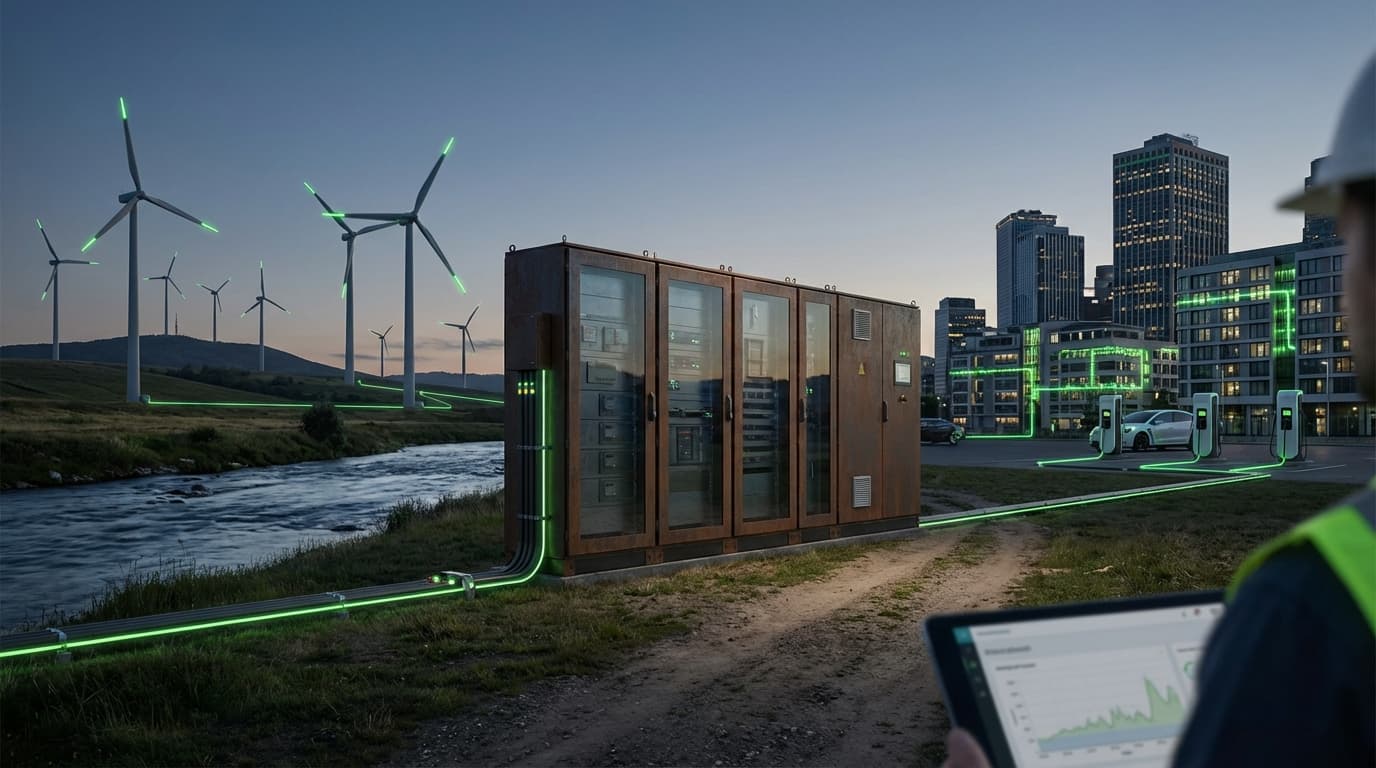
Autonomous Grid Orchestration
Autonomous grid orchestration platforms ingest SCADA, weather, DER telemetry, and market signals, then use reinforcement learning and model-predictive control to dispatch storage, flexible loads, and conventional generation every few seconds. They forecast congestion, voltage issues, and inertia shortfalls, issuing setpoints directly to inverters or aggregators while respecting regulatory constraints. Layered on top are asset-health models that predict failures in transformers, batteries, or power electronics, enabling proactive maintenance and self-healing grids.
Distribution system operators deploy these controllers to coordinate rooftop solar, EV fleets, and community batteries, while ISOs pilot them for ancillary services and automated frequency response. Microgrids at campuses, military bases, and islands rely on autonomous orchestration to island seamlessly during disturbances. Vendors like AutoGrid, GridBeyond, FlexGen, and RTE’s Oscillo plan combine AI control planes with secure communications and audit trails so operators can supervise AI decisions in real time.
Technology is TRL 5–6. Scaling requires rigorous testing in digital twins, cybersecurity certification, and regulatory approval so AI can issue binding dispatch commands. Standards like IEEE 2030.5 and IEC 61850 are being extended for autonomous operation, and regulators are crafting “AI in the control room” guidelines. As clean energy penetration and DER complexity rise, autonomous orchestration will shift from pilot to necessity.
Related Organizations

Provides a grid orchestration platform that gives utilities real-time visibility and control over local energy resources.
United Kingdom · Company
The technology arm of Octopus Energy, providing an AI-driven platform that balances grid load by automating millions of DERs.

Develops advanced grid control software enabling utilities to manage distributed energy resources (DERs) and microgrids autonomously.
Develops enterprise software that unlocks the value of distributed energy resources (DERs) through Virtual Power Plants (VPPs).

Global market leader in energy storage products and services, and digital applications for renewables and storage.

A global leader in AI-driven clean energy solutions and services.

A cloud-based energy management platform that helps utilities manage residential DERs like thermostats, water heaters, and batteries.

Provides an intelligent energy platform that connects industrial and commercial assets to energy markets for automated demand response and frequency response.

Provides a universal API for energy markets, allowing DER partners to automate bids and dispatch assets into wholesale markets.

A flexibility aggregator that connects industrial processes to the grid for balancing services.
Supporting Evidence
Research this in Signals
Signals turns a topic into a sourced research record you can inspect and rerun. Your first scan is free, and this one starts with Autonomous Grid Orchestration already loaded, so edit it or scan as is.