







Augmented olfaction
Digital Olfaction Interfaces
Devices that capture, encode, and reproduce scents digitally for immersive experiences
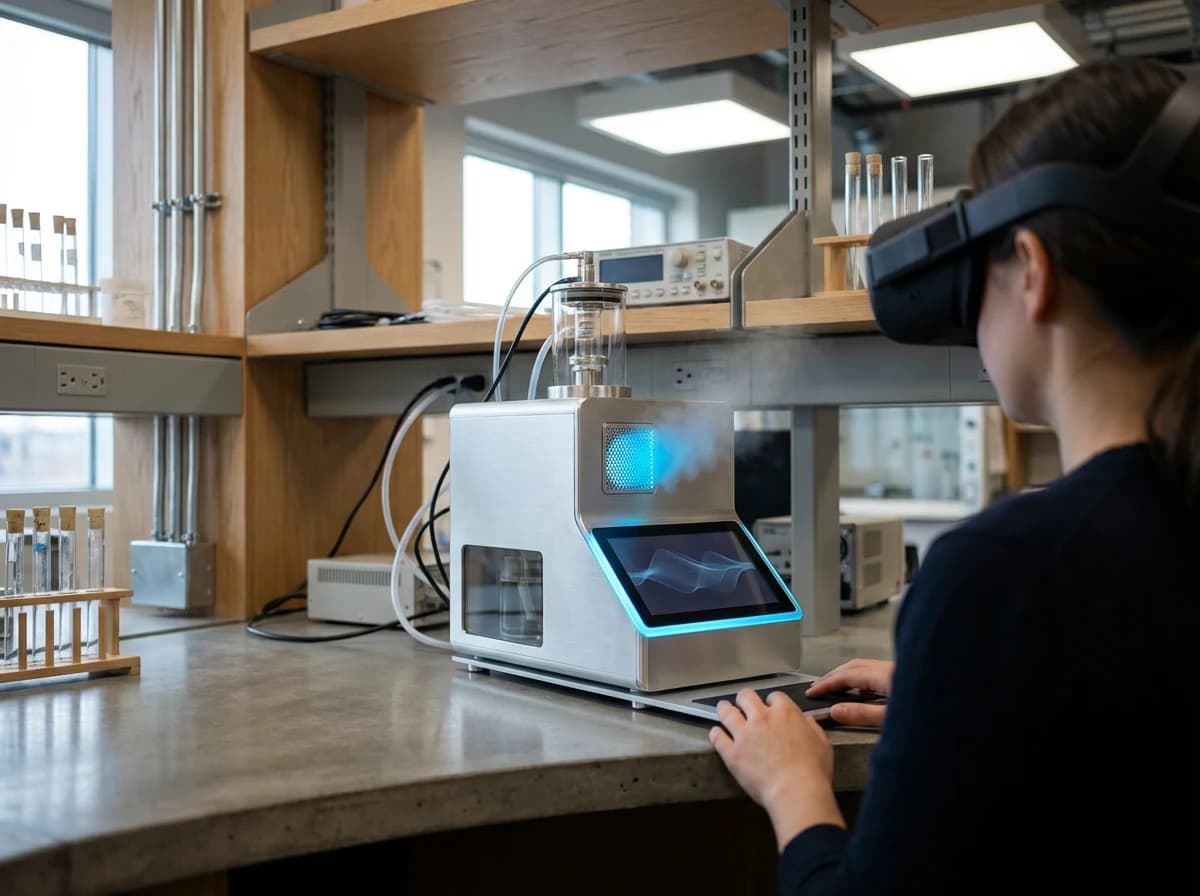
Digital olfaction interfaces represent a convergence of chemical sensing, molecular synthesis, and human-computer interaction technologies designed to capture, transmit, and reproduce scent experiences in digital environments. These systems typically employ two complementary mechanisms: electronic noses equipped with arrays of chemical sensors that can detect and digitally encode the molecular composition of ambient odors, and scent delivery devices that reconstruct these olfactory profiles using libraries of base aromatic compounds. The technology builds upon decades of research in analytical chemistry and neuroscience, leveraging our understanding of how the human olfactory system processes chemical signals. Advanced implementations utilize microfluidic cartridges containing hundreds of distinct scent molecules that can be precisely mixed and vaporized in real-time, while machine learning algorithms help translate complex natural odors into reproducible digital formulas. The technical challenge lies in the sheer complexity of natural scents—a single rose might contain over 400 volatile compounds—requiring sophisticated compression and approximation techniques similar to those used in digital audio and visual media.
The tourism and hospitality industries face a fundamental limitation in their digital transformation efforts: traditional virtual experiences engage only sight and sound, leaving the powerful sense of smell entirely untapped. This sensory gap is particularly significant given that olfaction is uniquely connected to the brain's limbic system, making scents extraordinarily effective at triggering emotional responses and vivid memories. For destination marketing organizations, the inability to convey the aromatic character of a location—whether the salt air of a coastal resort, the spice-laden atmosphere of a traditional market, or the pine-scented freshness of a mountain retreat—represents a missed opportunity to create compelling pre-travel experiences that drive booking decisions. Digital olfaction interfaces address this limitation by enabling what researchers call "sensory teleportation," allowing potential travelers to experience a destination's olfactory signature from their homes. This technology also solves practical challenges in travel planning, helping tourists with scent sensitivities identify potentially problematic environments, and supporting accessibility for individuals who cannot physically travel but wish to experience distant places through immersive virtual tourism.
Early commercial deployments of digital olfaction technology have appeared in select high-end travel agencies and virtual reality experience centers, where scent-enabled destination previews are being tested as booking conversion tools. Museums and cultural institutions have begun incorporating olfactory elements into virtual heritage tours, allowing remote visitors to experience the aromatic dimensions of historical sites and cultural practices. The technology shows particular promise in post-pandemic travel contexts, where virtual reconnaissance of destinations has become more common before committing to physical journeys. Industry analysts note growing interest from airlines and hotels in using scent branding to create distinctive, memorable experiences that extend into customers' homes through digital channels. Looking forward, digital olfaction interfaces align with broader trends toward multi-sensory extended reality experiences and the development of more emotionally resonant digital communications. As scent cartridge libraries expand and delivery mechanisms become more compact and affordable, this technology may evolve from a novelty feature into a standard component of virtual travel platforms, fundamentally changing how destinations market themselves and how travelers research and remember their journeys.
TRL
4/9Formative
Impact
3/5
Investment
3/5
Category
software
Related Organizations
Creates wearable scent technology (ION) for VR/AR headsets to deliver precise olfactory experiences.
Developer
Develops the Aroma Shooter, a directional scent delivery device that uses solid-state cartridges.
Developer
A Google Research spinoff using AI to map the structure of molecules to odor perception (digitizing smell).
Researcher
Combines biochemical sensors, advanced optics, and machine learning to create digital olfaction technology (NeOse).
Developer
University of Sussex (SCHI Lab)
United Kingdom · University
The Sussex Computer Human Interaction (SCHI) Lab explores multisensory interfaces, including smell.
Researcher
Expert in fragrance diffusion technologies, developing connected capsule-based systems for home and commercial scent synthesis.
Developer
Creator of the Smell iX16, a multi-channel gas detector chip designed to be an electronic nose for mass market IoT.
Developer
A research lab dedicated to new domains in science and technology, including music and creativity.
Researcher
The world's largest flavor and fragrance company, investing in digital scent startups and technologies.
Researcher

International Flavors & Fragrances (IFF)
United States · Company
Global leader in scent creation, partnering with tech firms to develop digital scent cartridges and delivery systems.
Researcher
What was expected
Published forecasts about this technology, graded against what happened in Hindsight.
Supporting Evidence
Evidence data is not available for this technology yet.
Research this in Signals
Scan Digital Olfaction Interfaces for yourself.
Signals turns a topic into a sourced research record you can inspect and rerun. Your first scan is free, and this one starts with Digital Olfaction Interfaces already loaded, so edit it or scan as is.