Crisis Mobility Coordination Systems
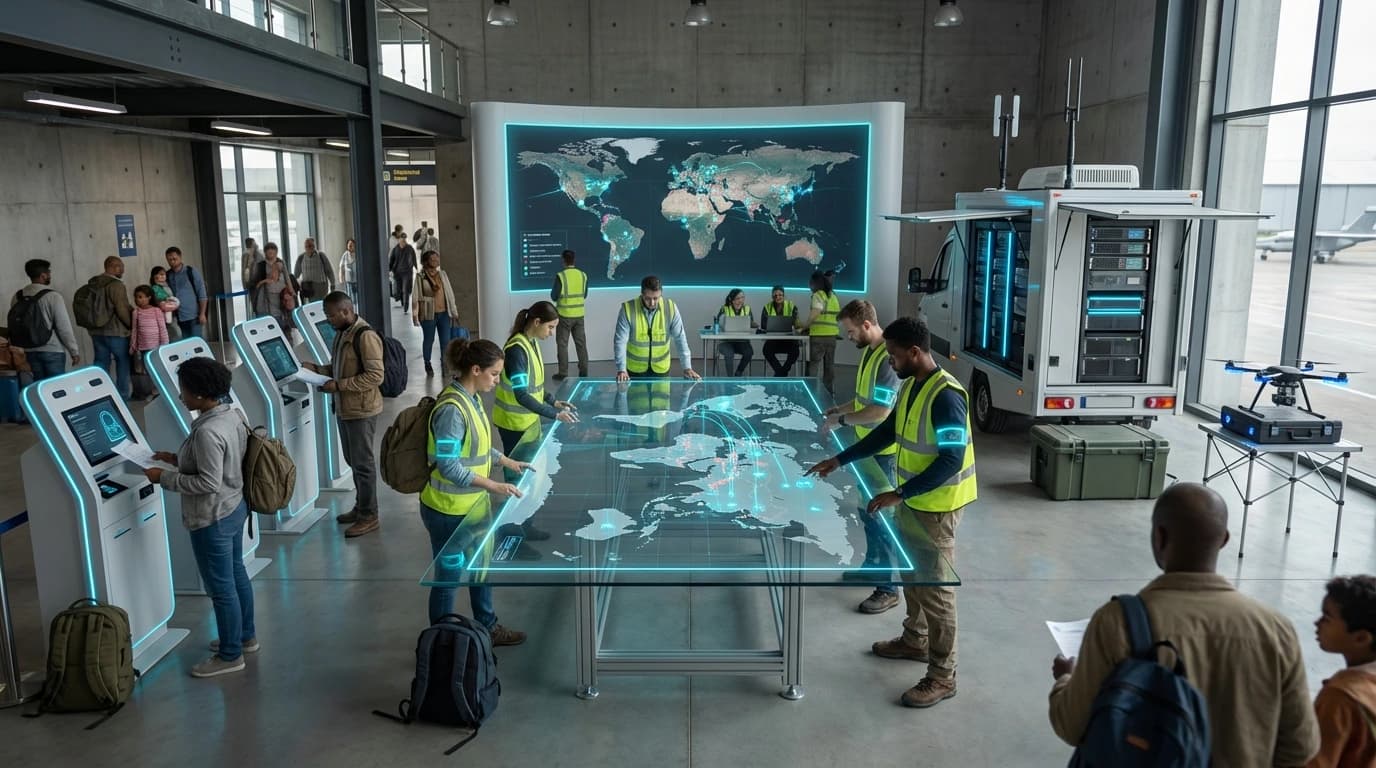
Crisis Mobility Coordination Systems represent a critical evolution in emergency response infrastructure, designed to orchestrate the complex logistics of moving large populations during catastrophic events. These platforms function as digital command centers that integrate data streams from multiple sources—satellite imagery, weather forecasting systems, transportation networks, border control databases, and on-ground humanitarian reports—into unified operational dashboards. The technical architecture relies on interoperable protocols that allow disparate organizations to share real-time information securely, while advanced algorithms process this data to generate optimal routing solutions, capacity allocations, and resource deployment strategies. At their core, these systems employ predictive modeling to anticipate bottlenecks, identify safe corridors, and dynamically adjust plans as situations evolve, whether tracking the path of an approaching hurricane, monitoring conflict zone boundaries, or mapping disease outbreak patterns.
The fundamental challenge these platforms address is the historically fragmented nature of emergency response, where airlines, government agencies, international organizations, and ground transportation providers have operated in silos with incompatible communication systems and competing priorities. During major crises, this lack of coordination has resulted in duplicated efforts, stranded populations, inefficient use of limited aircraft and vehicle capacity, and dangerous delays in moving vulnerable people to safety. Crisis Mobility Coordination Systems solve these problems by establishing common operating pictures that all stakeholders can access simultaneously, enabling coordinated decision-making at unprecedented speed and scale. They transform emergency evacuation from a chaotic scramble into a managed operation, ensuring that available transportation assets are matched with the greatest needs, that humanitarian aid travels alongside evacuees when possible, and that receiving locations are prepared for incoming populations. This coordination capability becomes increasingly vital as climate change intensifies the frequency and severity of natural disasters, while geopolitical instability continues to generate sudden displacement events.
Early implementations of these systems have emerged in response to recent large-scale emergencies, with pilot programs demonstrating their potential during wildfire evacuations, hurricane responses, and pandemic-related repatriation efforts. Industry analysts note growing investment in developing standardized data-sharing frameworks that can be activated rapidly when crises strike, rather than requiring ad-hoc coordination from scratch each time. The technology is particularly valuable in managing complex multi-modal evacuations that combine air transport for rapid long-distance movement with ground vehicles for local distribution, or in coordinating refugee flows across multiple borders where diplomatic clearances and capacity constraints must be balanced in real-time. As extreme weather events become more frequent and unpredictable, and as urban populations in vulnerable coastal and climate-stressed regions continue to grow, the ability to execute large-scale emergency relocations efficiently will become an essential component of resilience planning. These systems represent a shift toward proactive crisis management, where the infrastructure for coordinated response exists before disaster strikes, ready to activate when needed most.
Related Organizations

The leading inter-governmental organization in the field of migration.

Technology leader in the development of open-source software for information collection, visualization, and interactive mapping.

A non-profit foundation that analyzes mobile network data to track population displacement and mobility.

International team dedicated to humanitarian action and community development through open mapping.

Provides medical, security, evacuation, and travel risk management services.

An independent non-profit that leverages the Airbnb platform to provide temporary housing for people in times of crisis.

A nonprofit that helps refugees and displaced persons reconnect with their missing loved ones through a global database.

Software platform for real-time matching of humanitarian needs and resources.

Builds software that empowers organizations to integrate their data, decisions, and operations (Foundry and AIP).
Supporting Evidence
Research this in Signals
Signals turns a topic into a sourced research record you can inspect and rerun. Your first scan is free, and this one starts with Crisis Mobility Coordination Systems already loaded, so edit it or scan as is.