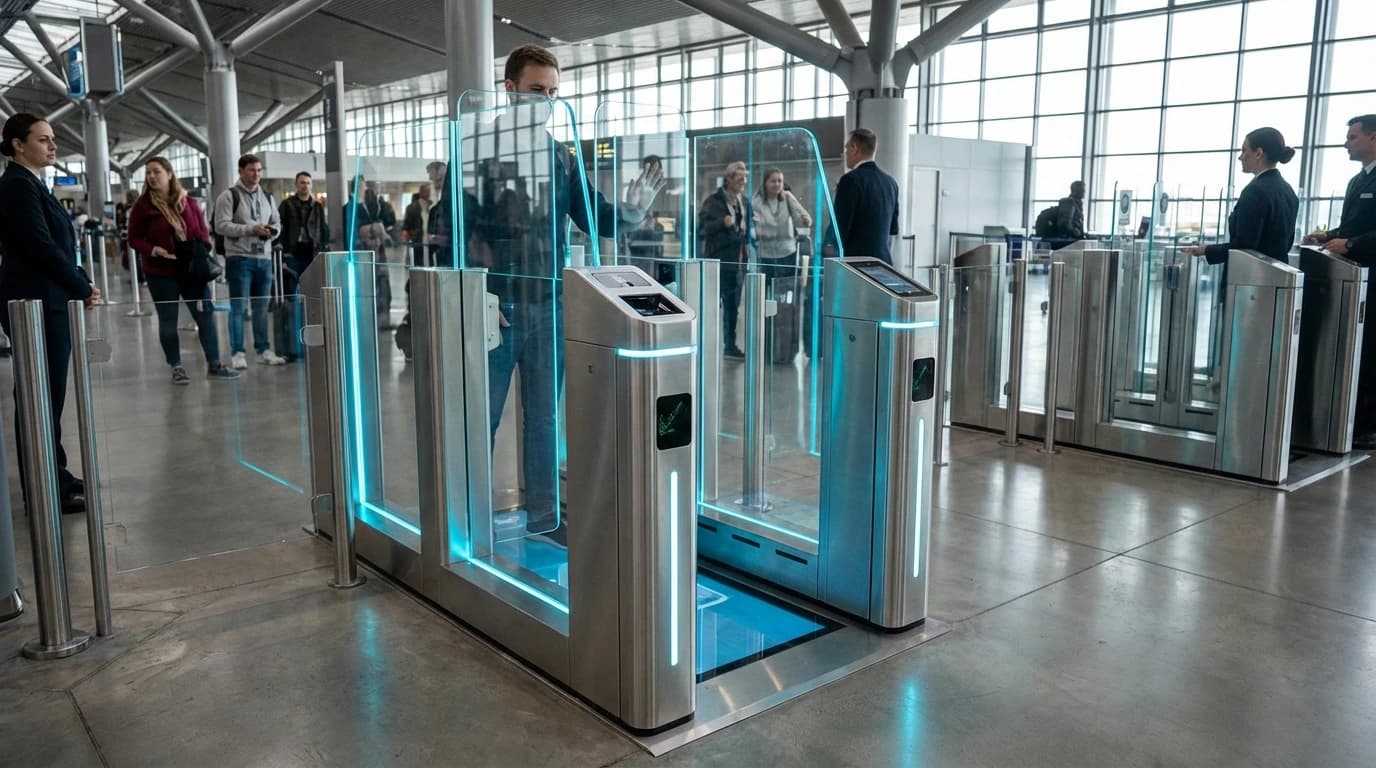
Biometric Governance Standards
The rapid adoption of biometric technologies across tourism and travel infrastructure has created an urgent need for comprehensive governance frameworks that balance operational efficiency with fundamental privacy rights. Biometric Governance Standards represent a coordinated effort by international bodies, industry consortia, and regulatory agencies to establish clear rules for how facial recognition, fingerprint scanning, iris detection, and other biometric modalities can be deployed at border crossings, airports, hotels, and cruise terminals. These frameworks address critical technical specifications—such as data encryption protocols, minimum accuracy thresholds, and interoperability requirements between different systems—while simultaneously establishing policy guardrails around consent mechanisms, data retention limits, cross-border data transfers, and passenger redress procedures. The technical architecture typically mandates that biometric templates be stored using privacy-preserving techniques, with clear protocols for when data must be deleted and how passengers can verify their information has been removed from systems.
The travel industry faces mounting pressure to streamline passenger processing while confronting increasingly stringent privacy regulations across different jurisdictions. Without standardised governance frameworks, operators risk deploying incompatible systems that create bottlenecks rather than efficiencies, while passengers face a fragmented landscape where their biometric data may be subject to wildly different protections depending on which airport or hotel they encounter. These standards solve the fundamental problem of regulatory fragmentation by establishing baseline requirements that can be adopted across borders, enabling a cruise passenger to understand their rights whether boarding in Miami or disembarking in Barcelona. They also address the power imbalance inherent in biometric collection, where travellers often feel compelled to consent to data collection simply to access essential services, by mandating alternative processing options and explicit opt-in mechanisms for non-essential uses.
Early implementations of these governance frameworks are emerging through initiatives like the International Civil Aviation Organization's biometric standards for travel documents and industry-led efforts to create common protocols for hotel check-in systems. Major airport operators are beginning to adopt standardised consent interfaces that clearly communicate what biometric data is being collected, how long it will be retained, and what rights passengers have to access or delete their information. The hospitality sector is exploring federated identity systems that would allow guests to verify their identity biometrically without requiring each hotel chain to maintain separate biometric databases. As cross-border travel volumes continue recovering and expanding, these governance standards will become increasingly critical infrastructure—not merely technical specifications but essential frameworks that determine whether biometric-enabled travel can achieve both efficiency and trustworthiness at scale.
Related Organizations

The trade association for the world's airlines, driving the 'One ID' initiative to set standards for contactless biometric travel.

A UN specialized agency that sets global standards for passports (Machine Readable Travel Documents) and Digital Travel Credentials (DTC).

The EU agency managing large-scale IT systems, including the biometric Entry/Exit System (EES) for the Schengen area.

A leading IT provider for the air transport industry, offering Smart Path biometric solutions for seamless airport processing.

The US agency responsible for the 'Biometric Entry-Exit' program, setting the de facto standards for facial recognition at US airports.

Identity and security company developing offline CBDC payment cards and secure elements.

US federal agency that sets standards for technology, including facial recognition vendor tests (FRVT).

Develops Vector Annealing, a quantum-inspired simulated annealing service running on high-performance vector supercomputers.

The global authority on the economic and social contribution of Travel & Tourism.

Charity committed to fighting for the right to privacy across the world.
Supporting Evidence
Research this in Signals
Signals turns a topic into a sourced research record you can inspect and rerun. Your first scan is free, and this one starts with Biometric Governance Standards already loaded, so edit it or scan as is.