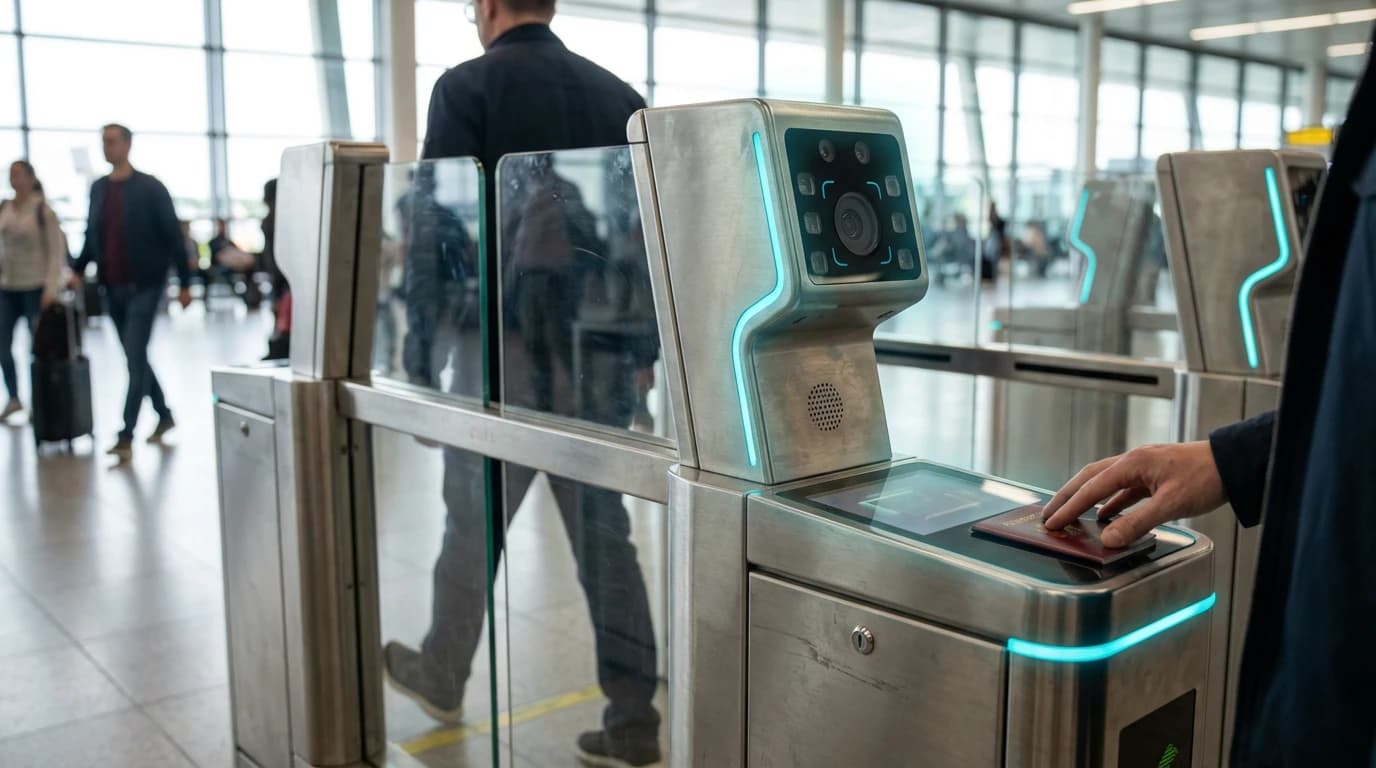
Biometric E-Gates
Biometric E-Gates represent an evolution in border control technology, combining automated physical barriers with advanced biometric verification systems to process travelers without human intervention. These systems typically integrate multiple technologies: high-resolution cameras capture facial images, which are then compared against data stored in electronic passports or pre-registered databases using facial recognition algorithms. Some implementations also incorporate iris scanning, fingerprint verification, or a combination of biometric modalities to enhance accuracy. The physical gate mechanism remains locked until the system successfully matches the traveler's live biometric data with their travel documents, at which point the barrier opens automatically. The entire verification process operates on principles of computer vision and pattern matching, where algorithms analyze unique biological characteristics—such as the distance between facial features or the distinctive patterns in an iris—to confirm identity with high precision.
The aviation and border security industries face mounting pressure to process growing numbers of international travelers while maintaining rigorous security standards and minimizing wait times. Traditional manual passport control creates bottlenecks at airports, requiring significant staffing resources and resulting in inconsistent processing times that can extend to hours during peak periods. Biometric E-Gates address these challenges by dramatically reducing processing time per passenger—often to under thirty seconds—while maintaining or improving security verification standards. This technology enables airports to reallocate human border control officers to exception handling and security oversight rather than routine document checks. The automation also reduces human error in identity verification and creates detailed audit trails of border crossings. For travelers, the system offers a more predictable and often faster experience, particularly for frequent flyers who can pre-enroll their biometric data.
Major international airports across Europe, Asia, and North America have deployed biometric E-Gates over the past decade, with adoption accelerating significantly in recent years. Many implementations currently serve citizens and registered travelers, though some airports are expanding access to all passport holders from trusted countries. The technology has proven particularly valuable in managing the post-pandemic recovery in air travel, where passenger volumes have rebounded while airports face labor shortages. Industry analysts note that biometric E-Gates are increasingly being integrated into broader "seamless travel" initiatives, where the same biometric credentials can be used throughout the airport journey—from check-in through baggage drop, security screening, and boarding. This convergence points toward a future where physical travel documents may become optional, replaced entirely by biometric credentials stored in secure digital systems, fundamentally transforming the passenger experience while addressing both security and efficiency imperatives in global travel infrastructure.
Related Organizations

Identity and security company developing offline CBDC payment cards and secure elements.

A leading IT provider for the air transport industry, offering Smart Path biometric solutions for seamless airport processing.

Specializes in seamless travel and digital identity management, providing automated border control gates globally.

Operates a private biometric identity verification platform used at airports and stadiums to expedite entry.

Provides security entrance control solutions, including automated boarding gates and immigration gates for airports.

Develops Vector Annealing, a quantum-inspired simulated annealing service running on high-performance vector supercomputers.

Multinational company designing and building electrical systems and providing services for the aerospace, defence, transportation and security markets.

Collins Aerospace
United States · Company
A major aerospace and defense contractor, a subsidiary of RTX Corporation.

German IT security provider offering the 'secunet easygate' for automated border control.

A joint venture between Giesecke+Devrient and Bundesdruckerei, providing integrated identity solutions and e-gates.
Supporting Evidence
Research this in Signals
Signals turns a topic into a sourced research record you can inspect and rerun. Your first scan is free, and this one starts with Biometric E-Gates already loaded, so edit it or scan as is.