






Off-Planet Tourism
Space Tourism and Orbital Passenger Flight
Commercial spaceflight services offering suborbital and orbital experiences to private passengers
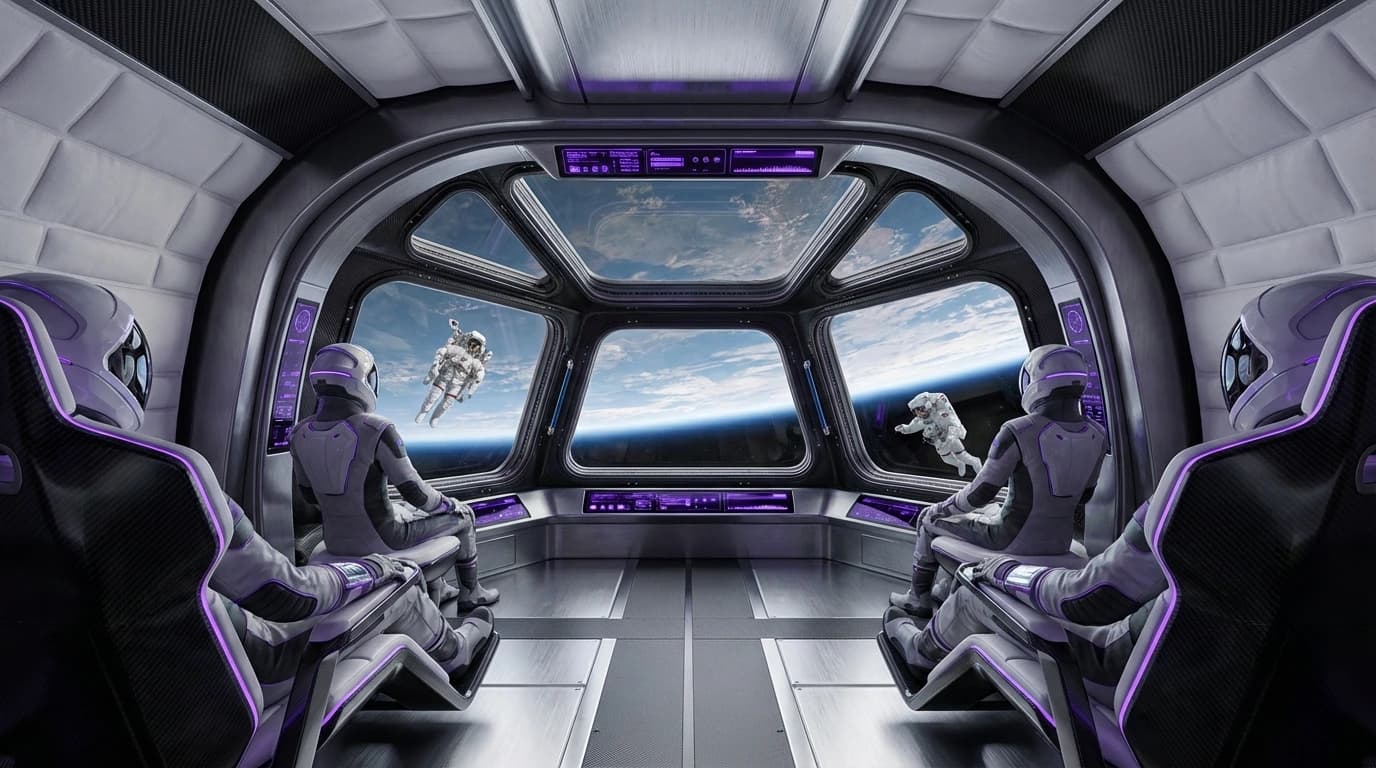
Space tourism and orbital passenger flight encompasses a growing ecosystem of commercial launch providers and space stations offering spaceflight experiences for private individuals, including short-duration suborbital flights (providing a few minutes of weightlessness and views of Earth) and multi-day orbital stays (where customers live and work in space for several days). While the market is still early in maturity, these services are driving innovation in crew systems, training programs, safety standards, and the overall experience of spaceflight for non-professional astronauts.
This innovation addresses the emerging market for space tourism, where private individuals can experience spaceflight for recreational purposes. Companies like Blue Origin, Virgin Galactic, SpaceX, and Axiom Space are developing and operating these services, creating new revenue streams for space companies and making space more accessible to non-astronauts. The services include training programs, safety protocols, and hospitality elements designed to make spaceflight accessible and enjoyable for paying customers.
The technology is making space more accessible and creating new business opportunities that help fund further space development. As the market matures and costs decrease, space tourism could become more accessible to a broader range of people. However, the industry faces challenges including safety, cost, regulatory approval, and creating sustainable business models. The technology represents an important step toward making space more accessible, but significant work remains to make space tourism safe, affordable, and sustainable. The success of this market will depend on maintaining excellent safety records, reducing costs, and creating compelling experiences that justify the price. As the market develops, it could help drive down costs and make space more accessible, potentially transforming how we think about space travel.
TRL
7/9Operational
Impact
3/5
Investment
4/5
Category
applications
Related Organizations

Blue Origin
United States · Company
Aerospace manufacturer developing the 'Blue Alchemist' technology to produce solar cells and transmission wire from lunar regolith simulants.
Deployer
Operates the SpaceShipTwo and upcoming Delta-class spaceplanes for suborbital tourism.
Deployer
Developing the Dream Chaser spaceplane and LIFE habitats to support commercial space activities including manufacturing.
Developer
Developing Haven-1, a commercial space station designed for private astronaut missions.
Developer
Japanese startup developing a two-seater cabin for balloon-based space viewing flights.
Developer
Developing 'Starlab', a free-flying commercial space station.
Developer
Developing stratospheric balloon systems for tourism and research.
Developer
French company offering low-carbon stratospheric balloon flights for tourism.
Developer
What was expected
Published forecasts about this technology, graded against what happened in Hindsight.
Off-Planet Tourism: Getting to Space
Space tourism
Supporting Evidence
Evidence data is not available for this technology yet.
Research this in Signals
Scan Space Tourism and Orbital Passenger Flight for yourself.
Signals turns a topic into a sourced research record you can inspect and rerun. Your first scan is free, and this one starts with Space Tourism and Orbital Passenger Flight already loaded, so edit it or scan as is.