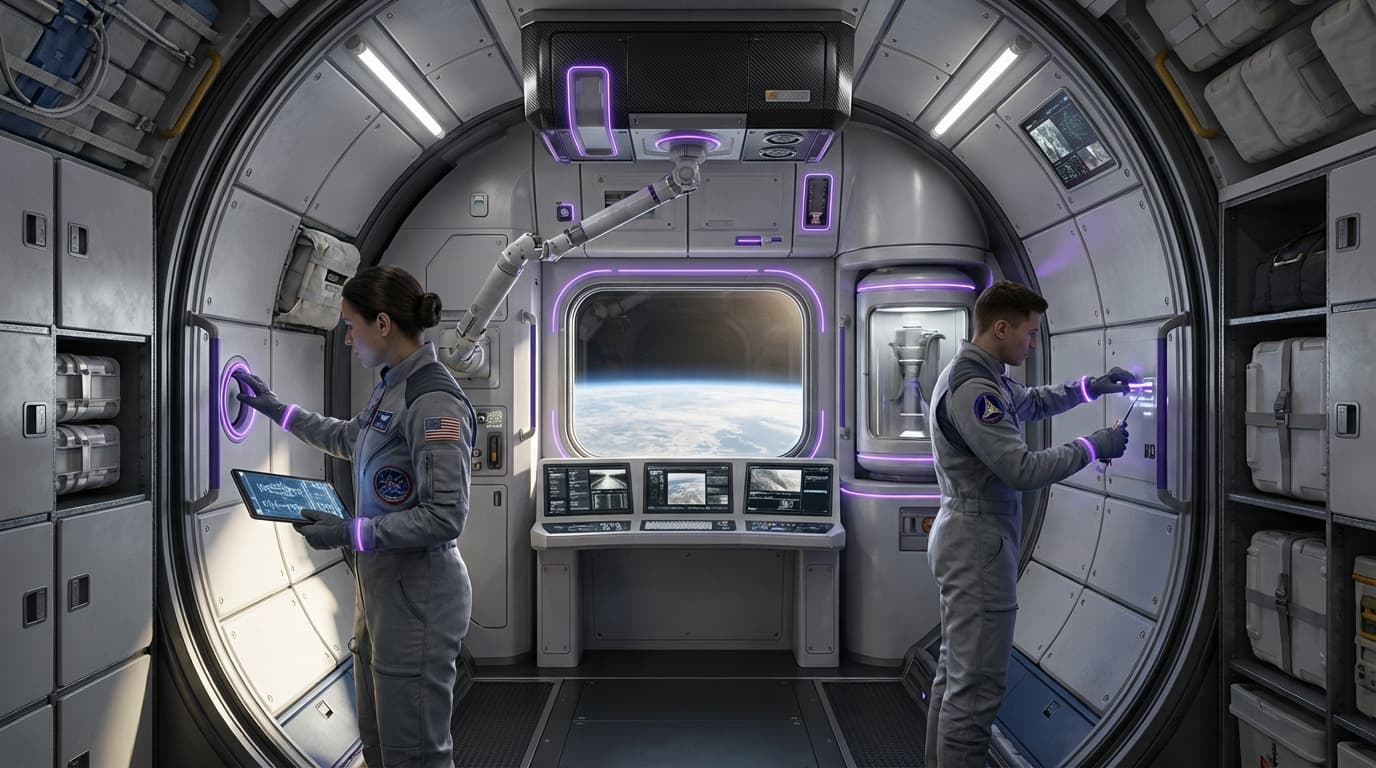
Commercial Space Stations
Commercial space stations are privately operated orbital platforms in Low Earth Orbit designed to host diverse customers including government agencies, industrial researchers, and space tourists. These modular stations represent a transition from state-run space laboratories (like the ISS) to commercial orbital real estate markets, enabling new business models for research and development, in-space manufacturing, tourism, and other commercial activities. Companies like Axiom Space, Blue Origin, and others are developing these stations to replace or supplement government facilities.
This innovation addresses the need for continued access to space for research and commercial activities as the ISS approaches retirement, while also creating new business opportunities in space. By operating commercially, these stations can be more flexible, cost-effective, and responsive to customer needs than government facilities. The stations enable new markets including space tourism, commercial research, and in-space manufacturing that can justify private investment.
The technology is essential for maintaining and expanding access to space for research and commercial activities as government facilities age. As commercial space stations become operational, they could enable new industries and business models in space. However, the technology faces challenges including the high cost of development and operation, ensuring safety and reliability, and creating sustainable business models. The technology represents an important evolution in space infrastructure, moving from government-run to commercial facilities. Success could create new space-based industries and make space more accessible, but requires significant investment and the development of viable business models. The transition to commercial space stations could fundamentally change how space is accessed and used.
Related Organizations


Developing the Dream Chaser spaceplane and LIFE habitats to support commercial space activities including manufacturing.

Developing Haven-1, a commercial space station designed for private astronaut missions.

Developing 'Starlab', a free-flying commercial space station.

Manufactures large-scale 'StarMax' space station modules.

A major European satellite manufacturer leading the ASCEND feasibility study.

A major industrial conglomerate that has successfully conducted ground-based microwave power transmission tests for future space solar power.

Developing large, scalable space infrastructure using in-space welding.

Developing 'Nyx', a modular and reusable orbital vehicle designed to provide cargo logistics to commercial space stations.

Official hotel partner for Voyager Space's Starlab, designing crew accommodation and hospitality experiences for orbit.
Supporting Evidence
Research this in Signals
Signals turns a topic into a sourced research record you can inspect and rerun. Your first scan is free, and this one starts with Commercial Space Stations already loaded, so edit it or scan as is.