Commercial Space Tourism & Suborbital Flights
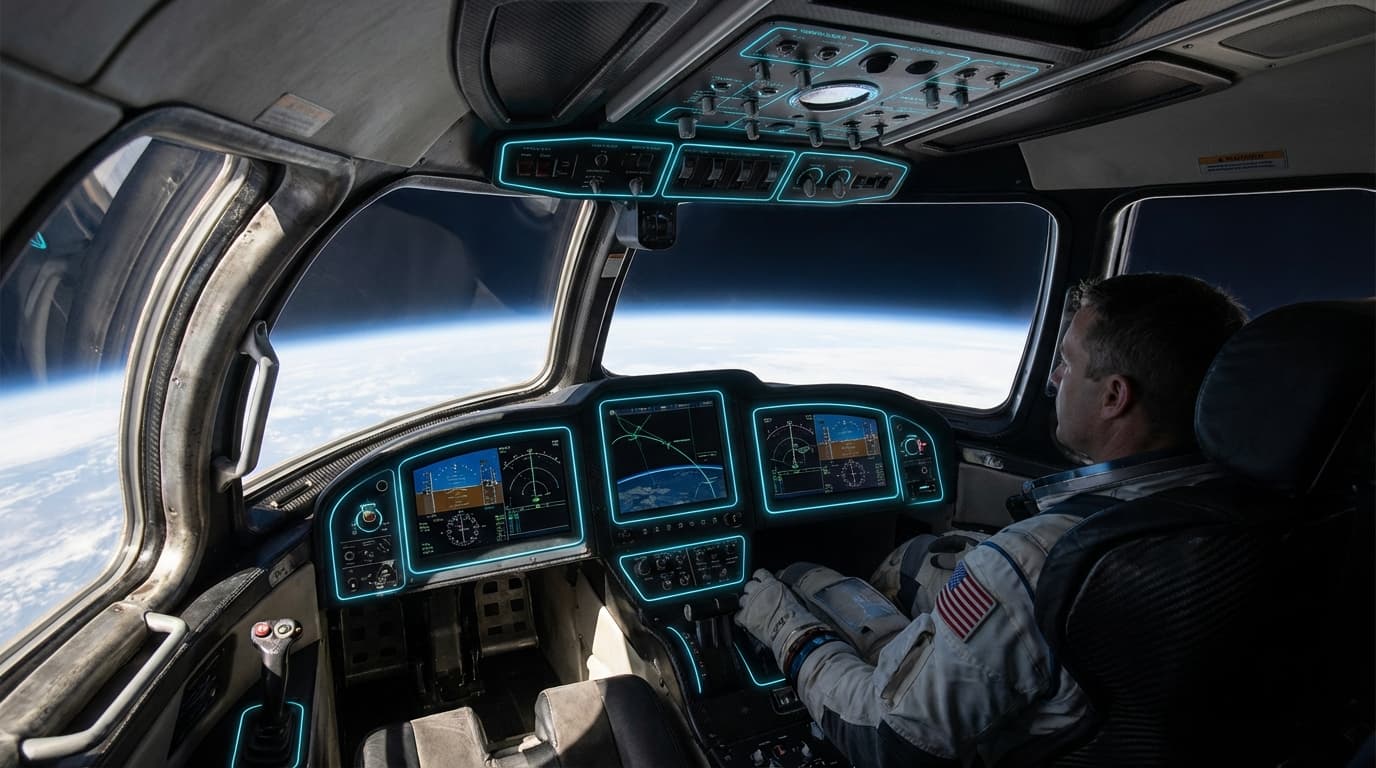
Commercial space tourism represents a new frontier in high-altitude flight, where passengers experience the edge of space without entering orbit. Suborbital vehicles ascend to altitudes around 100 kilometers—the Kármán line, widely recognized as the boundary between Earth's atmosphere and outer space—allowing passengers to experience several minutes of weightlessness and observe the curvature of Earth against the blackness of space. These flights differ fundamentally from orbital spaceflight: rather than achieving the sustained velocity needed to circle the planet, suborbital craft follow a parabolic trajectory, briefly crossing into space before descending back to Earth. The vehicles themselves employ diverse technical approaches, from rocket-powered spaceplanes that take off horizontally and glide back to landing, to vertical-launch capsules that parachute down after separation from their boosters. Flight durations typically range from ten to fifteen minutes total, with only three to five minutes spent above the Kármán line, yet this brief experience delivers the profound perspective shift of seeing Earth from space.
The emergence of commercial suborbital flight addresses a long-standing challenge in aerospace: making space accessible beyond the narrow confines of government astronaut programs and scientific missions. For decades, experiencing space required years of training, exceptional physical fitness, and selection into elite national space agencies. Suborbital tourism compresses the preparation timeline to days or weeks of orientation and basic safety training, opening this experience to a broader population. This shift creates complex regulatory challenges, as these vehicles operate in a grey zone between traditional aviation and spaceflight. Certification frameworks must account for unique risks—cabin depressurization at extreme altitude, re-entry heating, and the physiological effects of rapid acceleration and microgravity—while insurance models grapple with limited actuarial data from a nascent industry. The technology also enables new business models beyond tourism, including rapid point-to-point transportation for time-sensitive cargo, microgravity research platforms for universities and corporations, and astronaut training programs that provide realistic spaceflight conditions at a fraction of orbital mission costs.
Several operators have already conducted crewed flights, with early missions carrying company founders and selected passengers to demonstrate vehicle capabilities and build public confidence. Industry analysts note that as flight cadence increases and safety records mature, ticket prices are expected to decline from current six-figure levels, potentially expanding the addressable market. The technology also serves as a proving ground for reusable launch systems, with rapid turnaround between flights being essential to economic viability—lessons that inform the broader commercial space industry. Looking forward, suborbital flight sits at the intersection of several converging trends: the commercialization of space, advances in composite materials and propulsion efficiency, and growing public interest in space experiences. As regulatory frameworks evolve to accommodate this hybrid category of flight, the distinction between high-altitude aviation and low-altitude spaceflight will continue to blur, potentially catalyzing new applications that leverage the unique environment at the edge of space for scientific research, Earth observation, and telecommunications infrastructure testing.
Research this in Signals
Signals turns a topic into a sourced research record you can inspect and rerun. Your first scan is free, and this one starts with Commercial Space Tourism & Suborbital Flights already loaded, so edit it or scan as is.