Cross-Sector Hybrids (NGO + DAO + Public Body)
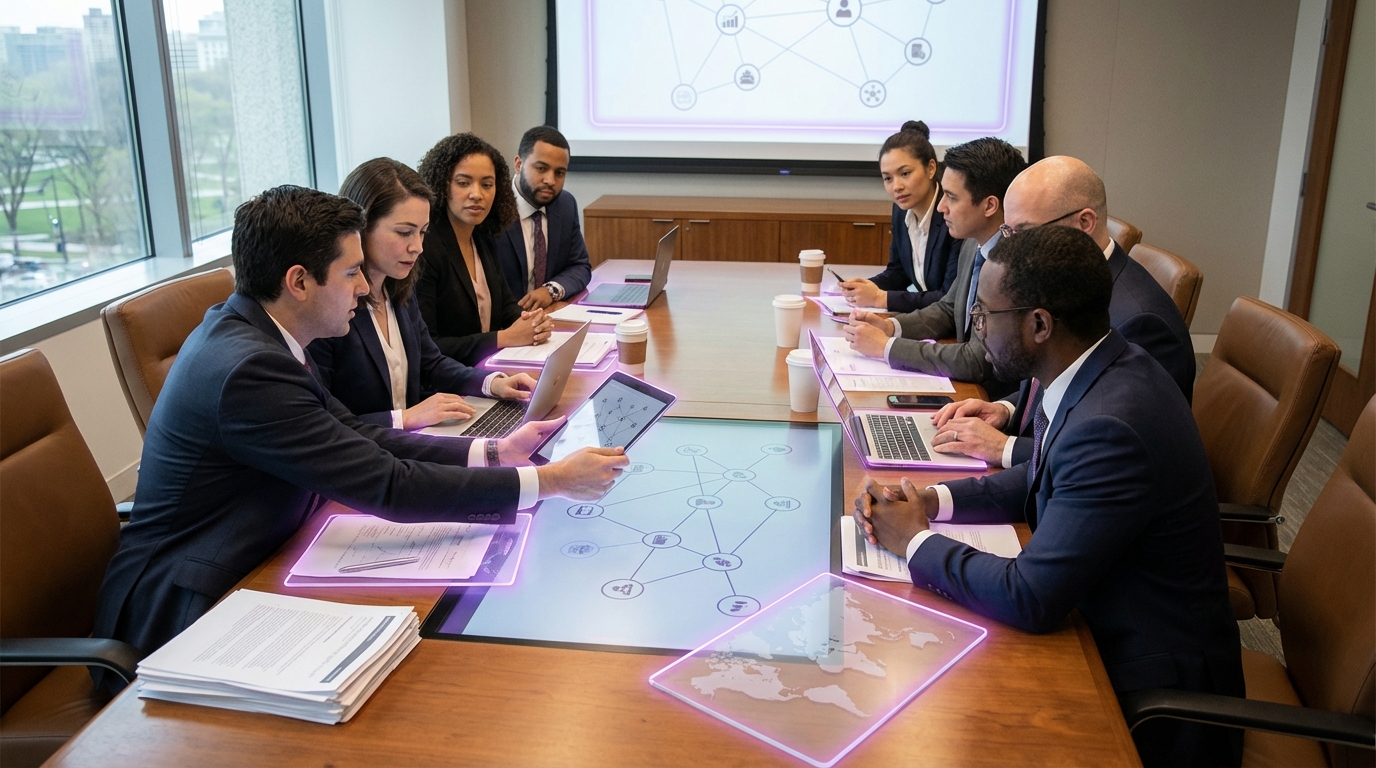
The traditional boundaries separating nonprofit organizations, government entities, and decentralized digital collectives are increasingly blurred by experimental organizational forms that deliberately combine elements from multiple sectors. These cross-sector hybrids represent a fundamental rethinking of institutional architecture, merging the mission-driven focus and tax structures of NGOs with the transparent, token-based governance mechanisms of decentralized autonomous organizations (DAOs), while incorporating the regulatory legitimacy and public accountability frameworks of government bodies. At their core, these entities operate through layered governance systems that might include traditional boards of directors alongside blockchain-based voting mechanisms, or public oversight committees working in tandem with community token holders. The technical infrastructure often combines conventional legal incorporation in specific jurisdictions with smart contracts that automate certain decisions and resource allocations, creating organizations that exist simultaneously in traditional legal frameworks and decentralized digital ecosystems.
The emergence of these hybrid forms addresses critical limitations in existing organizational models that struggle to tackle complex, multi-stakeholder challenges. Traditional NGOs, while mission-driven, often face constraints in transparency, stakeholder participation, and sustainable funding models. Government bodies provide legitimacy and public accountability but can be slow to innovate and limited by jurisdictional boundaries. DAOs offer unprecedented transparency and distributed decision-making but frequently lack legal recognition, regulatory compliance frameworks, and mechanisms for interfacing with traditional institutions. By combining these elements, cross-sector hybrids attempt to capture the strengths of each model while mitigating their weaknesses. For instance, a hybrid organization might use DAO mechanisms to enable global community participation in funding decisions while maintaining NGO status for tax-deductible donations and partnering with municipal governments to implement programs. This approach enables new forms of public-private-commons collaboration, where resources can flow between sectors more fluidly and accountability can be distributed across multiple stakeholder groups rather than concentrated in a single governance body.
Early experiments with these organizational forms are appearing across various domains, from climate action networks that combine municipal partnerships with tokenized carbon credit systems, to community land trusts that incorporate blockchain-based ownership records alongside traditional legal protections. Research institutions and philanthropic organizations are beginning to explore how hybrid structures might enable more participatory grantmaking, where community members vote on funding allocations through transparent digital mechanisms while professional program officers provide expertise and due diligence. These experiments reflect broader trends toward institutional innovation in response to challenges that transcend traditional sector boundaries—issues like climate change, digital rights, and equitable resource distribution that require coordination across government, civil society, and decentralized networks. As regulatory frameworks gradually evolve to accommodate these novel forms, and as the technical infrastructure for hybrid governance matures, these organizational experiments may point toward fundamentally new ways of structuring collective action and shared responsibility in an increasingly interconnected world.
Related Organizations

A platform for funding and coordinating open source development.

The first on-chain 501(c)(3) public charity offering Donor-Advised Funds (DAFs) powered by DeFi.

A decentralized autonomous organization that drives demand for carbon credits by accumulating them into its treasury.
Ethereum Layer 2 scaling solution that utilizes Retroactive Public Goods Funding (RPGF), a variant of mechanism design related to QF.
Research organization focused on technologies for cooperation across difference, including mechanism design like QV.

An experiment in decentralized land ownership, using a Wyoming LLC wrapper to allow a DAO to own physical land.
A community focused on building the Future of Giving using blockchain technology.

A venture fund within the UN that invests in open source technology and holds cryptocurrency to fund startups.

Open-source R&D lab building Filecoin and IPFS, the storage layer for decentralized science data.

Infrastructure provider bridging the voluntary carbon market (traditional sector) with blockchain (Web3).