Military Simulation Training
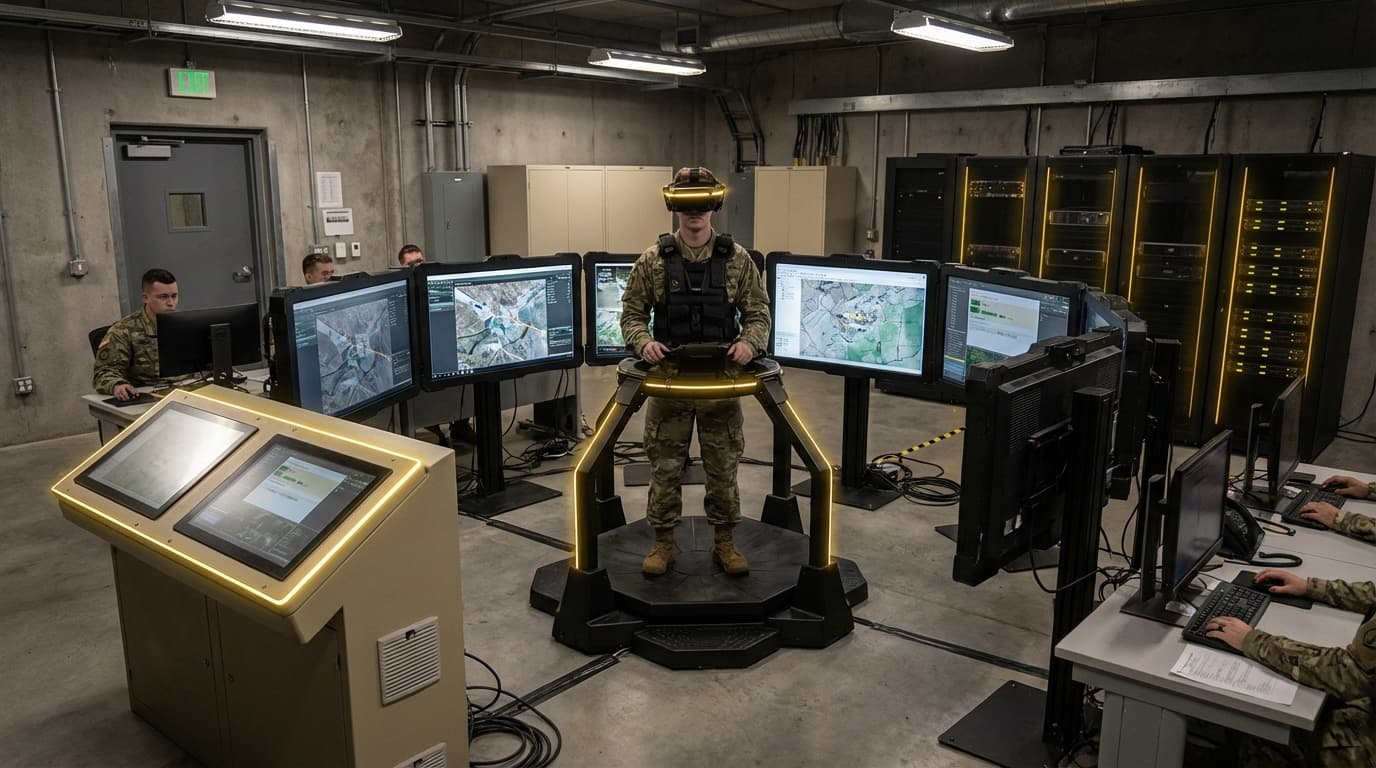
Military simulation training represents a sophisticated convergence of virtual reality, augmented reality, and constructive simulation technologies designed to prepare defense personnel for complex operational scenarios without the costs and risks of live exercises. At its core, this approach creates what military planners call Live-Virtual-Constructive (LVC) environments, where real soldiers interact with computer-generated forces and scenarios that mirror actual battlefield conditions. The technology employs high-fidelity physics engines to replicate weapon systems, vehicle dynamics, and environmental factors such as terrain, weather, and visibility conditions. Advanced artificial intelligence drives opposition forces that adapt tactics in real-time, providing unpredictable and challenging adversaries that respond to trainee decisions with realistic military doctrine. Integrated biometric sensors monitor physiological indicators like heart rate variability, stress levels, and cognitive load, enabling instructors to assess not just tactical performance but also how personnel respond under simulated combat stress.
The defense sector has long grappled with the challenge of preparing forces for rapidly evolving threats while managing constrained training budgets and limited access to live-fire ranges. Traditional field exercises require extensive logistics, consume ammunition and fuel, pose safety risks, and cannot easily replicate certain scenarios such as chemical weapons exposure or urban combat in populated areas. Military simulation training addresses these limitations by enabling forces to rehearse combined-arms operations—coordinating infantry, armor, artillery, and air support—in controlled digital environments that can be reset instantly and modified to present different tactical challenges. This technology also solves the critical problem of after-action review, as every action within the simulation can be recorded, replayed from multiple perspectives, and analysed in detail to identify tactical errors and reinforce effective decision-making. Furthermore, these systems enable geographically dispersed units to train together in shared virtual battlespaces, fostering interoperability between allied forces without the expense of international exercises.
Major military organizations worldwide have increasingly adopted simulation training as a core component of force preparation, with systems ranging from individual weapon trainers to battalion-level command post exercises. Research suggests that well-designed simulations can reduce live training requirements by significant margins while maintaining or even improving readiness levels, particularly for complex decision-making skills. Current deployments span applications from pilot training in synthetic cockpits that replicate specific aircraft systems to infantry squads practicing room-clearing techniques in reconfigurable virtual buildings. The technology has proven especially valuable for rehearsing low-probability, high-consequence scenarios such as nuclear incident response or hostage rescue operations that would be impractical to stage in real environments. As artificial intelligence capabilities advance and haptic feedback systems become more sophisticated, the fidelity gap between simulation and reality continues to narrow. This trajectory aligns with broader defense trends toward distributed operations, multi-domain warfare, and the need to prepare forces for adversaries employing hybrid tactics that blend conventional and unconventional approaches. The integration of machine learning algorithms that can analyse thousands of training iterations to identify optimal tactics represents a particularly promising frontier, potentially transforming simulation from a training tool into a strategic planning asset that helps commanders anticipate enemy responses and refine operational concepts.
Related Organizations

A global leader in simulation and training for civil aviation, defense, and healthcare.
Develops the Advanced Tactical Augmented Reality System (ATARS), allowing pilots to dogfight against virtual adversaries in real jets.

Manufacturer of 'bionic display' headsets that use a high-density focus display inside a peripheral context display.

Provides Live, Virtual, and Constructive (LVC) training systems, including air combat maneuvering instrumentation.

Defense company producing the Barracuda advanced camouflage systems.

Operates a dedicated Simulation & Training division providing gunnery and combat simulators.

Developer of the Reconfigurable Virtual Collective Trainer (RVCT) for the US Army.

Develops the Virtual Hangar platform for VR-based aircraft maintenance training.

Integrates XR pilot training rigs and software for the US Air Force's Pilot Training Next program.
VRAI
Ireland · Startup
Provides data-driven VR simulation training that captures biometric and performance data.
Supporting Evidence
Research this in Signals
Signals turns a topic into a sourced research record you can inspect and rerun. Your first scan is free, and this one starts with Military Simulation Training already loaded, so edit it or scan as is.