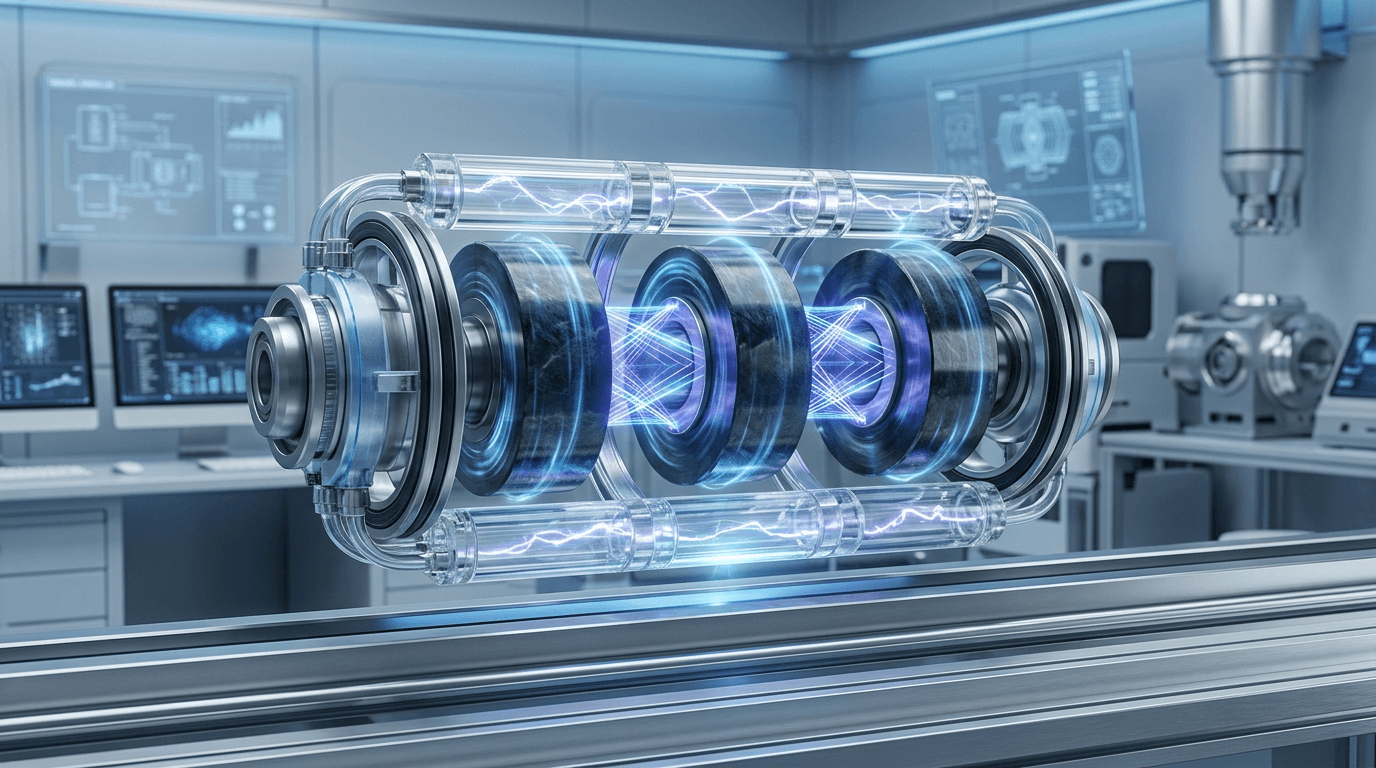
Magnetic Rollers
Multiple variations propose rotating magnetic rollers (cylindrical permanent magnets or electromagnets) arranged around fixed magnetic rings or cores, with the rollers spinning via motor or initial impulse. These systems are claimed to generate continuous electrical power exceeding input requirements (over-unity energy generation) through interactions between rotating magnetic fields. Some configurations also claim to produce levitation effects when scaled to sufficient sizes, allegedly enabling magnetic-field-based antigravity propulsion.
Working principle involves concentric rings of permanent magnets or electromagnets with intermediate 'roller' magnets positioned around the periphery. As rollers spin (either free-wheeling from magnetic repulsion/attraction forces or motor-driven), they supposedly induce currents in stator windings or generate rotary power through magnetic coupling. Proponents claim the rotating magnets tap ambient energy or generate self-sustaining power loops where output electrical energy exceeds input mechanical energy. At larger scales, some claim the rotating magnetic field geometries create local gravity modification enabling levitation of the device or attached loads.
Typical configurations include
fixed outer ring magnets (stationary with alternating N-S poles); intermediate rotor with permanent magnet 'rollers' (smaller magnets attached to rotating ring); and optional stator coils for electrical generation. Variations use electromagnets instead of permanent magnets, different roller geometries (cylindrical, spherical, bar magnets), and feedback systems where generated electricity powers additional electromagnets or drives the rotation motor. Some designs incorporate geometric arrangements (specific numbers of rollers per ring, precise angular spacing) claimed critical for producing anomalous effects.
The most detailed early claim came from the 1950s, describing a system generating continuous power and allegedly powering devices called 'Levity Discs' that demonstrated levitation or antigravity flight. Original devices were reportedly lost or destroyed, creating a 'lost invention' narrative. Modern reproductions by various builders claim partial success but typically demonstrate only normal electromagnetic induction without over-unity or levitation. Some reports describe devices that spin freely for extended periods (minutes to hours) before stopping, interpreted as evidence of self-powered operation rather than low-friction rotation.
Physics analysis finds no mechanism for generating net energy beyond conventional electromagnetic induction. Rotating permanent magnets past coils induces electrical current through magnetic flux change—well-understood generator principle. However, extracting electrical energy from this process creates drag opposing rotation (Lenz's law), requiring external power input to sustain rotation. Magnetic interactions between fixed and rotating elements (roller magnets and ring magnets) create complex force patterns but cannot generate net energy—violating conservation laws. The magnetic coupling between rings and rollers can create self-sustaining rotation under specific conditions (low friction, resonant frequencies) but requires initial energy input and gradually decays as energy dissipates.
Claims of over-unity generation typically result from measurement errors, hidden power sources not accounted for, or selective reporting of transient effects during spin-down after external power is removed. Prolonged free-spinning can occur with high-quality bearings and balanced systems but represents stored kinetic energy, not continuous energy generation. Levitation claims lack demonstrated mechanism—magnetic levitation requires superconductors or active electromagnetic stabilization, not rotating permanent magnets.
The technology represents persistent fringe electromagnetics category—genuinely complex systems producing interesting magnetic effects (self-rotation under certain conditions, complex force patterns, induction generation) that appear to violate physics when misanalyzed. The physical systems are real and measurable, but claimed anomalous capabilities (over-unity, levitation) result from misunderstanding conventional electromagnetic phenomena rather than discovery of new physics. Reproductions demonstrate normal magnetic motor/generator behavior without extraordinary effects, despite continued claims by proponents.
Research this in Signals
Signals turns a topic into a sourced research record you can inspect and rerun. Your first scan is free, and this one starts with Magnetic Rollers already loaded, so edit it or scan as is.