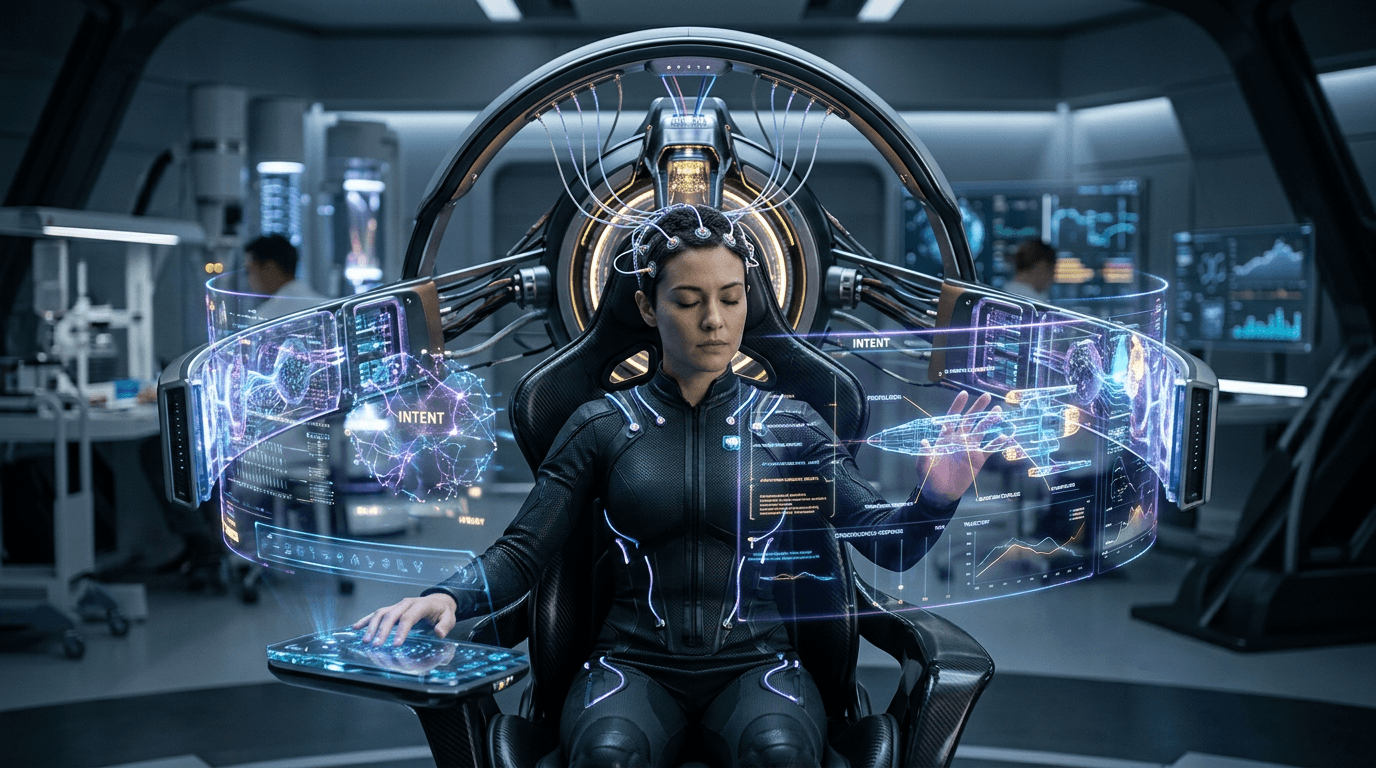
Intent-Based Control Interfaces
Intent-based control interfaces represent comprehensive systems enabling direct mental control of craft and technology through various neural and consciousness-based mechanisms. These systems encompass biological neural interfaces, thought-responsive control panels, and quantum field coupling approaches for seamless human-machine integration.
Neural Cockpit Systems
Biological interface cockpit systems enable direct brain-craft coupling through biological tissue or hybrid neural substrates, creating semi-organic interface hardware for craft control. Dr. Diana Pasulka's 'American Cosmic' research documented field interviews and DIA notes describing biological interface systems in alleged UAP encounters. These systems reportedly enable direct neural control through biological tissue interfaces rather than conventional mechanical controls, featuring neural wetware integration, biological tissue substrates, and direct brain-craft coupling for enhanced control precision.
Thought-Responsive Interface Panels
Control panels and luminous surfaces that respond to intention and attention rather than physical touch, reported in entity encounters alongside emerging brain-computer interface technologies. Abduction literature consistently describes control panels that respond to intention rather than touch, beings manipulating navigation by directing thought toward glowing areas, and systems entirely governed by conscious will. Witnesses report panels that illuminate when approached with intention, controls that respond to specific thoughts, and interfaces that require no physical contact for operation.
Intent Navigation Systems
Auto-kinetic implementation describes aerospace systems that bypass conventional control interfaces, responding instead to operator thought patterns and intentions. Recent testimony about 'zero-point craft' programs describes systems that encode pilot mental states into quantum field structures, allowing direct consciousness-to-vehicle communication. The mechanism involves 'imprinting intent' into the craft's quantum substrate through hybrid digital-quantum architecture where classical algorithms handle basic physics while a quantum layer interprets and executes operator intentions.
Technical Implementation
These systems require precision neural signal detection and interpretation, real-time intention recognition and translation, non-contact interface control, and seamless integration between mental commands and system responses. The approach seeks to achieve control through neural manipulation rather than physical interaction, combining biological interfaces, optical gesture sensing, and quantum field coupling.
Modern Technology Parallels
Brain-computer interfaces using EEG, fMRI, or neural implants for device control; optical gesture sensing and eye-tracking systems; direct neural interfaces for prosthetic control; and emerging thought-controlled computing systems. Current research explores neural control of computers, intention-based interfaces, and direct brain-to-device communication.
Current Status
While theoretically grounded in neural interface research and consciousness studies, intent-based control interfaces remain speculative with significant technical challenges. The technology represents an extension of neural interface research into comprehensive consciousness-based control applications, though practical implementation requires advanced neural signal processing, intention recognition, and quantum field manipulation capabilities.
Research this in Signals
Signals turns a topic into a sourced research record you can inspect and rerun. Your first scan is free, and this one starts with Intent-Based Control Interfaces already loaded, so edit it or scan as is.