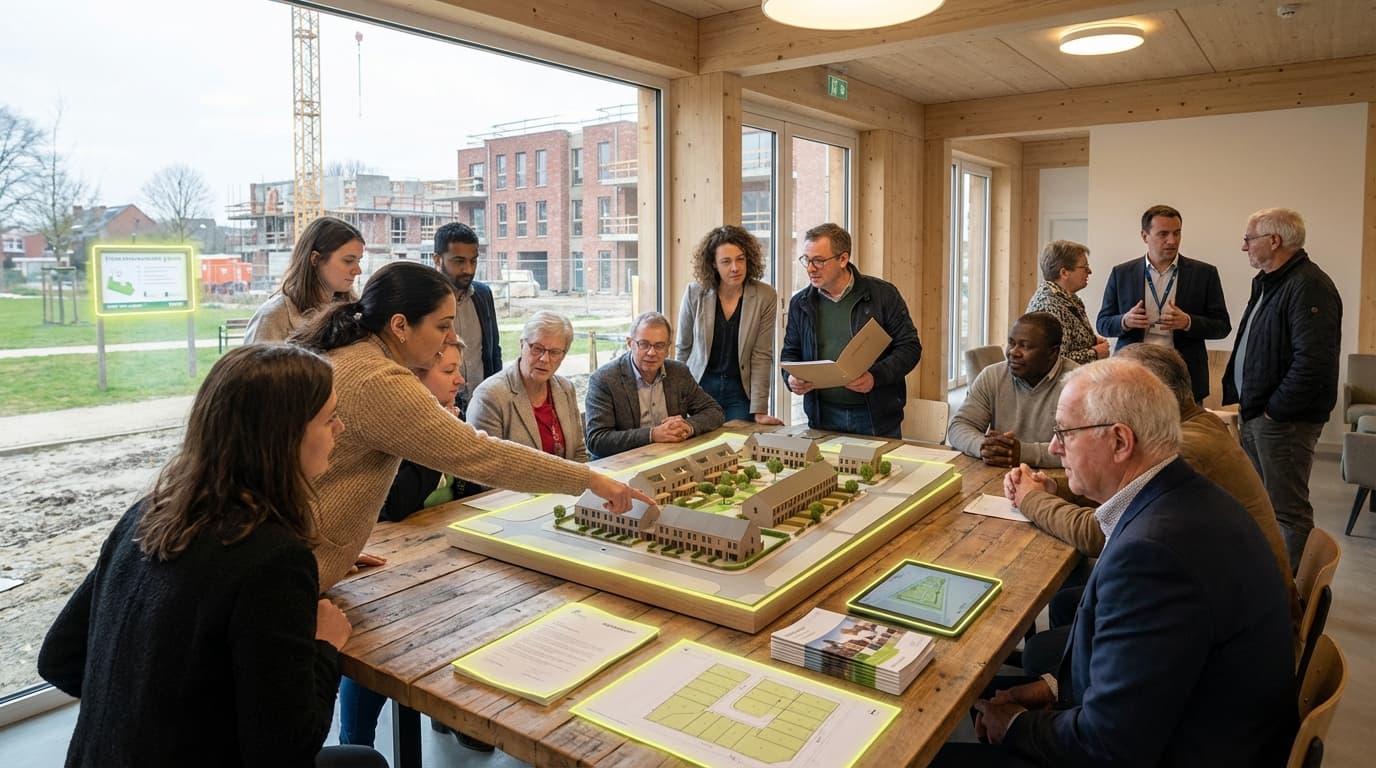
Community Land Trusts
Community Land Trusts represent a structural intervention in housing markets that addresses a fundamental tension: how to provide stable, affordable housing in contexts where land values continually rise and displace existing residents. The core problem CLTs aim to solve is the commodification of housing that treats shelter primarily as an investment vehicle rather than a social good. By separating land ownership from building ownership, this model removes land from speculative markets while allowing residents to build equity through homeownership. The nonprofit organization holds land in perpetual trust, leasing it to residents under long-term renewable agreements, typically 99 years. Residents own their homes and can sell them, but resale prices are capped by formula to preserve affordability for future buyers. This structure creates what advocates call "permanently affordable housing," breaking the cycle where public subsidies create temporary affordability that evaporates when properties return to market rates.
Early evidence from Benelux contexts suggests growing institutional interest in CLTs as a policy tool, though implementation remains concentrated in pilot projects and municipal experiments. Brussels has established several community land trust initiatives since 2012, with local government support providing initial land acquisition funding and regulatory frameworks. Wallonia has followed with regional legislation enabling CLT formation, while Dutch municipalities including Amsterdam and Utrecht are exploring adaptations of the model within their existing social housing systems. These experiments indicate a directional pattern toward hybrid governance models that blend nonprofit stewardship with municipal backing, though the scale remains modest compared to conventional social housing production. Research from Belgian implementations suggests CLTs can successfully maintain affordability across resale cycles while building resident engagement in governance, though questions persist about financial sustainability and the capacity to scale without continuous public subsidy for land acquisition.
The strategic implications for housing policy center on whether CLTs can transition from niche experiments to systematic tools for affordability preservation, particularly in gentrifying neighborhoods where displacement pressures are acute. For municipalities, CLTs offer potential advantages in maintaining mixed-income communities and leveraging public land assets without ongoing operational responsibilities. However, several thresholds require monitoring: the development of standardized legal frameworks across jurisdictions, the establishment of revolving funds or land banks to reduce acquisition costs, and the emergence of federation structures that can provide technical support to nascent trusts. The model's viability at scale depends partly on whether it can attract patient capital from institutional investors or public pension funds willing to accept below-market returns. Observers should track whether national housing strategies in the Netherlands, Belgium, and Luxembourg begin incorporating CLT targets alongside traditional social housing quotas, and whether resale formulas prove durable across economic cycles without requiring continuous regulatory adjustment.
Related Organizations

The pioneer of the CLT model in continental Europe, developing permanently affordable housing projects in Brussels.

A Belgian non-profit organization promoting and supporting communal living forms, including kangaroo living (kangoeroewonen), through advice, workshops, and policy advocacy.

An Interreg North-West Europe project dedicated to supporting the establishment of more successful CLTs in cities across the region.

The Housing Fund of the Brussels-Capital Region, which provides mortgage loans and financing often utilized in CLT schemes.

A Dutch foundation advocating for land reform and taxation shifts to address the housing crisis, promoting ideas related to community land ownership.

A Dutch organization facilitating collective ownership and affordable living through a model similar to the Mietshäuser Syndikat and CLTs.

An international charity dedicated to finding and sharing the best housing solutions, often focusing on cooperative and community land trust models.

And The People
Netherlands · Company
A design and strategy agency focusing on smart citizenship and the governance of public value in smart city contexts.

Gemeente Amsterdam
Netherlands · Government Agency
The Municipality of Amsterdam operates one of the world's most extensive municipal ground lease systems, retaining land ownership to control urban development and capture value appreciation.