Radar-Based Autonomous Driving Perception
Geography: Asia Pacific · East Asia · South Korea
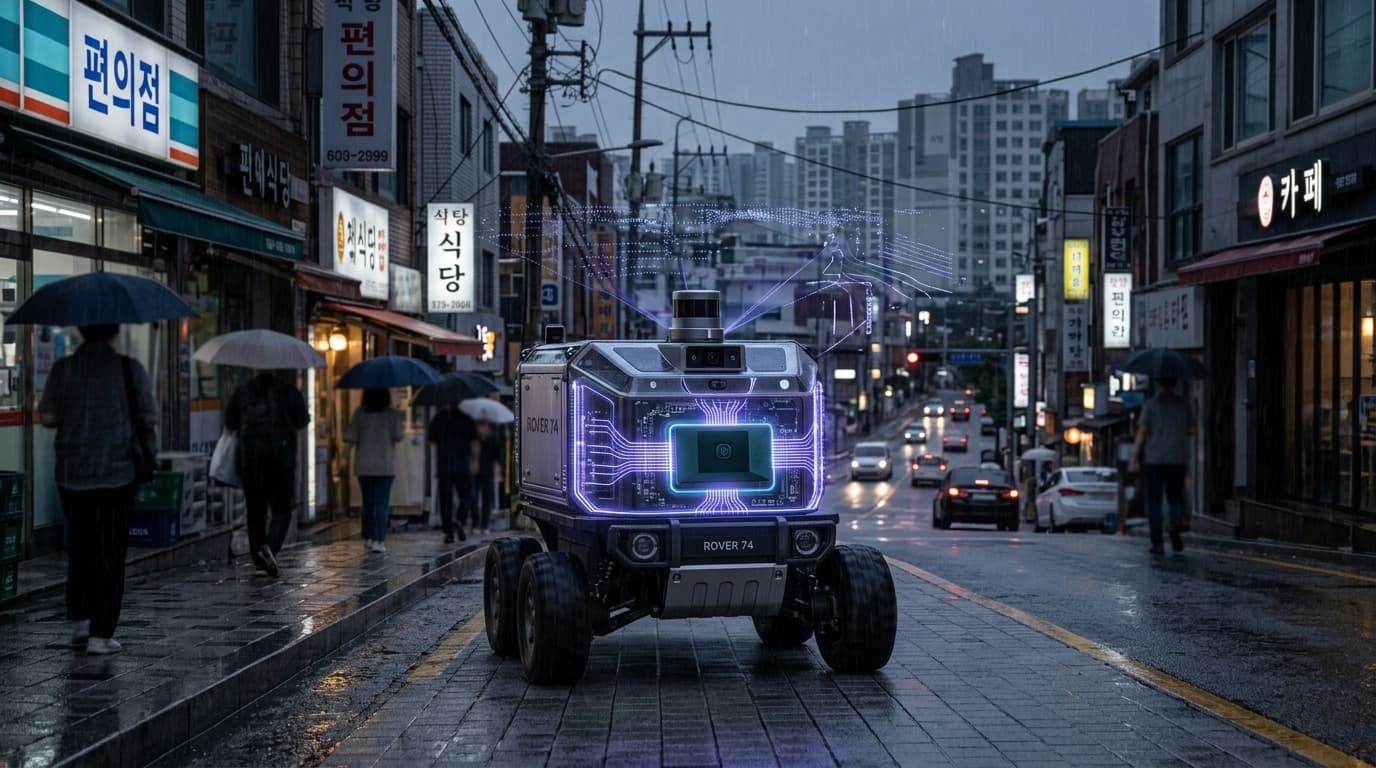
Deep Fusion AI, a Korean startup, developed a 4D imaging radar perception system that uses AI to extract high-resolution spatial information from radar signals, achieving camera-like object recognition in conditions where optical sensors are blind. The system won CES 2026 Best of Innovation in the Vehicle Tech category for its ability to detect pedestrians, vehicles, and road features in heavy rain, fog, dust, and complete darkness.
Most autonomous driving stacks rely primarily on cameras and lidar, both of which degrade significantly in adverse weather. Radar has traditionally been used only for basic distance/speed detection because its angular resolution was too poor for detailed scene understanding. Deep Fusion AI's breakthrough is using deep learning to extract rich spatial features from low-resolution radar data, effectively making a cheap sensor perform like an expensive one.
This has implications beyond autonomous driving — the same radar perception technology applies to industrial automation, drone navigation, and defense. Deep Fusion AI has partnerships with Korean automotive OEMs and is in discussions with European Tier 1 suppliers. The company represents Korea's growing startup layer in AI, distinct from the chaebol-driven innovation that dominates other sectors.
Research this in Signals
Signals turns a topic into a sourced research record you can inspect and rerun. Your first scan is free, and this one starts with Radar-Based Autonomous Driving Perception already loaded, so edit it or scan as is.