Cloud Gaming & Interactive Streaming
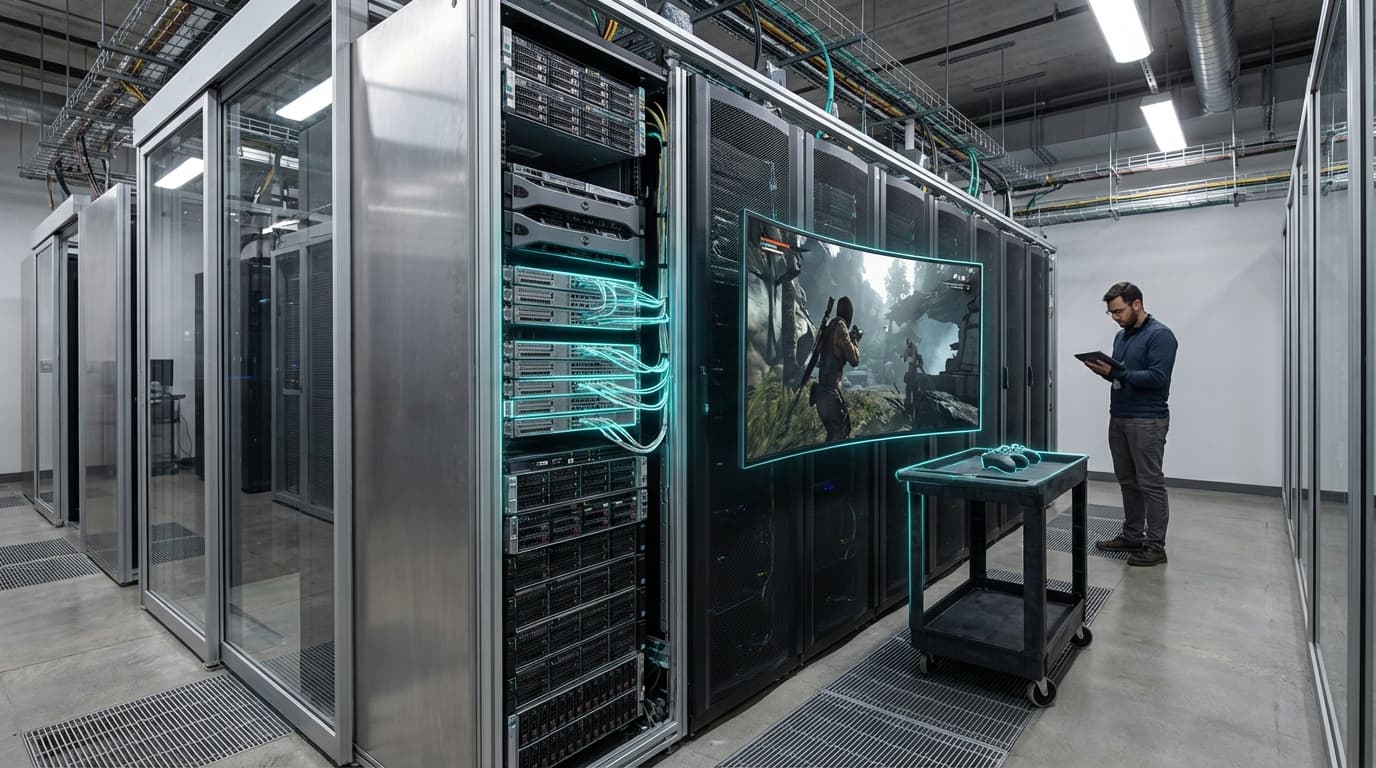
Cloud gaming and interactive streaming represent a fundamental shift in how computational workloads are distributed between end-user devices and remote data centers. Rather than requiring powerful local hardware to render graphics and process game logic, these systems execute applications entirely on cloud servers equipped with high-performance GPUs and processors. The rendered output is then compressed into a video stream and transmitted to the user's device over the internet, while input commands from controllers, keyboards, or touchscreens are sent back to the server with minimal delay. The technical challenge lies in achieving sufficiently low latency—typically under 80 milliseconds round-trip—to maintain the responsiveness that interactive entertainment demands. This requires sophisticated video encoding algorithms, adaptive bitrate streaming protocols, and strategically distributed edge computing infrastructure positioned close to population centers to minimize network transit time.
The entertainment industry has long grappled with the barrier to entry created by expensive gaming hardware, which can cost hundreds or even thousands of dollars and becomes obsolete within a few console generations. Cloud gaming addresses this friction by decoupling the viewing experience from the rendering workload, allowing users to access high-fidelity games on smartphones, tablets, smart TVs, and budget laptops that would otherwise lack the processing power for such content. This democratization of access opens new business models, including subscription services that offer rotating libraries of titles without individual purchases, and enables content creators to reach audiences who might never invest in dedicated gaming hardware. The technology also solves distribution challenges, as updates and patches are deployed once on server infrastructure rather than downloaded to millions of individual devices, and eliminates concerns about piracy since the executable code never leaves the data center.
Early commercial deployments have demonstrated both the promise and current limitations of cloud gaming platforms. Services from major technology companies have launched in select markets where broadband infrastructure can support the bandwidth and latency requirements, typically targeting users with fiber or high-speed cable connections. Industry analysts note that adoption patterns vary significantly based on regional internet infrastructure, with stronger uptake in areas where 5G networks and edge computing nodes reduce the physical distance between users and rendering servers. Beyond traditional gaming, the same underlying technology enables interactive streaming experiences such as choose-your-own-adventure narratives, virtual concerts with real-time audience participation, and collaborative creative tools that run entirely in the cloud. As network infrastructure continues to improve globally and compression algorithms become more efficient, cloud gaming positions itself as a cornerstone of the broader shift toward streaming-first entertainment consumption, potentially reshaping not only how games are played but how all computationally intensive interactive media are delivered and monetized.
Related Organizations

Through Copilot and the 'Recall' feature in Windows, Microsoft is integrating persistent memory and agentic capabilities directly into the operating system.

The leading developer of Massive Interactive Live Events (MILEs) SDKs.
Developing foundation models for robotics (Project GR00T) and vision-language models like VILA.

Creators of the PlayStation VR2, which features standard foveated rendering.

Ubitus
Taiwan · Company
Cloud gaming technology provider for Nintendo Switch and other platforms.
Provides a full high-end PC in the cloud, accessible via a small 'Ghost' set-top box or software apps.


A global cloud gaming provider offering access to PC games via browser and apps, utilizing partnerships with companies like Microsoft.

Offers a smart download and cloud gaming hybrid service, allowing users to play games while they download or stream instantly.

A cloud gaming platform specifically dedicated to retro games, allowing users to stream thousands of classic titles without emulation setup.
Supporting Evidence
Research this in Signals
Signals turns a topic into a sourced research record you can inspect and rerun. Your first scan is free, and this one starts with Cloud Gaming & Interactive Streaming already loaded, so edit it or scan as is.