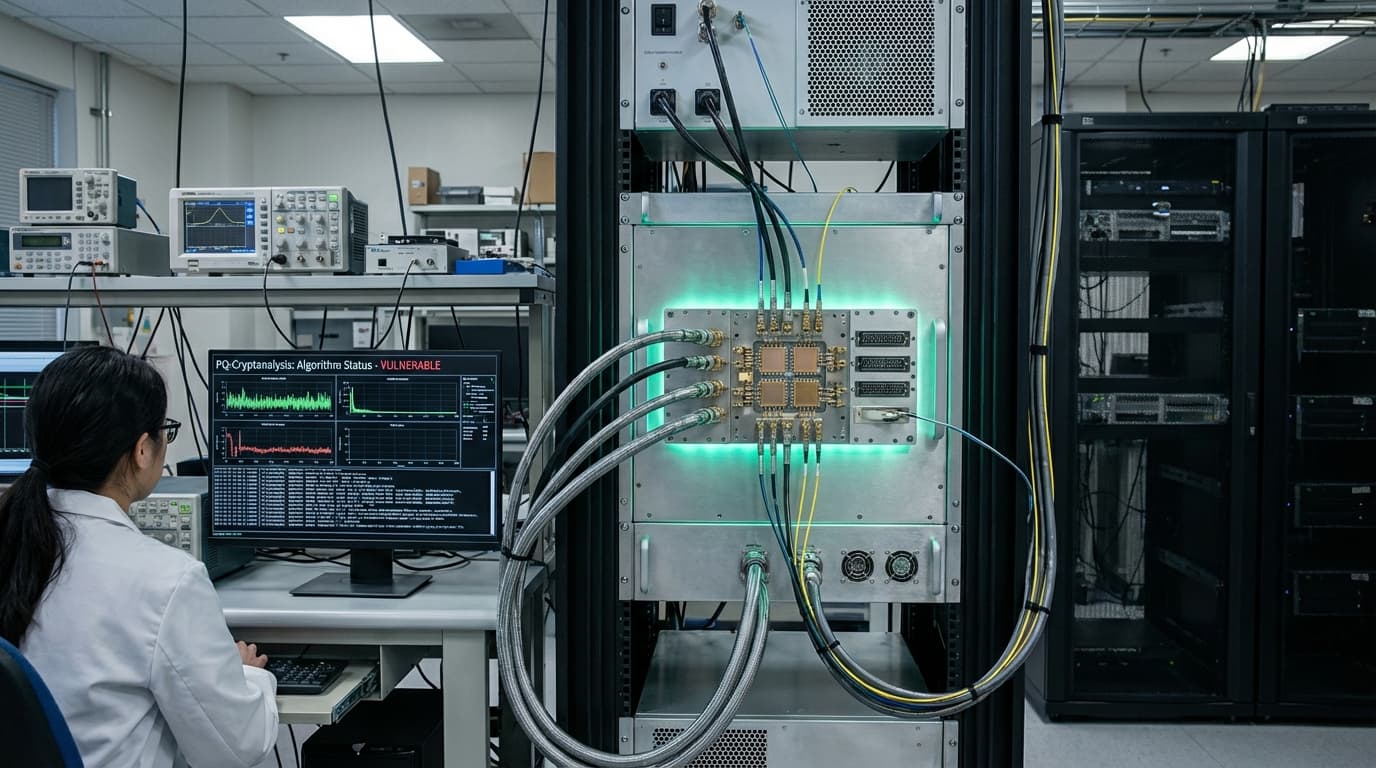
Post-Quantum Cryptanalysis Tools
Post-quantum cryptanalysis tools are software tools for testing classical cryptographic algorithms (current encryption methods) against quantum attack vectors (attacks using quantum computers), where as we transition to Post-Quantum Cryptography (PQC, encryption methods that are secure against quantum computers), we need robust tools to stress-test new algorithms (like lattice-based cryptography, encryption based on mathematical problems involving lattices) against both classical attacks (attacks using regular computers) and quantum attacks (attacks using quantum computers) to ensure they don't have hidden vulnerabilities (security weaknesses that could be exploited), making these tools essential for validating that new encryption methods are actually secure against both current and future threats, ensuring that the transition to post-quantum cryptography provides real security.
This innovation addresses the need to validate post-quantum cryptography, where new algorithms must be tested thoroughly. By providing cryptanalysis tools, these systems help ensure security. Standards organizations, security researchers, and companies are developing these tools.
The technology is essential for the transition to post-quantum cryptography, where validation is necessary for security. As PQC is deployed, cryptanalysis becomes increasingly important. However, ensuring thoroughness, managing complexity, and keeping up with new attacks remain challenges. The technology represents important infrastructure for post-quantum cryptography, but requires continued development to stay effective. Success could ensure secure post-quantum cryptography, but the tools must continue to evolve. Post-quantum cryptanalysis is an active area of research with ongoing standardization efforts.
Related Organizations

The US federal agency leading the global competition to select and standardize post-quantum cryptographic algorithms.

A spinout from Oxford University providing hardware and software IP for PQC, including side-channel analysis tools to test resistance.

Spun out of Alphabet, they provide a Security Suite that discovers cryptographic vulnerabilities and manages the migration to PQC.

Co-founded by Michele Mosca, offering 'Quantum Risk Assessment' services and tools to evaluate organizational vulnerability to quantum decryption.
Canada · University
Researchers at IQC have conducted significant experiments in quantum illumination and microwave quantum sensing.
Switzerland · Company
Offers 'AgileSec Analytics' to scan software code and binaries for cryptographic vulnerabilities and compliance.

Develops crypto-agile solutions and tools to test and migrate systems to quantum-safe standards.

Provides 'QuProtect', a software platform that monitors network traffic to detect and upgrade vulnerable cryptographic connections.

Through Copilot and the 'Recall' feature in Windows, Microsoft is integrating persistent memory and agentic capabilities directly into the operating system.

Prime contractor for the TeQuantS project and a key partner in ESA's quantum satellite initiatives.
Supporting Evidence
Research this in Signals
Signals turns a topic into a sourced research record you can inspect and rerun. Your first scan is free, and this one starts with Post-Quantum Cryptanalysis Tools already loaded, so edit it or scan as is.