Quantum Resource Estimators
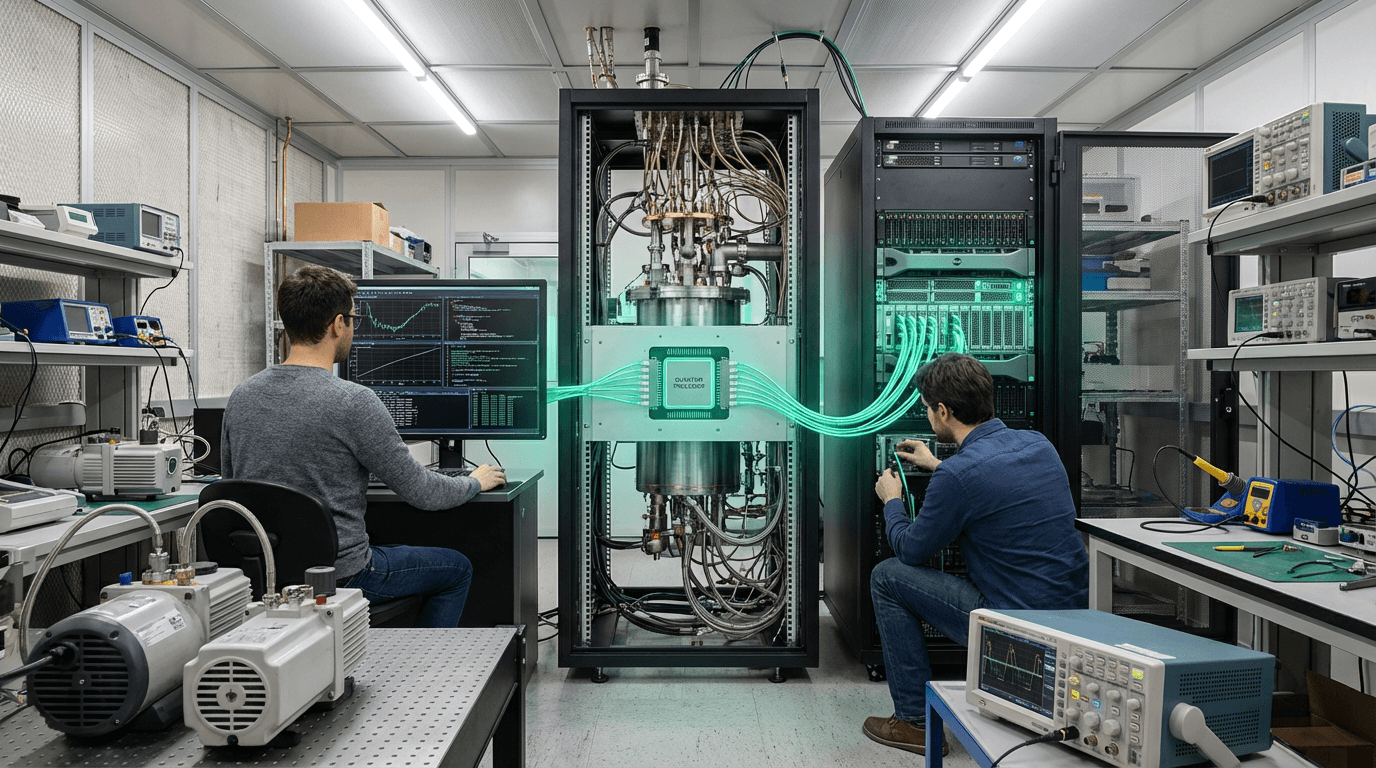
Quantum resource estimators are software tools that predict the qubit count (number of quantum bits needed) and runtime (how long the computation will take) required for large-scale quantum algorithms, calculating the physical resources (qubits, gates, time) needed for logical operations (high-level quantum operations) while accounting for error correction overhead (additional resources needed to correct errors). Before running an algorithm that might take a billion operations, we need to know if it's even feasible (practical to run), and resource estimators provide this reality check for quantum advantage claims (claims that quantum computers can solve problems faster than classical computers), helping researchers and developers understand whether their algorithms are practical and what resources they'll need, preventing wasted effort on infeasible algorithms.
This innovation addresses the challenge of understanding algorithm feasibility, where it's difficult to know if quantum algorithms are practical. By providing resource estimates, these tools help guide development. Companies like Microsoft, IBM, and research institutions are developing these estimators.
The technology is essential for practical quantum algorithm development, where understanding resource requirements is necessary for planning. As quantum algorithms become more complex, resource estimation becomes increasingly important. However, ensuring accuracy, managing complexity, and accounting for all factors remain challenges. The technology represents an important tool for quantum computing, but requires continued development to improve accuracy. Success could help guide quantum algorithm development, but the technology must provide accurate estimates. Quantum resource estimators are an active area of development with several tools available.
Related Organizations

Through Copilot and the 'Recall' feature in Windows, Microsoft is integrating persistent memory and agentic capabilities directly into the operating system.
France · Startup
Developing 'cat qubits' which are inherently protected against bit-flip errors, accelerating the path to fault tolerance.
United States · Company
Maintains Cirq and publishes extensive research on the resource costs of surface codes and specific algorithms like Shor's.

Provides watsonx.governance for managing AI risk and compliance.
United States · Company
Building a utility-scale quantum computer using silicon photonics and fusion-based architecture.

Integrated quantum computing company formed by Honeywell and CQC.

A US Department of Energy lab actively researching adiabatic logic circuits and reversible computing to overcome thermodynamic limits in microelectronics.
United States · Nonprofit
Maintains Mitiq, an open-source Python toolkit for implementing error mitigation techniques via circuit compilation.

The French National Institute for Research in Digital Science and Technology, heavily involved in AI research and Scikit-learn.
Supporting Evidence
Research this in Signals
Signals turns a topic into a sourced research record you can inspect and rerun. Your first scan is free, and this one starts with Quantum Resource Estimators already loaded, so edit it or scan as is.