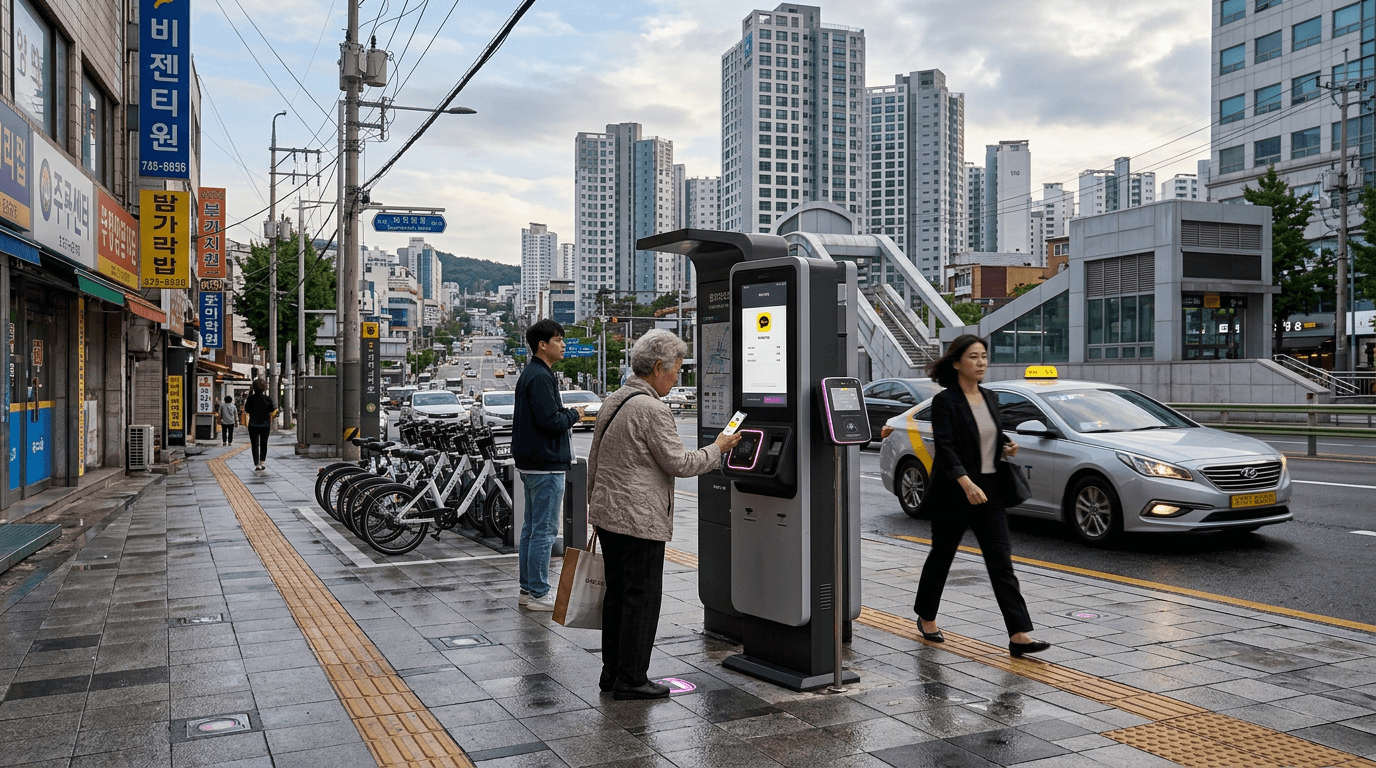
Kakao Digital Ecosystem
Geography: Asia Pacific · East Asia · South Korea
KakaoTalk messaging is installed on virtually every smartphone in South Korea, with over 53 million registered users in a country of 52 million people. The Kakao ecosystem extends from messaging to Kakao Pay (payments), Kakao Mobility (ride-hailing), Kakao Entertainment (webtoons, music), Kakao Games, Kakao Bank, and Kakao Brain (AI research). It functions as a private digital infrastructure layer.
Kakao's penetration in Korea is comparable to WeChat in China — a single platform through which citizens pay bills, hail taxis, read comics, send money, and manage daily life. Kakao Pay processes over $70B in annual transaction volume. Kakao Mobility is Korea's dominant ride-hailing and navigation platform. This breadth creates enormous data advantages for AI development and new product launches.
The platform's ubiquity also creates systemic risk — a 2022 data center fire that knocked KakaoTalk offline for hours caused national disruption. The Korean government has since classified Kakao as critical digital infrastructure. For technology innovation, Kakao's significance is as a distribution platform: any new Korean AI, fintech, or mobility product can reach near-total market penetration through KakaoTalk integration.
Research this in Signals
Signals turns a topic into a sourced research record you can inspect and rerun. Your first scan is free, and this one starts with Kakao Digital Ecosystem already loaded, so edit it or scan as is.