





Nuclear in Space
This page is a narrower case of it.
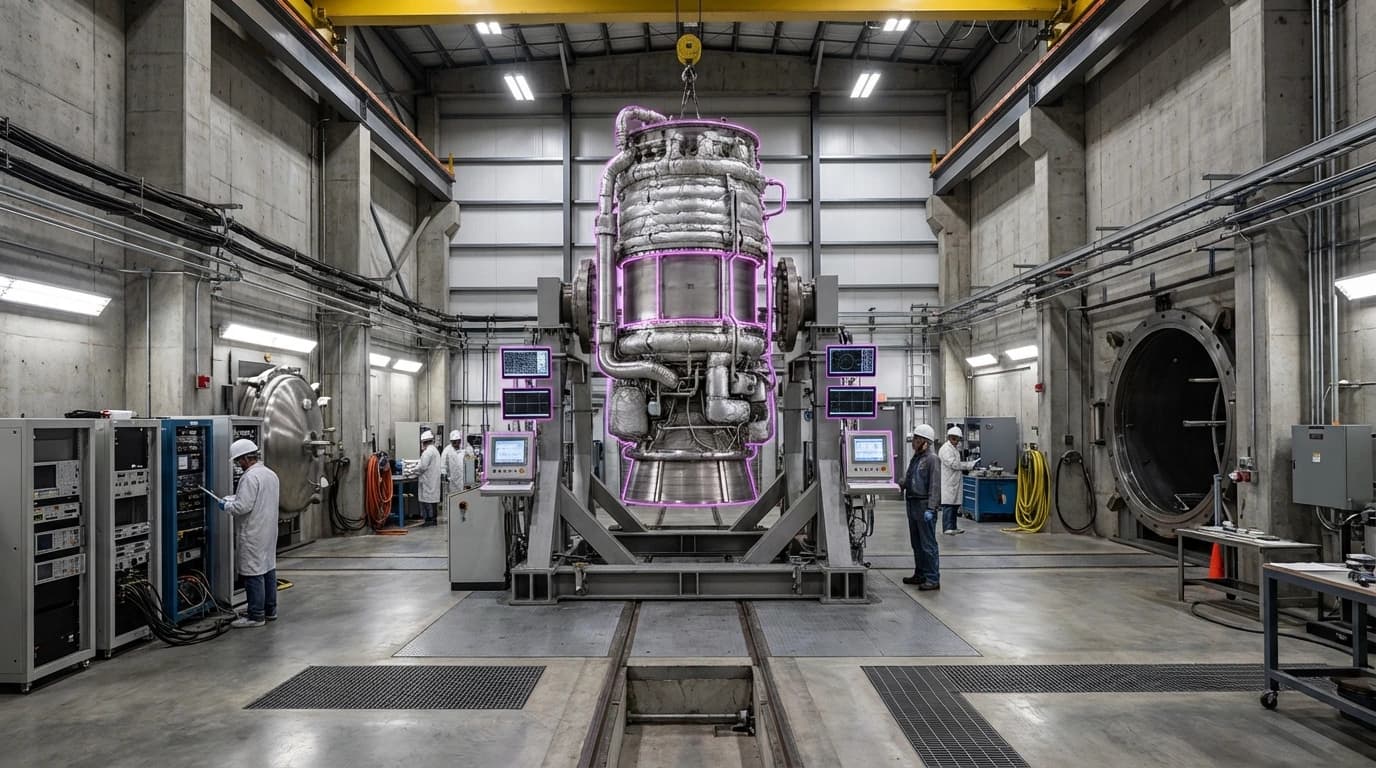
Nuclear propulsion systems represent a fundamental departure from conventional chemical rockets by harnessing the immense energy density of nuclear reactions to power spacecraft. Nuclear thermal propulsion operates by channeling a propellant—typically liquid hydrogen—through a nuclear reactor core, where fission reactions heat the propellant to extreme temperatures before expelling it through a nozzle to generate thrust. This approach achieves specific impulse values roughly twice that of chemical rockets, meaning spacecraft can carry less propellant for the same mission or accomplish more ambitious trajectories with existing payload capacities. Nuclear electric propulsion takes a different approach, using a nuclear reactor to generate electricity that powers ion or plasma thrusters. These electric propulsion systems produce relatively low thrust but can operate continuously for months or years, gradually accelerating spacecraft to velocities unattainable by chemical means. The reactor designs for both systems must withstand extreme thermal and radiation environments while maintaining criticality control and structural integrity throughout multi-year missions.
The primary challenge these technologies address is the tyranny of the rocket equation, which dictates that conventional chemical propulsion requires exponentially more propellant as mission distances and payload masses increase. For crewed Mars missions, chemical propulsion necessitates transit times of six to nine months each way, exposing astronauts to prolonged microgravity and cosmic radiation while requiring massive life support reserves. Nuclear thermal propulsion could potentially halve these transit times, significantly reducing crew health risks and mission complexity. For cargo missions to the outer solar system, nuclear electric propulsion enables spacecraft to carry scientific instruments to destinations like Jupiter's moons or Saturn's rings without the gravitational assist maneuvers that add years to mission timelines. This capability transforms mission architecture by allowing direct trajectories and flexible launch windows, reducing both cost and operational complexity. Furthermore, the high power output of space nuclear reactors can support energy-intensive scientific instruments and communication systems far beyond what solar panels can provide in the dim outer solar system.
Recent developments indicate renewed momentum for space nuclear propulsion after decades of ground-based research. NASA's renewed focus on lunar and Martian exploration has driven investment in demonstration programs, with agency roadmaps identifying nuclear propulsion as critical for sustainable deep space operations. Early ground tests of reactor components and propellant heating systems have validated core technical concepts, though significant engineering challenges remain in areas such as reactor shielding, thermal management, and launch safety protocols. The technology aligns with broader trends toward reusable space infrastructure and in-space resource utilization, as nuclear systems could potentially be refueled and serviced at orbital depots rather than being single-use assets. As international space agencies and private companies pursue increasingly ambitious exploration goals, nuclear propulsion stands as an enabling technology that could redefine humanity's reach into the solar system, transforming what were once multi-decade missions into endeavors achievable within astronaut career spans.
A supplier of nuclear components and fuel to the U.S. government.
Runs the Semantic Forensics (SemaFor) program to develop technologies for automatically detecting, attributing, and characterizing falsified media.
Developing micro-reactors for nuclear thermal and nuclear electric propulsion in space.
Russian state corporation developing the 'Zeus' nuclear-powered space tug.
Developing the VASIMR plasma engine for high-power electric propulsion.
Developer of the Xe-100 high-temperature gas-cooled small modular reactor and TRISO-X fuel.
Published forecasts about this technology, graded against what happened in Hindsight.
Nuclear in Space
This page is a narrower case of it.
Signals turns a topic into a sourced research record you can inspect and rerun. Your first scan is free, and this one starts with Nuclear Thermal & Electric Propulsion already loaded, so edit it or scan as is.