Long-Duration Energy Storage
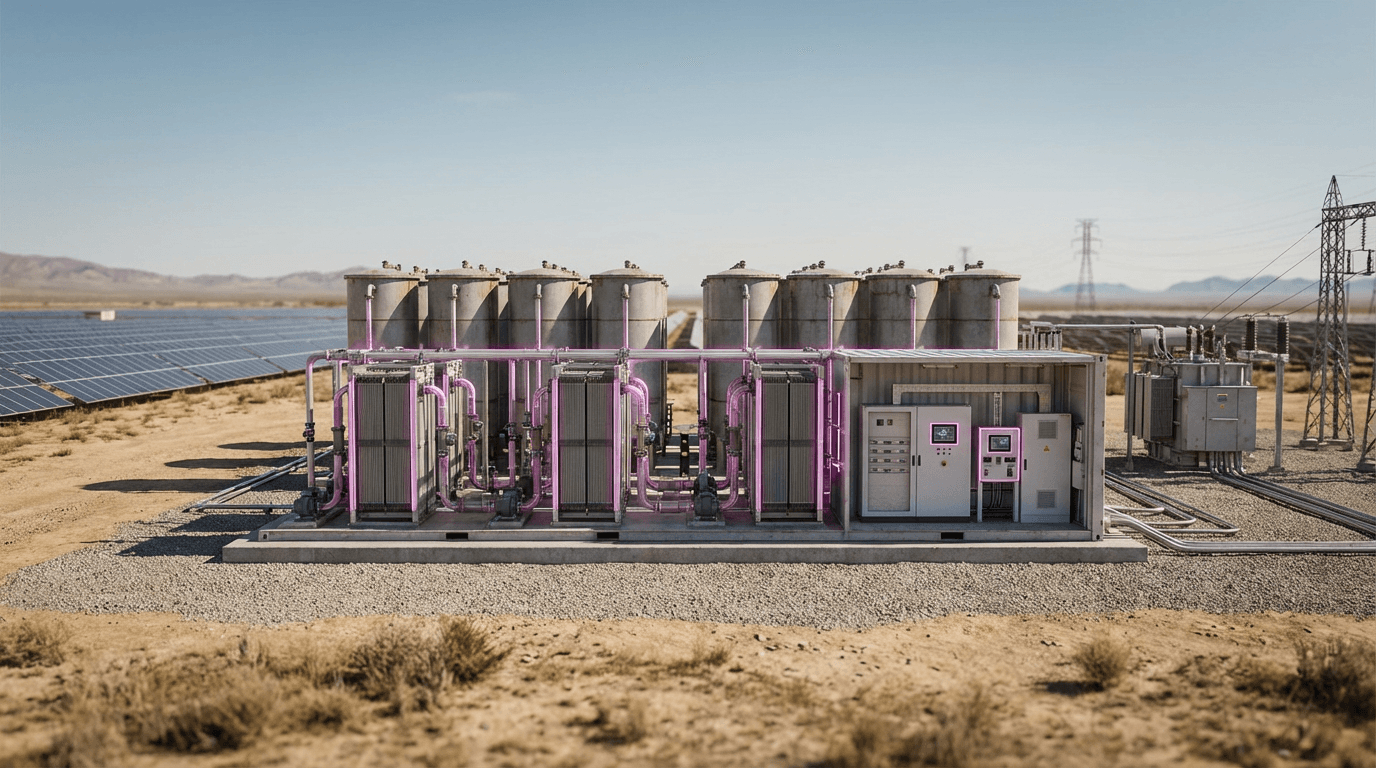
The transition to renewable energy sources has created a fundamental mismatch between when power is generated and when it is needed. Solar panels produce electricity during daylight hours, while wind turbines generate power based on weather patterns—neither of which necessarily align with peak demand periods. Traditional lithium-ion batteries, while effective for short-duration storage of 2–4 hours, cannot economically bridge the gap when renewable generation drops for extended periods, such as during multi-day weather events or seasonal variations. Long-duration energy storage addresses this critical infrastructure challenge by providing systems capable of storing and dispatching electricity for 10 to 100+ hours, enabling grids to maintain reliability even as renewable penetration approaches 80–100% of total generation capacity.
This category encompasses diverse technological approaches, each leveraging different physical principles to store energy over extended timeframes. Flow batteries circulate liquid electrolytes through electrochemical cells, with storage capacity determined by tank size rather than electrode surface area, allowing for independent scaling of power and duration. Gravity-based systems lift heavy masses—whether concrete blocks, rail cars, or water—during periods of excess generation, then release that potential energy to drive turbines when needed. Thermal storage captures heat or cold in molten salt, rocks, or phase-change materials, which can later generate steam for power production or directly serve heating and cooling loads. Compressed air energy storage (CAES) uses surplus electricity to compress air into underground caverns or purpose-built vessels, then expands that air through turbines during discharge. Each approach offers distinct advantages in terms of round-trip efficiency, geographic requirements, capital costs, and operational lifespan, allowing grid operators to select technologies suited to their specific renewable profiles and geological constraints.
Pilot projects and early commercial deployments are demonstrating the viability of these systems in real-world grid operations. Utilities in regions with high renewable penetration are increasingly procuring long-duration storage to replace retiring fossil fuel peaker plants and provide the multi-day reliability previously delivered by coal and natural gas. Research suggests that achieving fully decarbonised grids will require storage durations far beyond what lithium-ion can economically provide, with some studies indicating that 5–10% of total grid capacity may need to come from 100+ hour storage systems. As manufacturing scales up and costs decline, long-duration storage is positioned to become a cornerstone of grid infrastructure, working alongside transmission expansion and demand flexibility to create resilient, renewable-powered electricity systems. The technology represents not merely an incremental improvement but a fundamental enabler of the energy transition, providing the temporal flexibility that allows variable renewables to serve as baseload power sources.
Related Organizations
Developing and commercializing multi-day energy storage systems using iron-air battery technology specifically for grid scaling.
A global executive-led organization working to accelerate the deployment of long-duration energy storage.

Manufactures iron flow batteries for long-duration commercial and utility-scale energy storage applications.
Specializes in gravity-based energy storage solutions that lift and lower composite blocks to store and release energy.

Develops cryogenic energy storage systems (Liquid Air Energy Storage) that use liquid air as the storage medium.
Developer of Advanced Compressed Air Energy Storage (A-CAES) systems that use hydrostatic pressure to store energy.

A spin-out from Google X developing a pumped thermal energy storage system using molten salt and coolant.

Uses solid carbon blocks to store heat at extremely high temperatures, providing zero-carbon heat and power to heavy industry.

Develops geomechanical pumped storage, storing water under pressure between rock layers underground.
Redflow
Australia · Company
Develops and manufactures zinc-bromine flow batteries for stationary energy storage applications.
Supporting Evidence
Research this in Signals
Signals turns a topic into a sourced research record you can inspect and rerun. Your first scan is free, and this one starts with Long-Duration Energy Storage already loaded, so edit it or scan as is.