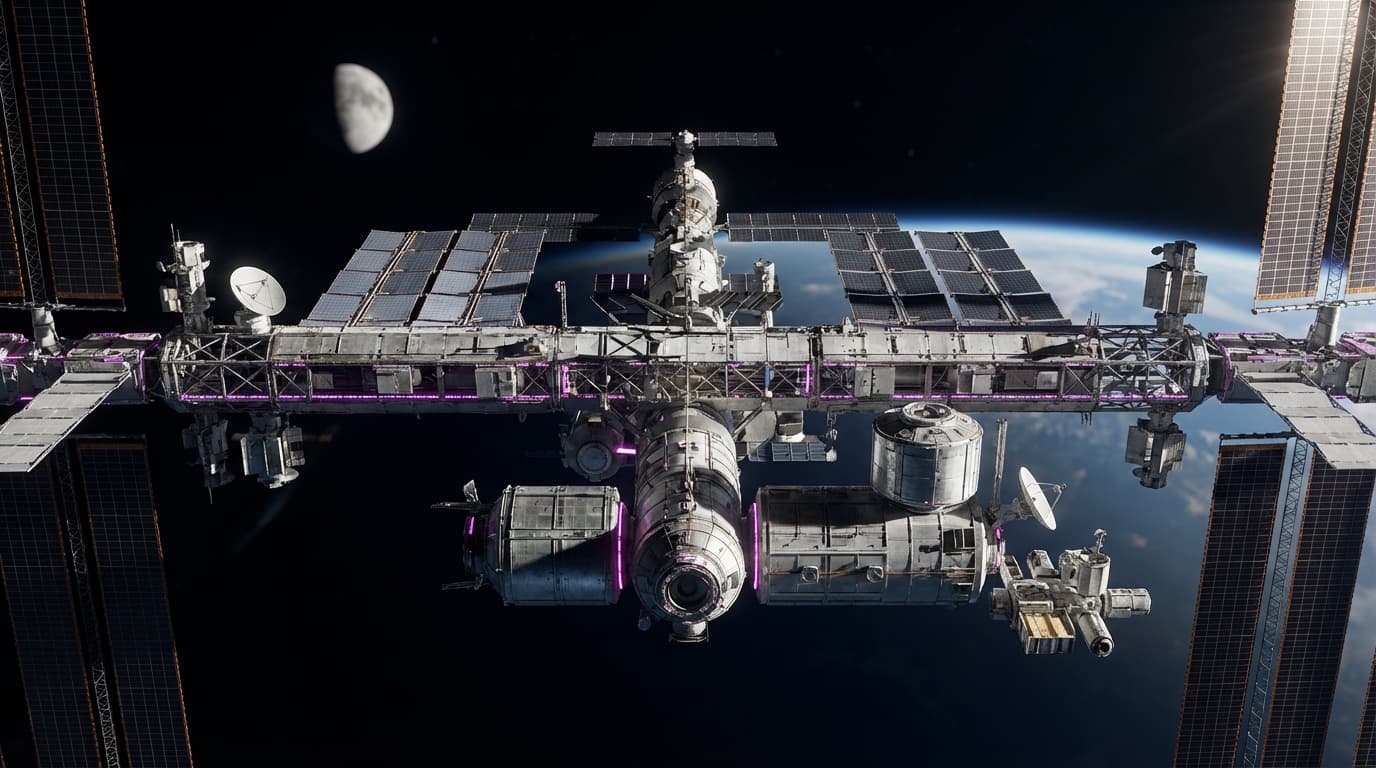
Lagrange Point Stations
Lagrange points are gravitationally stable positions in space where the combined gravitational forces of two large bodies—such as Earth and the Moon—balance with the centrifugal force experienced by a smaller object. Of the five Lagrange points in the Earth-Moon system, L1 and L2 lie between or just beyond the two bodies, while L4 and L5 form equilateral triangles with them. These locations require minimal propellant to maintain position, making them exceptionally valuable for permanent infrastructure. Unlike traditional orbits that demand constant fuel expenditure for station-keeping, objects at Lagrange points can remain relatively stationary with only minor corrections, enabling long-duration missions and reducing the logistical burden of resupply. The physics underlying these points was first described in the 18th century, but their practical application has only recently become feasible as space agencies and private entities develop the capability for sustained operations beyond low Earth orbit.
The strategic value of Lagrange point stations addresses several critical challenges in space exploration and infrastructure development. Current space operations suffer from the tyranny of Earth's gravity well, where launching payloads directly to the Moon or beyond requires enormous fuel reserves. Stations positioned at L1 could serve as transfer hubs where spacecraft refuel and resupply before continuing to lunar surface operations, effectively creating a "gas station" in space that dramatically reduces mission costs. Similarly, L2 offers a stable vantage point shielded from Earth's radio interference, making it ideal for deep space communications relays and astronomical observatories that require uninterrupted views of the cosmos. The L4 and L5 points, being the most stable of the five, present opportunities for large-scale construction projects that would be impractical in other orbital locations—research suggests these positions could eventually support manufacturing facilities that process materials extracted from lunar or asteroid sources, taking advantage of microgravity conditions without the constant orbital decay that affects lower-altitude stations.
Early conceptual work by space agencies indicates growing interest in establishing initial infrastructure at these locations within the coming decades. Proposed applications include propellant depots that would store fuel manufactured from lunar ice or delivered from Earth, gateway stations that coordinate traffic between Earth, the Moon, and eventually Mars, and telescope arrays positioned to observe phenomena impossible to study from Earth's surface. The Artemis program and similar initiatives have identified Lagrange points as key nodes in future cislunar infrastructure, with L2 particularly noted for its potential role in supporting lunar far-side operations. As launch costs continue to decline and in-space manufacturing techniques mature, industry analysts note that Lagrange point stations could evolve from simple unmanned depots into permanent crewed facilities, potentially hosting scientific research, spacecraft assembly operations, and even long-term habitation modules. This infrastructure represents a fundamental shift from treating space as a destination to viewing it as a domain for sustained economic and scientific activity, establishing the foundation for a truly spacefaring civilisation that operates routinely beyond Earth orbit.
Related Organizations

Leads the EAGLE-1 mission and the SAGA program to build a European quantum communication infrastructure in space.

NASA's lead center for the In-Space Manufacturing (ISM) project, focusing on on-demand fabrication and repair.

Major defense contractor developing Reciprocal Quantum Logic (RQL) for cryogenic computing.

Science operations center for JWST and the upcoming Nancy Grace Roman Space Telescope.

Partner in the EuroQCI initiative, working on the space segment of the European quantum communication infrastructure.
China National Space Administration (CNSA)
China · Government Agency
Operates the Queqiao relay satellites stationed at Earth-Moon L2 to support lunar far-side missions.

A major European satellite manufacturer leading the ASCEND feasibility study.
Developed the optical mirror system for JWST and contributes to Roman Space Telescope.

The Aerospace Corporation
United States · Nonprofit
A federally funded research and development center (FFRDC) focused on national security space.

A global aerospace and defense technology innovator delivering end-to-end solutions.
Supporting Evidence
Research this in Signals
Signals turns a topic into a sourced research record you can inspect and rerun. Your first scan is free, and this one starts with Lagrange Point Stations already loaded, so edit it or scan as is.