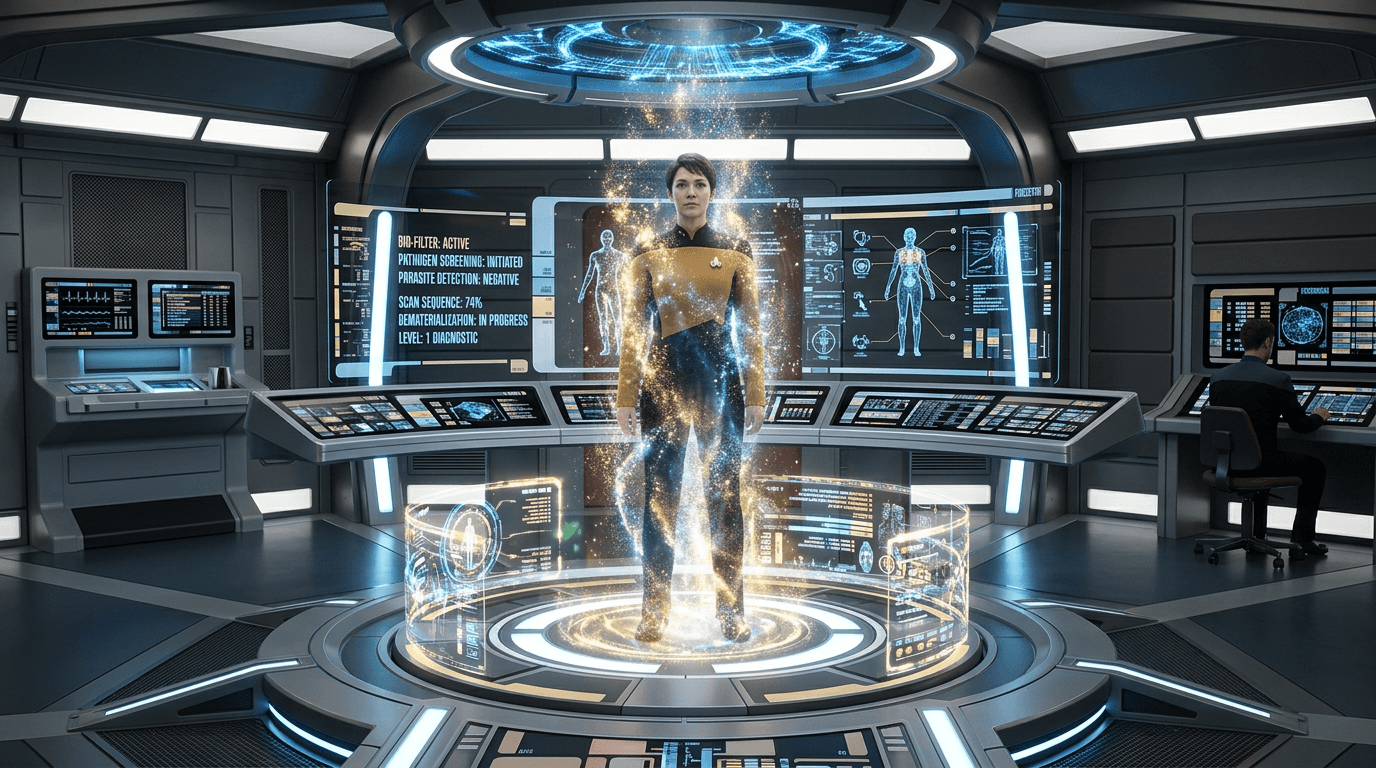
Transporter Biofilter
A transporter biofilter is a speculative biosafety subsystem embedded within transporter operations, intended to detect and remove harmful biological agents from matter-stream data during dematerialization and rematerialization. In Star Trek logic, it functions as a high-speed pattern-analysis and exclusion layer: scanning biological signatures, identifying hazardous pathogens or contaminants, and preventing reintegration of dangerous material into the destination body pattern. Framed as a concept, it combines molecular diagnostics, computational pattern recognition, and strict reconstruction constraints within a single transfer workflow.
The strategic role of this idea is less about teleportation itself and more about borderless biosecurity in high-mobility systems. If movement between locations is effectively instantaneous, health protection must shift from perimeter checks to embedded pipeline controls. That framing mirrors real-world pressures in aviation, healthcare logistics, and critical infrastructure, where rapid diagnostics, genomic surveillance, and automated contamination controls are becoming essential. The transporter biofilter concept pushes that trajectory to an extreme endpoint: biosafety controls operating at the same speed as mobility infrastructure, with minimal human intervention and very high consequence for false decisions.
Scientific plausibility is mixed. The underlying components, such as rapid pathogen detection, sequencing-assisted classification, and real-time risk scoring, are credible research areas; full transporter-grade biological filtering remains fictional because it assumes complete and reversible matter-pattern handling beyond current physics and engineering. Even so, the concept is valuable for foresight: it highlights design principles for future high-throughput mobility systems, including layered detection, explainable auto-quarantine decisions, fail-safe defaults, and governance models for what counts as a removable threat versus protected biological variation.
Research this in Signals
Signals turns a topic into a sourced research record you can inspect and rerun. Your first scan is free, and this one starts with Transporter Biofilter already loaded, so edit it or scan as is.