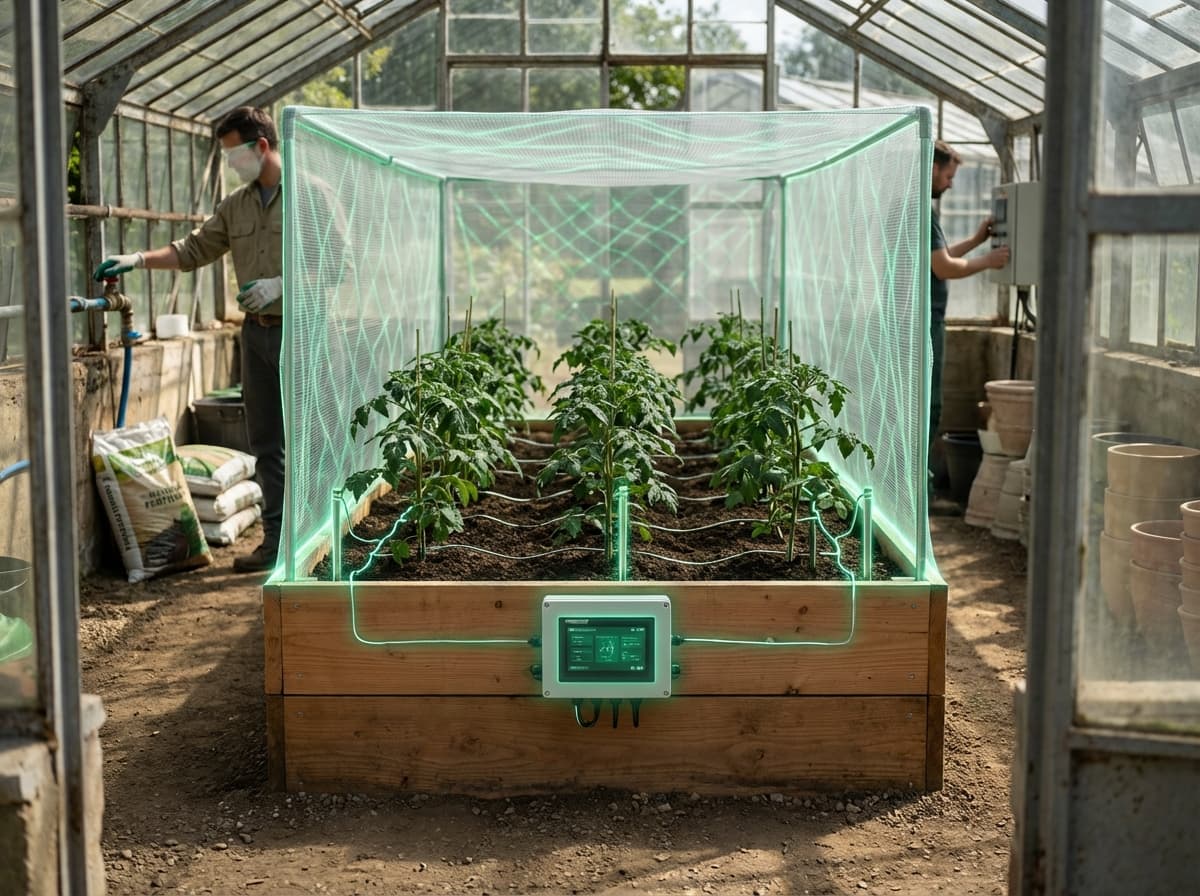
Electro-Culture Growth Stimulation
Electro-culture growth stimulation systems apply finely tuned low-voltage currents or high-voltage electrostatic fields to plant root zones, canopies, or irrigation lines using conductive stakes, antennas, or foliar electrodes. The electrical stimuli enhance ion transport across cell membranes, activate stress-response pathways, and can improve nutrient uptake or water-use efficiency when synchronized with growth stages.
Organic growers, controlled-environment farms, and research vineyards are experimenting with electro-culture rigs to boost yields without additional chemicals, extend shelf life, or mitigate drought stress. Startups and university labs report promising results for leafy greens, strawberries, and grapevines, though performance varies widely by species and application protocol.
To unlock mainstream adoption, the sector needs standardized dosing recipes, UL-listed hardware safe for field crews, and agronomic trials that isolate electro-culture impacts from environmental noise. Future systems may integrate with sensor networks to modulate waveforms based on plant signals, but regulators will demand evidence that electromagnetic exposure does not affect wildlife or consumer safety.
Related Organizations
Nagoya University Center for Low-temperature Plasma Sciences
Japan · University
A leading global research center dedicated to plasma applications, specifically focusing on plasma agriculture for crop yield enhancement.

Develops plasma-activated water (PAW) systems that mimic lightning to fix nitrogen and stimulate plant health without chemicals.
Drexel University (C. & J. Nyheim Plasma Institute)
United States · University
Conducts extensive research on the application of non-thermal plasma and pulsed electric fields in agriculture.

Recently proposed 'electro-agriculture' concepts involving replacing photosynthesis with solar-to-electric-to-acetate pathways.

Vivent Biosignals
Switzerland · Company
Creators of PhytlSigns, a system that monitors plant electrophysiology to diagnose stress and optimize growing conditions.

Developing agricultural support tools including electrostatic spraying and growth stimulation technologies for greenhouses.
Develops fogponics systems that utilize electrostatics to optimize nutrient mist delivery to roots.
Supporting Evidence
Research this in Signals
Signals turns a topic into a sourced research record you can inspect and rerun. Your first scan is free, and this one starts with Electro-Culture Growth Stimulation already loaded, so edit it or scan as is.