Biodegradable Field Microsensors
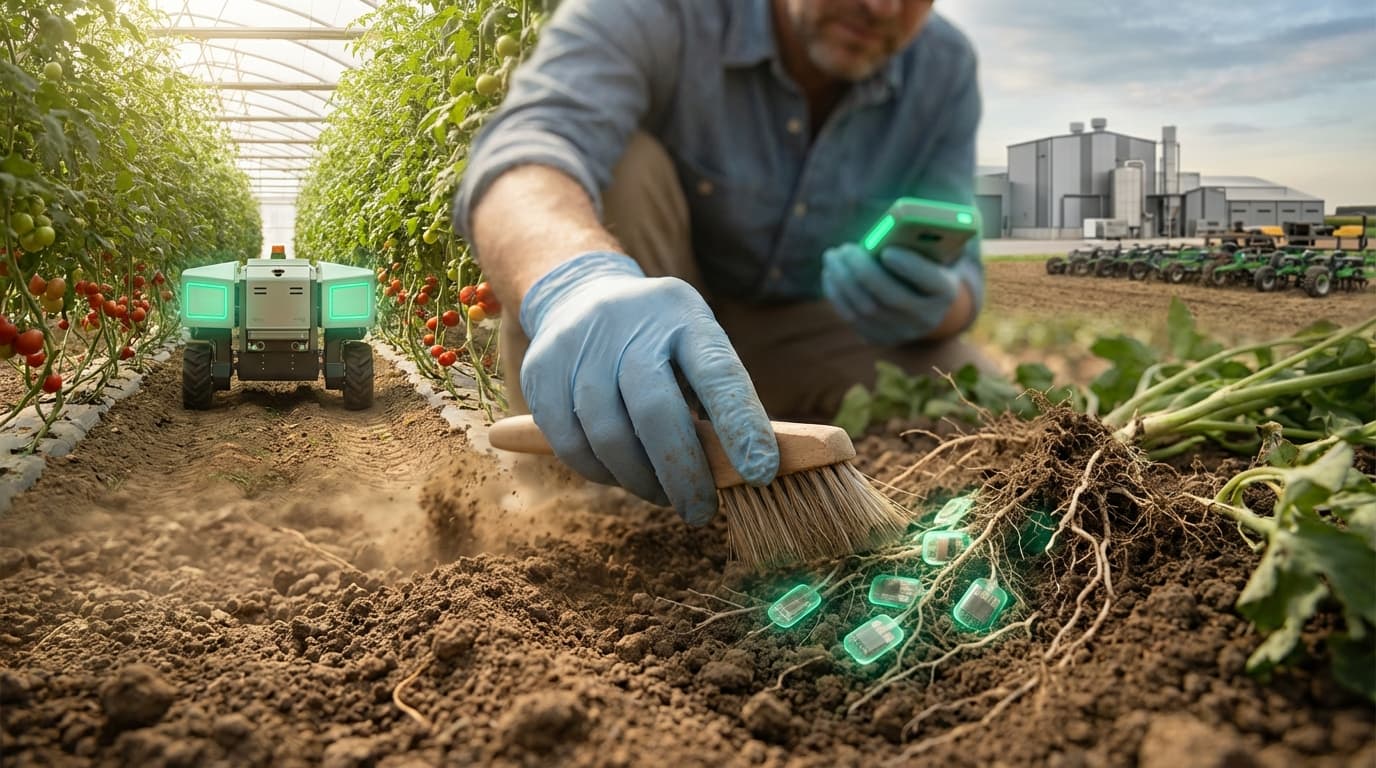
Biodegradable field microsensors, sometimes called electronic dust, encapsulate microcontrollers, MEMS sensors, and low-power radios inside substrates made from magnesium, silk fibroin, cellulose, or other bio-resorbable materials. Farmers disperse them across fields via drones or pneumatic spreaders to capture micro-climate data, pest vibrations, and soil hydration at square-meter resolution, then rely on over-the-air updates and mesh relays to push readings into farm management systems.
Because the circuitry dissolves into benign compounds after weeks or months, these sensors prevent the agricultural e-waste problem associated with traditional IoT nodes. Public agencies exploring large-scale soil carbon monitoring and insurers pricing parametric crop policies are piloting this approach to gather dense datasets without retrieval costs or landfill concerns.
Future iterations will integrate passive RFID harvesting, microfluidic nutrient assays, and computer-vision tags readable by autonomous implements. Challenges remain in balancing sensor longevity with degradation speed, ensuring reliable connectivity from thousands of low-power nodes, and earning regulatory approval for soil deposition. If solved, biodegradable microsensors can provide the granular observability required for climate-resilient farming while aligning with regenerative stewardship goals.
Related Organizations

Home to John Rogers' lab, the primary pioneer of epidermal electronics and skin-integrated haptic interfaces.

Conducts extensive research on living materials, including fungal mycelium for sensing and responsive surfaces.

Empa
Switzerland · Research Lab
Swiss Federal Laboratories for Materials Science and Technology, researching self-healing elastomers.

Conducts advanced research into cryogenic CMOS and quantum computing interconnects.

Conducts advanced research in transient electronics for agriculture, specifically soil nitrate sensors.

Develops materials and processes for printed and flexible electronics, including smart sensing platforms.

Develops passive, printed humidity and moisture sensors that are ultra-thin and require no batteries.

Developed SmartStax PRO, the first corn product with RNAi-based rootworm control.
Supporting Evidence
Research this in Signals
Signals turns a topic into a sourced research record you can inspect and rerun. Your first scan is free, and this one starts with Biodegradable Field Microsensors already loaded, so edit it or scan as is.