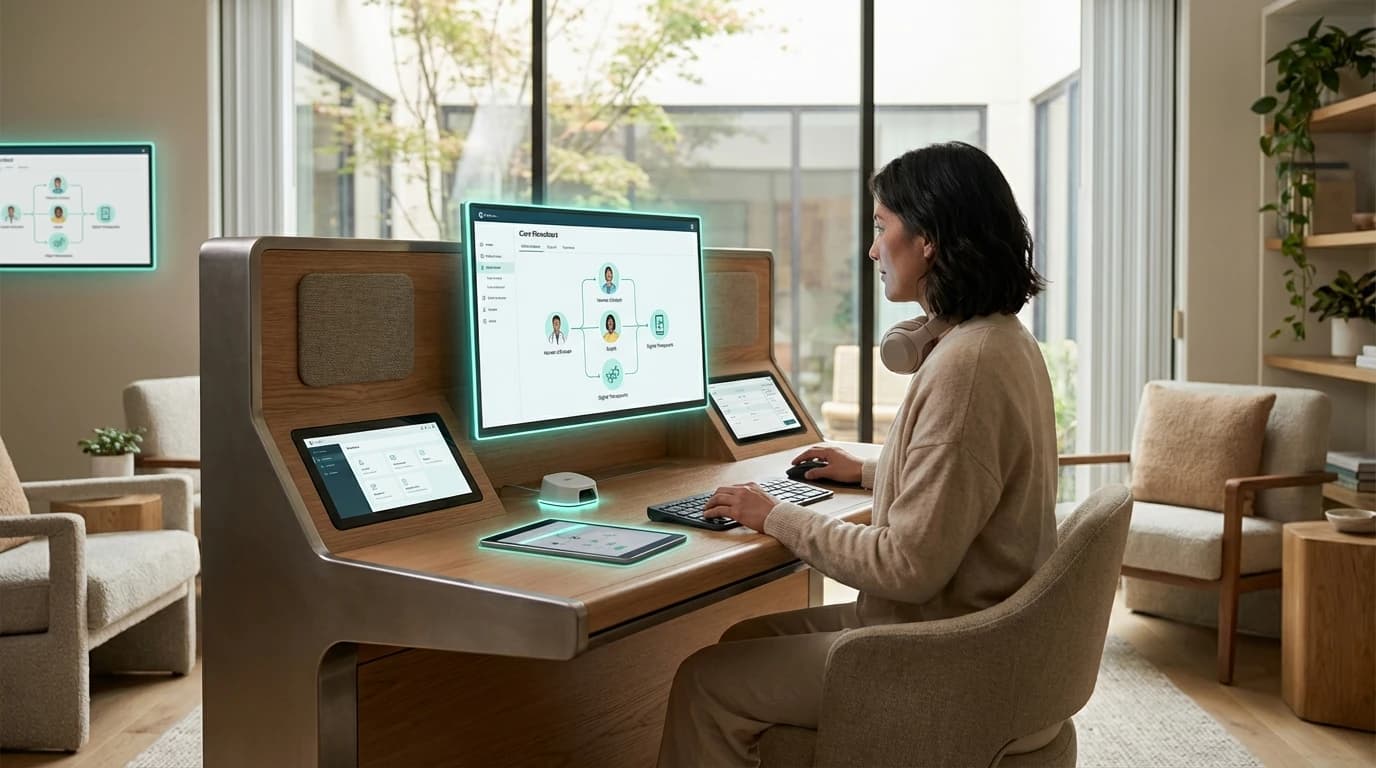
Blended Care Orchestration Systems
Blended Care Orchestration Systems represent a sophisticated approach to healthcare delivery that addresses a fundamental challenge in modern treatment: the fragmentation of care across multiple providers, modalities, and intervention types. Traditional healthcare models often operate in silos, with digital health applications, peer support networks, and clinical professionals functioning independently without meaningful coordination or information exchange. This disconnection creates gaps in care continuity, duplicates efforts, and frequently leaves patients navigating complex treatment landscapes without adequate guidance. These orchestration platforms solve this problem by serving as an intelligent coordination layer that dynamically routes individuals to the most appropriate care resource at any given moment, whether that's a self-guided meditation app, a peer support group, a health coach, or a licensed clinician. The systems employ sophisticated algorithms that continuously assess risk levels, engagement patterns, symptom severity, and treatment progress to determine optimal care pathways while maintaining strict privacy controls and consent management frameworks.
The healthcare industry faces mounting pressure to deliver effective interventions at scale while managing costs and addressing workforce shortages, particularly in mental health and chronic disease management. Blended care orchestration addresses these challenges by maximizing the efficiency of limited clinical resources, reserving high-touch professional interventions for moments of greatest need while leveraging digital therapeutics and peer support for ongoing maintenance and prevention. This approach enables organizations to serve larger populations without proportionally increasing clinical staff, while simultaneously improving outcomes through more timely and contextually appropriate interventions. For employers managing workplace wellbeing programs, these systems offer a unified framework that can adapt to individual employee needs without requiring HR teams to manually coordinate between multiple vendors and service providers. The platforms also solve critical data integration challenges, creating a longitudinal view of an individual's care journey across different modalities while respecting privacy boundaries and regulatory requirements like HIPAA.
Early deployments of blended care orchestration have emerged primarily in mental health services, chronic disease management programs, and corporate wellness initiatives, where the need for flexible, scalable care models is most acute. Research suggests that these hybrid approaches can achieve clinical outcomes comparable to traditional care while significantly reducing costs and improving access, particularly for populations in underserved areas or those facing barriers to in-person treatment. The systems typically integrate evidence-based digital therapeutics—such as cognitive behavioral therapy apps or medication adherence tools—with scheduled check-ins from coaches or clinicians, creating a continuum of support that adapts as individuals progress or encounter setbacks. As healthcare systems increasingly recognize the limitations of purely digital or purely human-delivered interventions, blended care orchestration is positioned to become a standard architecture for population health management. The technology aligns with broader industry movements toward value-based care, where outcomes matter more than service volume, and represents a practical pathway toward truly personalized medicine that meets individuals where they are in their recovery or management journey.
Related Organizations

Digital health prescribing platform spun out of Providence St. Joseph Health.








A mental health company offering an AI-powered chatbot based on Cognitive Behavioral Therapy (CBT).

Virtual mental health services for high-acuity patients.
Supporting Evidence
Research this in Signals
Signals turns a topic into a sourced research record you can inspect and rerun. Your first scan is free, and this one starts with Blended Care Orchestration Systems already loaded, so edit it or scan as is.