Digital Signatures
This page is a narrower case of it.
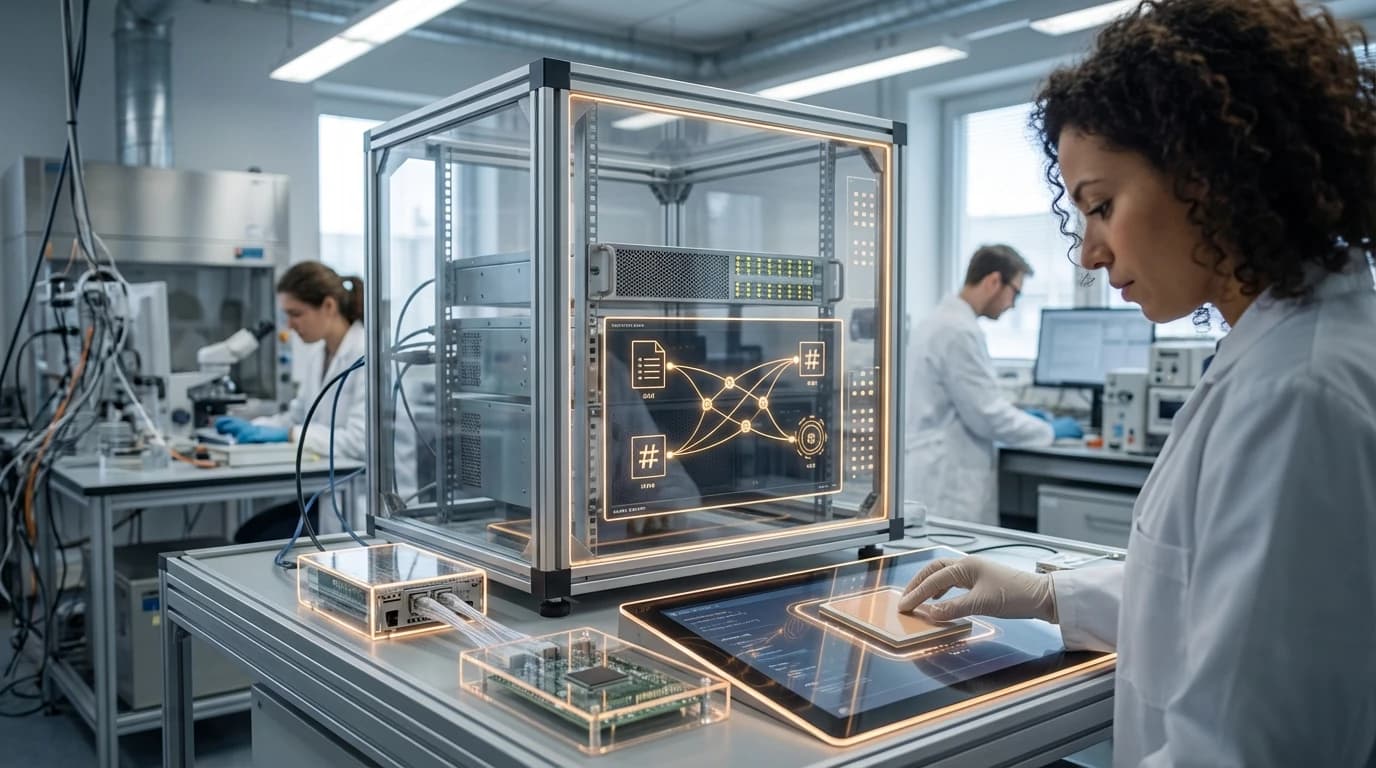
In an era where sensitive data increasingly flows through third-party systems and cloud infrastructures, organisations face a fundamental tension between operational efficiency and data integrity. Traditional digital signatures verify that data hasn't been tampered with, but they break when legitimate computations are performed on that data—requiring either re-signing by the original authority or accepting unverified results. Homomorphic signatures resolve this dilemma through a cryptographic mechanism that allows mathematical operations to be performed on signed data while maintaining verifiable authenticity. The technology works by creating signatures that are "computation-aware," meaning they can be transformed alongside the data they protect. When a third party performs an authorised operation—such as calculating an average, sum, or other aggregate function—the signature updates accordingly, producing a new valid signature that proves the result was correctly derived from authentically signed inputs, all without requiring access to the original signing key or exposing the underlying data.
This capability addresses critical challenges in distributed computing environments where data must traverse multiple processing stages while maintaining provenance and integrity. In cloud computing scenarios, organisations can outsource data processing to external providers without sacrificing the ability to verify that computations were performed correctly on authentic source data. Supply chain systems benefit similarly, as product information can be aggregated and transformed across multiple parties while maintaining cryptographic proof of authenticity at each stage. Financial institutions can perform privacy-preserving analytics on signed transaction data, producing verifiable aggregate statistics without exposing individual records. The technology also enables new models for data marketplaces and collaborative analytics, where multiple parties contribute signed datasets that can be combined and analysed while preserving each contributor's cryptographic attestation of their input's validity.
Research implementations have demonstrated homomorphic signatures in blockchain networks for verifiable computation and in healthcare systems for privacy-preserving medical data analysis. Early deployments indicate particular promise in scenarios requiring audit trails across organisational boundaries, where traditional approaches would require either centralised trust or complex multi-party signing protocols. As regulatory frameworks increasingly demand both data privacy and computational transparency—particularly in sectors like finance, healthcare, and government services—homomorphic signatures represent a crucial building block for verification architectures. The technology aligns with broader industry movements toward zero-knowledge proofs and privacy-preserving computation, offering a pathway to systems where data can be processed, aggregated, and analysed without compromising either security or verifiability. While computational overhead currently limits some applications, ongoing cryptographic research continues to improve efficiency, positioning homomorphic signatures as an essential component of future trust infrastructures where data must remain both private and provably authentic throughout its lifecycle.
Published forecasts about this technology, graded against what happened in Hindsight.
Digital Signatures
This page is a narrower case of it.
Signals turns a topic into a sourced research record you can inspect and rerun. Your first scan is free, and this one starts with Homomorphic Signatures already loaded, so edit it or scan as is.