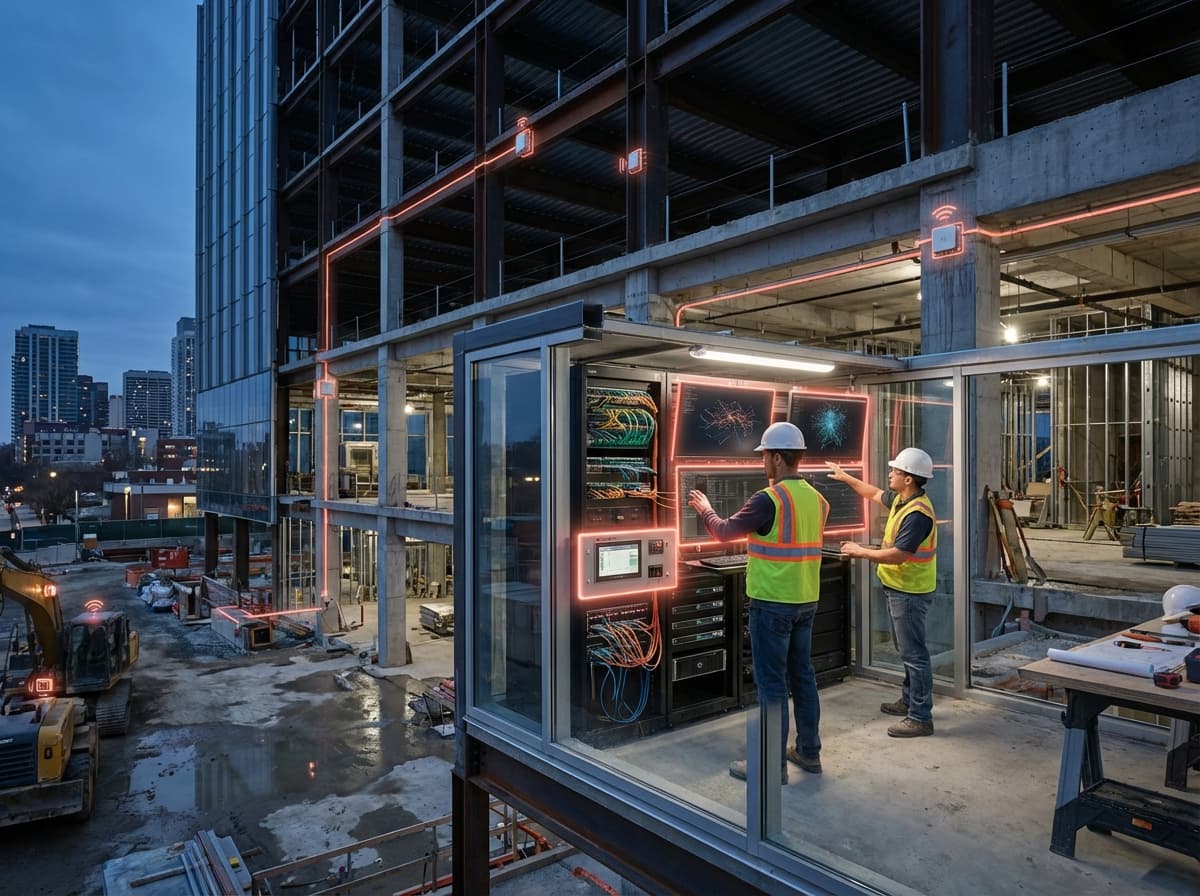
Cyber-Physical Building Security
Modern buildings have evolved into complex networks of interconnected systems, where heating, ventilation, air conditioning (HVAC), elevators, lighting, access control, and fire safety systems communicate through digital networks. This convergence of physical infrastructure and digital control systems creates what are known as cyber-physical systems—environments where computational elements directly influence physical processes. While this integration enables unprecedented efficiency and automation, it also introduces significant vulnerabilities. A successful cyberattack on building systems could result in consequences far beyond data breaches: manipulated HVAC systems could create dangerous temperature extremes, compromised elevator controls could trap occupants, and disabled fire suppression systems could prevent emergency responses. The fundamental challenge lies in securing systems that were often designed with operational efficiency rather than cybersecurity in mind, many of which now connect to broader networks and the internet.
Cyber-physical building security addresses these vulnerabilities through layered defense strategies that combine network segmentation, continuous monitoring, authentication protocols, and intrusion detection systems specifically designed for building automation networks. Unlike traditional IT security, which primarily protects data, cyber-physical security must safeguard both digital information and physical safety. This requires specialized approaches that account for the unique characteristics of building systems: their long operational lifespans, the difficulty of patching legacy equipment, and the critical nature of maintaining continuous operation. The construction and facilities management industries face particular challenges in implementing these protections, as building systems often involve multiple vendors, proprietary protocols, and equipment that may remain in service for decades. Research suggests that many existing building automation systems lack basic security features such as encrypted communications or multi-factor authentication, making them attractive targets for malicious actors ranging from cybercriminals to nation-state adversaries.
The urgency of addressing these vulnerabilities has grown as smart building technologies become standard in new construction and retrofit projects. Early deployments of comprehensive cyber-physical security frameworks indicate that effective protection requires collaboration between building owners, system integrators, cybersecurity specialists, and equipment manufacturers. Industry analysts note increasing adoption of security-by-design principles, where protection measures are incorporated from the earliest planning stages rather than added retroactively. This includes implementing zero-trust architectures that verify every access request, deploying anomaly detection systems that identify unusual patterns in building system behavior, and establishing incident response protocols specific to building environments. As construction projects increasingly incorporate artificial intelligence and machine learning for building optimization, the attack surface continues to expand, making robust cyber-physical security not merely a technical requirement but a fundamental aspect of occupant safety and building resilience in an increasingly connected world.
Related Organizations

Provides device-level cybersecurity for the IoT edge, specifically for building automation.

Building Cyber Security (BCS)
United States · Nonprofit
Non-profit developing a framework and certification for cyber-physical safety in buildings.

Specializes in securing the Extended Internet of Things (XIoT), bridging the gap between IT, OT, and IoT security.

Armis
United States · Startup
Asset intelligence platform that discovers and secures managed, unmanaged, and IoT/OT devices.

Delivers OT and IoT visibility and security, using AI to detect anomalies in industrial control networks.

Multinational conglomerate operating in aerospace and building technologies.

Johnson Controls
United States · Company
Multinational conglomerate producing HVAC and building control systems, notably the OpenBlue digital platform.

US federal agency that sets standards for technology, including facial recognition vendor tests (FRVT).

Industrial giant offering the 'Senseye Predictive Maintenance' suite and MindSphere IoT platform.

Provides industrial cybersecurity platform for asset identification, threat detection, and response in OT environments.
Supporting Evidence
Research this in Signals
Signals turns a topic into a sourced research record you can inspect and rerun. Your first scan is free, and this one starts with Cyber-Physical Building Security already loaded, so edit it or scan as is.