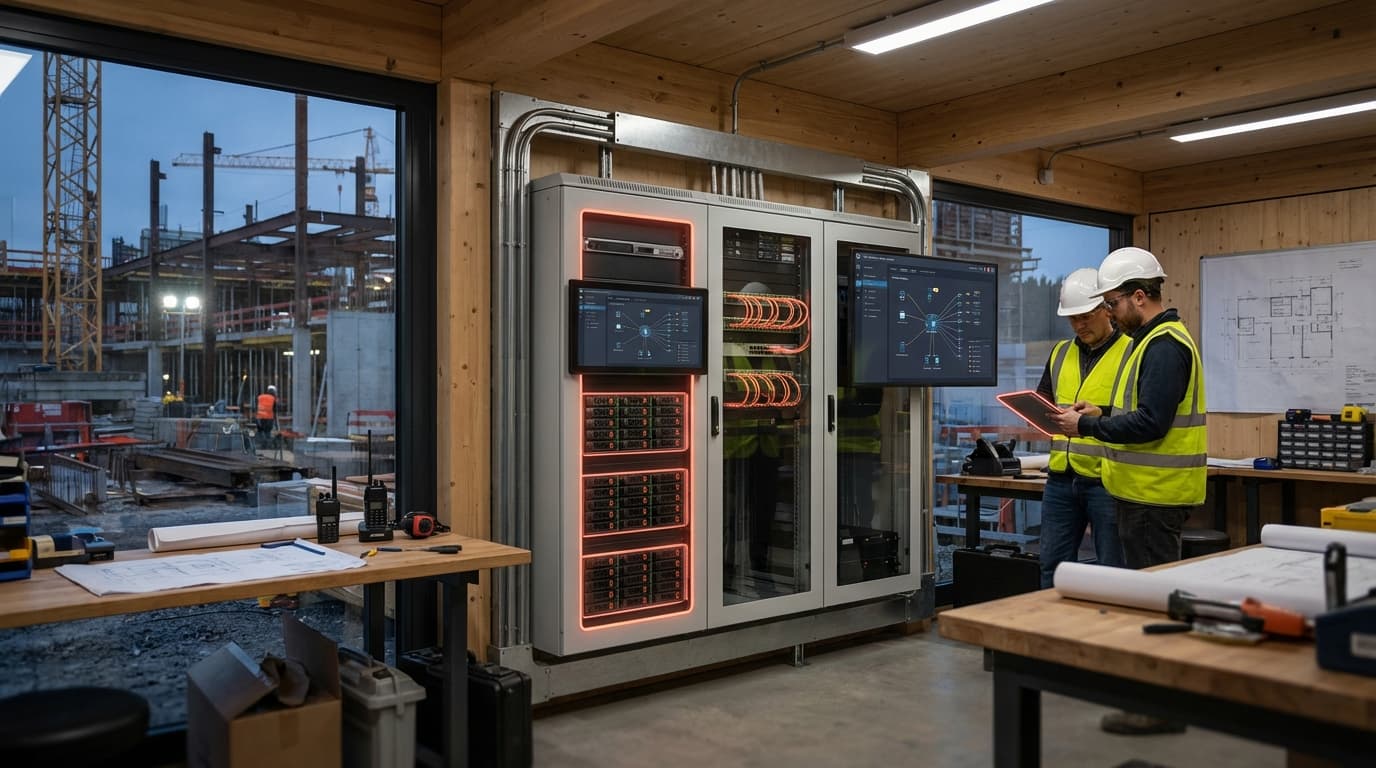
Ransomware Resilience for Contractors
Construction companies face a unique cybersecurity challenge that stems from the industry's fundamental operational structure. Unlike traditional office-based businesses, construction firms operate across multiple distributed job sites, each with its own network of subcontractors, suppliers, and temporary IT infrastructure. This fragmented digital ecosystem creates numerous entry points for ransomware attacks, while the industry's reliance on time-sensitive project schedules and just-in-time delivery models makes firms particularly vulnerable to extortion. When ransomware locks critical systems containing building information models, project schedules, or payment processing systems, the financial impact extends beyond the ransom itself to include costly project delays, penalty clauses, and potential safety risks from incomplete documentation. The problem is compounded by construction's historically lower investment in IT security compared to other sectors, creating an attractive target for cybercriminals who recognize that firms may be more willing to pay ransoms to avoid missing critical deadlines.
Ransomware resilience for contractors addresses these vulnerabilities through a multi-layered defense strategy specifically adapted to construction workflows. At its foundation, the approach emphasizes immutable offline backups of essential data—including BIM models, contracts, schedules, and financial records—stored in air-gapped systems that cannot be accessed or encrypted by attackers who breach the network. Network segmentation isolates different project sites and business functions, ensuring that a breach at one location cannot cascade across the entire organization. The framework incorporates strict access controls based on least-privilege principles, granting employees and subcontractors only the minimum system access required for their specific roles, while multi-factor authentication adds an additional verification layer. Vendor risk management protocols assess the security posture of third-party software providers and subcontractors before granting them network access. Perhaps most critically, incident response playbooks provide step-by-step procedures for isolating infected systems, activating backup restoration processes, and maintaining project continuity without succumbing to ransom demands.
Industry associations and cybersecurity firms have begun developing construction-specific resilience frameworks, recognizing that generic IT security approaches often fail to account for the sector's unique operational realities. Early adopters report that implementing these measures requires initial investment in backup infrastructure and staff training, but the cost proves minimal compared to the average ransomware incident, which can run into millions of dollars when accounting for downtime, data recovery, and project delays. As construction increasingly relies on digital tools—from drone surveys to cloud-based project management platforms—the attack surface continues to expand, making resilience measures not merely advisable but essential for business continuity. The approach represents a shift from viewing cybersecurity as an IT department concern to recognizing it as a fundamental risk management issue that affects project delivery, client relationships, and competitive positioning in an industry where reputation and reliability remain paramount.
Related Organizations



Zero Trust Data Security company focusing on enterprise backup and recovery.




Provider of security awareness training and simulated phishing platform.

A construction management software platform that integrates BIM models for field teams to view and collaborate on mobile devices.

Provides the Singularity Platform which uses on-device AI to autonomously detect and remediate threats.

Supporting Evidence
Research this in Signals
Signals turns a topic into a sourced research record you can inspect and rerun. Your first scan is free, and this one starts with Ransomware Resilience for Contractors already loaded, so edit it or scan as is.